

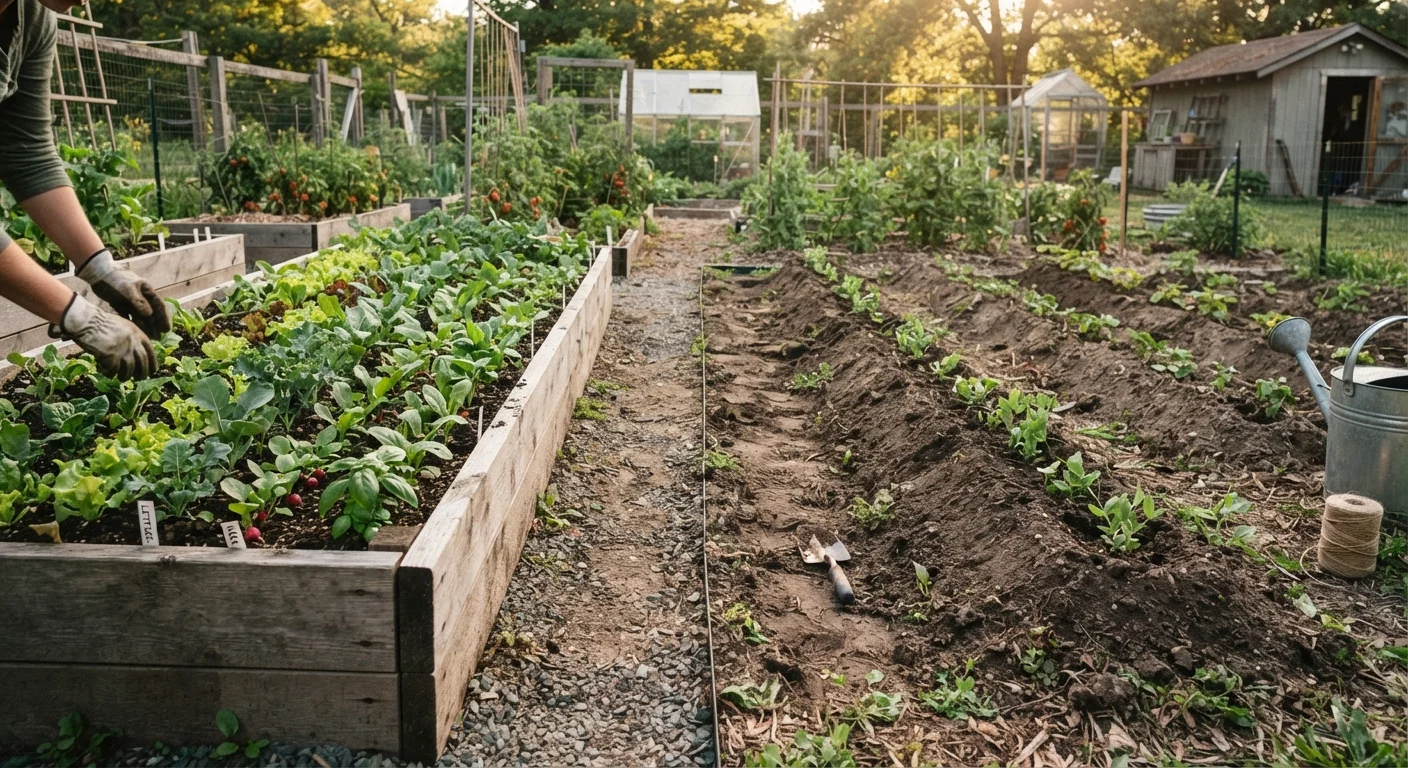
Option A
Raised Beds
The controlled, higher-setup approach that pays off in soil quality and accessibility.
Best for: Homeowners with poor native soil, limited mobility, or who want tighter control over growing conditions.
Option B
Ground Planting
The traditional, lower-cost method that works well when your soil and space cooperate.
Best for: Gardeners with decent existing soil who want to grow larger plots without upfront lumber or fill costs.
The Real Difference Between These Two Approaches
Raised beds are freestanding structures - usually built from wood, galvanized metal, or stone - filled with soil you bring in. Ground planting means working directly with the earth beneath your feet, amending it as needed and planting straight into it.
That distinction shapes almost every trade-off in this comparison: cost, drainage, soil control, physical effort, and long-term maintenance. Neither approach is universally better. The right choice depends on what you're starting with and what you're trying to grow. For a broader look at what goes into outdoor home projects, see our home improvement hub.
It's also worth noting that many experienced gardeners use both - raised beds for vegetables and herbs that benefit from precise soil conditions, and in-ground planting for perennials, fruit trees, or larger crops that spread wide and deep.
Cost and Setup: What You're Actually Signing Up For
In-ground planting has a low barrier to entry. If your soil is reasonable, you can start with little more than a shovel, some compost, and seeds. Even with amendments, the upfront cost is modest.
Raised beds require more investment. Lumber, hardware cloth (for pest protection), corner brackets, and bulk soil or a custom mix all add up. A single 4×8-foot bed filled to 12 inches can cost anywhere from around $100 to several hundred dollars depending on materials and whether you buy pre-mixed soil or blend your own.
| Criterion | Raised Beds | Ground Planting |
|---|---|---|
| Upfront cost | Higher (lumber, soil, hardware) | Lower (amendments only) |
| Soil control | Full - you choose the mix | Limited by native soil quality |
| Drainage | Excellent by default | Depends on existing soil type |
| Weed pressure | Lower, especially early on | Higher - native seeds present |
| Spring warm-up | Faster - extends season | Slower - follows ground temp |
| Scalability | Costly to scale up | Easier and cheaper to expand |
| Physical accessibility | Better - less bending needed | More bending and kneeling |
| Watering needs | More frequent - dries faster | Less frequent in many soils |
If budget is a concern, the budgeting basics hub has practical frameworks for planning project costs before you start spending.
Soil Quality, Drainage, and What That Means for Your Plants
This is where raised beds earn their reputation. Because you fill them yourself, you start with known, workable soil - typically a mix of topsoil, compost, and an aerating material like perlite or aged bark. Drainage is built in; water moves freely through the mix rather than pooling around roots.
In-ground gardens are only as good as the soil underneath. Clay-heavy soil drains poorly and compacts easily. Sandy soil drains too fast and holds few nutrients. Both can be improved - building a compost routine is one of the most effective long-term fixes - but it takes time. Checking and adjusting your soil pH before planting applies equally to both methods, though raised bed gardeners have more flexibility to correct it quickly by adjusting their fill mix.
Raised beds also warm up faster in spring because the soil is elevated and surrounded by air. This can extend your planting window by two to four weeks in cooler climates - a meaningful advantage for short-season gardeners.
Maintenance, Weeding, and Ongoing Effort
Raised beds tend to have fewer weeds early on because you're starting with clean, imported soil. Over time, wind-blown seeds will still arrive, but the contained space makes weeding faster. Applying the right mulch in a raised bed suppresses weeds efficiently and helps retain moisture.
In-ground gardens typically require more weeding, especially in the first few seasons. Established weed seeds already exist in native soil, and the open ground gives them room to spread. That said, a well-mulched in-ground bed with good plant coverage can be kept manageable without constant effort. If you're choosing plants strategically, low-maintenance plant varieties help either system run with less intervention.
Watering behaves differently too. Raised beds dry out faster because of their improved drainage and elevated position - especially in hot weather. This means more frequent watering is often needed. A drip irrigation setup can make this hands-off and consistent, which is worth considering if you're building a raised bed system. Avoid common watering mistakes that quietly damage plants regardless of which method you use.
Which Should You Choose?
If your yard has poor, compacted, or potentially contaminated soil - common in older urban or suburban lots - raised beds give you a clean start. They're also worth it if physical accessibility matters, or if you want a tidy, defined garden space that's easy to manage in small sessions.
If your soil is already decent, you have plenty of space, and you'd rather put money into plants and amendments than infrastructure, in-ground planting is a practical and productive choice. It scales up more easily and doesn't require replacing or rebuilding structures over time.
It's also worth looking at a third option covered in our container gardening article - useful if space is extremely limited or if you're renting and can't modify the yard. For long-term garden planning, understanding the difference between annual and perennial plants will also shape which setup suits your goals best.
The most important thing is simply to start. A small, well-tended bed - raised or in-ground - will teach you more in one season than any amount of research beforehand.
The content on this site is for informational purposes only and is not a substitute for professional advice. Always consult a qualified professional for guidance specific to your situation.