

Why Mulch Matters More Than You Might Think
Mulch is one of the simplest things you can add to a garden, but it does a surprising amount of work. At its core, mulch is any material layered on top of soil to protect it. What that layer actually does - to moisture, temperature, weeds, and soil health - depends almost entirely on the type of mulch you use.
Picking the wrong mulch for a situation isn't a disaster, but it can mean more weeding, more watering, or soil that gradually shifts in ways you didn't intend. This guide walks through the most common mulch types in plain language so you can match the right material to the job.
| Recommended mulch depth | 2-4 inches (General horticultural guidance) |
| Clearance from plant stems | 2-3 inches minimum (General horticultural guidance) |
| How often organic mulch needs refreshing | Once or twice per year (Varies by material and climate) |
| Best mulch for vegetable gardens | Straw or compost (General horticultural guidance) |
| Best mulch for trees and ornamental beds | Wood chips or shredded bark (General horticultural guidance) |
| Mulch type that can lower soil pH over time | Pine needles (General horticultural guidance) |
Organic Mulches: They Break Down and Feed Your Soil
Organic mulches decompose over time. That's the point - as they break down, they add organic matter to the soil, which feeds soil biology and gradually improves structure. The trade-off is that you'll need to replenish them periodically, typically once a year or more.
Wood Chips
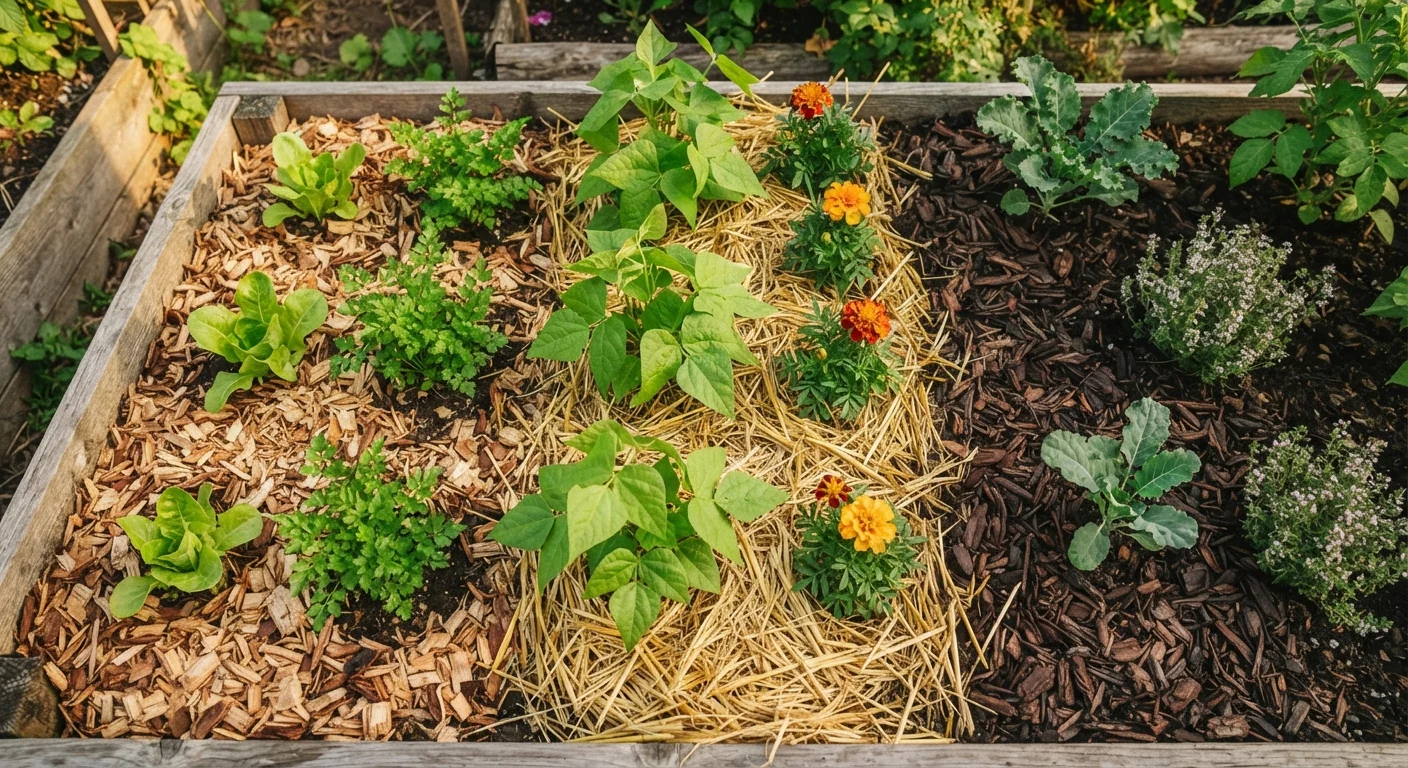
Wood chips are chunky, slow to decompose, and excellent at suppressing weeds and retaining moisture. They're a solid choice for garden paths, around trees, and in ornamental beds. A common concern is that wood chips steal nitrogen from soil as they break down - but this happens mainly at the surface. Mixing chips into soil can cause issues, but leaving them as a top layer generally does not. For more on separating gardening fact from fiction, see our rundown of popular garden myths.
Bark Mulch
Shredded or nugget bark behaves similarly to wood chips but tends to stay in place better on slopes. It breaks down more slowly than straw or compost, making it a low-maintenance option for established beds. Larger nuggets can float in heavy rain, so finer shreds work better in areas that get runoff.
Straw
Straw (not hay - hay carries weed seeds) is lightweight, affordable, and breaks down within a season. It's a popular choice for vegetable gardens because it keeps soil moist, suppresses weeds reasonably well, and decomposes quickly enough to turn under at season's end. It's particularly useful around plants like tomatoes to reduce soil splash on leaves.
Compost
A layer of finished compost acts as both mulch and soil amendment. It improves drainage in clay soils and water retention in sandy ones. Because compost breaks down fast, it won't suppress weeds as effectively as wood chips - but it feeds plants as it goes. It works especially well mixed into raised beds. If you're weighing whether to use raised beds at all, this comparison of raised beds vs. ground planting lays out the trade-offs clearly.
Grass Clippings and Leaves
Both are free if you have a yard. Grass clippings break down fast and can mat together, restricting airflow if applied too thickly - keep layers under an inch. Shredded leaves are excellent; whole leaves can mat and shed water. Running them through a mower first makes a big difference.
Inorganic Mulches: Permanent, Practical, and Limited
Inorganic mulches don't decompose, which means no soil feeding but also no annual topping off. They serve specific purposes well - and poorly in others.
Gravel and River Rock
Gravel works well around drought-tolerant plants, succulents, and in xeriscape designs where you want excellent drainage and a clean look. It does not add organic matter, and in hot climates it can radiate heat that stresses nearby plants. Removing it later is genuinely difficult, so choose it for permanent installations. Also worth noting: adding gravel to the bottom of pots does not improve drainage - a well-documented misconception covered in our garden myths article.
Landscape Fabric
Landscape fabric blocks weeds and lets water through, in theory. In practice, it degrades over several years, allows soil and debris to accumulate on top, and eventually becomes harder to manage than the weeds it was meant to stop. It can work in paths or under gravel for a few seasons, but most gardeners find organic mulches easier to maintain in planting beds over the long run.
Rubber Mulch
Made from recycled tires, rubber mulch lasts a long time and doesn't float away. It's used in playgrounds for cushioning. In garden beds, it offers little biological benefit and can get very hot in summer sun. It's generally not recommended for food gardens or areas where improving soil is the goal.
One factor that interacts with any mulch choice is your soil's pH. Acidic mulches like pine needles can gradually lower soil pH, which affects which nutrients your plants can absorb. If that's a concern, understanding soil pH basics is a useful next step.
How Much to Apply and What to Watch For
Most mulches perform best at 2-4 inches deep. Too thin and weeds push through; too thick and water may not penetrate to roots, and crowns of plants can rot. Keep mulch a few inches away from plant stems and tree trunks - the classic "mulch volcano" piled against a trunk traps moisture and invites disease and pests.
Refresh organic mulches when you notice the layer thinning or the color fading, usually once or twice per year depending on material. If you're also thinking about how light and site conditions interact with your plant choices, this guide to sun exposure labels can help you match plants to spots before you mulch around them.
There's no single best mulch - the right choice depends on what you're growing, what your soil needs, and how much maintenance you want to do. The good news is that any of the organic options will generally do more good than harm when applied at the right depth and kept away from plant stems.
The content on this site is for informational purposes only and is not a substitute for professional advice. Always consult a qualified professional for guidance specific to your situation.