

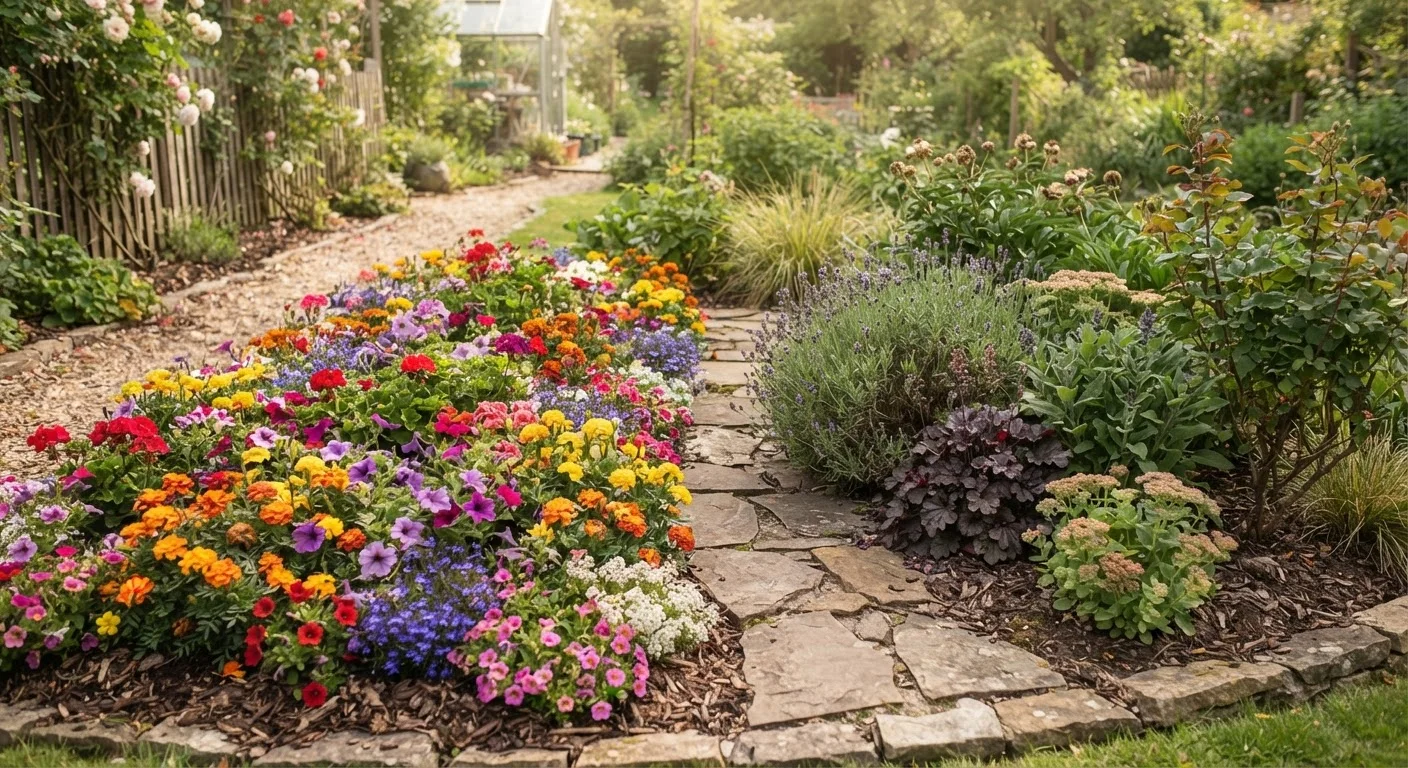
Option A
Annual Plants
The one-season performer.
Best for: Gardeners who want consistent, high-impact color and don't mind replanting each year.
Option B
Perennial Plants
The long-term investment.
Best for: Homeowners building a low-replanting garden that fills in and matures over several years.
What the Terms Actually Mean
Walk into any garden center and you'll find plants labeled "annual" or "perennial" - often without much explanation. The distinction is simpler than it sounds.
Annuals complete their entire life cycle - germination, growth, flowering, seed production, and death - within a single growing season. Once the first hard frost arrives, they're done. You pull them out, and next spring you start fresh with new transplants or seeds.
Perennials work differently. The above-ground growth (stems, leaves, flowers) dies back in cold weather, but the root system survives underground. Come spring, those roots send up new growth, and the plant returns - often for many years.
A useful analogy: annuals are like a one-year lease. Perennials are more like a long-term mortgage. Both work, but they carry different responsibilities and payoffs. If the concept of planning around recurring versus one-time costs feels familiar, it's similar to how fixed and variable expenses work differently in a budget - the structure of the commitment changes how you plan for it.
How They Compare Side by Side
The practical differences between annuals and perennials go beyond just lifespan. Bloom time, maintenance habits, and how they fit into your garden layout all vary significantly.
| Criterion | Annual Plants | Perennial Plants |
|---|---|---|
| Lifespan | One growing season | Multiple years (3+ typically) |
| Replanting required | Every year | Rarely, once established |
| Bloom duration | Often all season long | Weeks to a few months per year |
| Upfront cost per plant | Generally lower | Generally higher |
| Long-term cost | Higher (annual repurchase) | Lower (no yearly replacement) |
| Root system in winter | Dies completely | Survives underground |
| Garden design flexibility | Easy to change each year | More fixed placement over time |
| Establishment effort | Must restart each season | Grows stronger year over year |
One important nuance: "perennial" is always relative to your climate. A plant that overwinters comfortably in a mild Southern garden may behave like an annual in a cold Northern one. Check your USDA hardiness zone before assuming a plant will return - the zone information is typically listed on the plant tag or seed packet.
Planning a Garden With Both
Most experienced home gardeners don't choose one or the other - they use both strategically. Perennials provide the backbone: reliable structure, returning foliage, and predictable seasonal anchors. Annuals fill the gaps, especially during the periods when perennials aren't in bloom.
A practical starting point: identify two or three perennials suited to your light conditions (see what sun labels on plant tags actually mean) and build around them with annuals for seasonal color. Over time, as your perennials spread and mature, you may find you need fewer and fewer annuals to fill space.
If you're also thinking about where to put these plants, it's worth reading about raised beds versus in-ground planting - the choice affects drainage, soil quality, and how easily perennials establish roots. And if you're working with pots or planters, keep in mind that container gardening has real limitations for perennial winter survival, since roots in above-ground containers freeze more easily than those insulated by garden soil.
At the end of each growing season, your annuals and perennials need different treatment. Our end-of-season garden prep checklist walks through exactly what to cut back, what to pull, and how to protect perennial roots heading into winter.
If low maintenance is a priority, perennials generally win - but not all of them are equally forgiving. Our guide to low-maintenance plants for busy yards includes honest notes on what each type still needs to survive.
The content on this site is for informational purposes only and is not a substitute for professional advice. Always consult a qualified professional for guidance specific to your situation.