

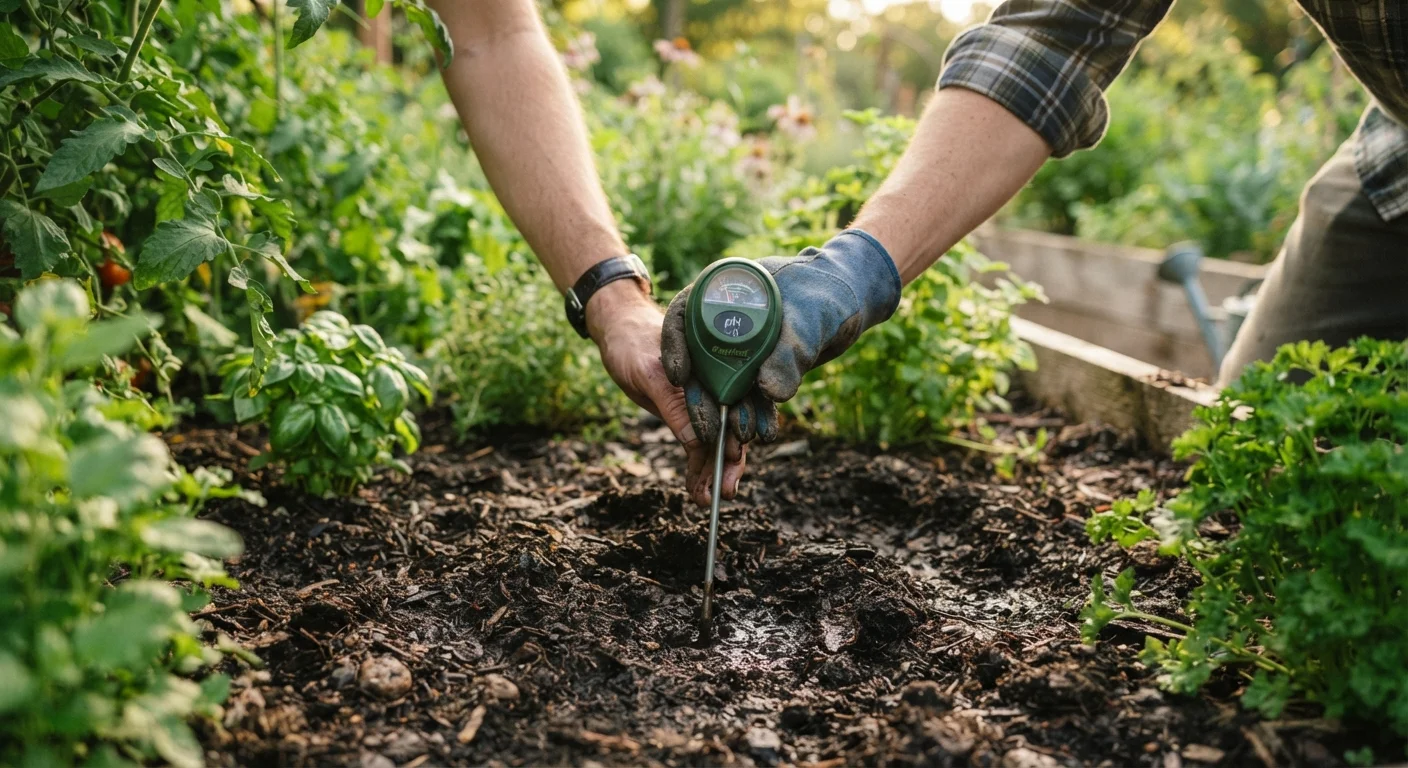
Why pH Determines What Your Soil Can Deliver
Think of soil pH as a gatekeeper. Even if your soil is packed with nutrients - nitrogen, phosphorus, potassium, iron - plants can only absorb them when the pH sits within the right range. Too acidic or too alkaline, and those nutrients become chemically bound to soil particles, effectively invisible to plant roots.
Phosphorus, for example, becomes poorly available when pH drops below 6.0 or rises above 7.5. Iron and manganese can reach toxic levels in very acidic soils. Calcium and magnesium become scarce in highly acidic conditions. This is why a plant growing in nutrient-rich soil can still look starved - the nutrients are there, but the chemistry won't release them.
Most common vegetables, herbs, and flowering annuals perform well in a pH range of roughly 6.0 to 7.0. That sweet spot keeps the widest range of nutrients accessible simultaneously. Step too far outside it in either direction and you're likely to see slow growth, pale leaves, or poor yields regardless of how much you water or fertilize.
Match Plants to Your Existing pH First
Before spending time and money amending your soil, consider choosing plants suited to your current pH. Blueberries, rhododendrons, and azaleas naturally prefer acidic conditions around 4.5-5.5. If your soil already leans that way, working with it rather than against it is often the easier path. Amendments are most worthwhile when you're committed to specific crops like vegetables that need a near-neutral range.
What Naturally Shifts Your Soil's pH
Soil pH isn't fixed. Several factors nudge it over time, and understanding them helps you anticipate problems before they appear.
- Rainfall: Heavy rain leaches calcium and magnesium from soil, which tends to make it more acidic. Regions in the eastern US with high annual rainfall often have naturally acidic soils as a result.
- Underlying rock: Limestone-rich geology buffers soil toward alkaline conditions. Sandy soils over granite tend acidic. This is largely outside your control but good to know.
- Organic matter decomposition: Decomposing leaves, wood chips, and compost release organic acids that can gradually lower pH. This is usually a mild and manageable effect.
- Fertilizers: Some nitrogen fertilizers - particularly ammonium-based types - acidify soil over repeated applications.
- Irrigation water: Water high in calcium carbonate (common in many western US cities) can gradually push container and garden soil pH upward.
If you're deciding between growing in raised beds or directly in the ground, pH management is one factor worth weighing. See our guide to raised beds vs. ground planting for a fuller comparison of trade-offs.
How to Test Your Soil
Testing soil pH is genuinely easy and inexpensive. You have two main options:
- Home test kits: Widely available at garden centers, these typically use a color-change indicator or electronic probe. They give you a quick ballpark reading - accurate enough to tell you whether you have a significant problem to address.
- Cooperative Extension lab tests: Your state's land-grant university Cooperative Extension service usually offers low-cost mail-in soil testing. These reports give precise pH readings along with nutrient levels and specific amendment recommendations. They're worth doing at least once for any new garden bed.
Collect samples from several spots across your garden bed, at a depth of about four to six inches. Mix them together and test the combined sample - this averages out local variation and gives you a more representative reading.
6.0-7.0
Optimal pH range for most vegetables
Widely cited by university extension programs as the target range for nutrient availability in common food crops.
~$15-$20
Typical cost of a Cooperative Extension soil test
Many state land-grant university programs offer low-cost soil testing for home gardeners, often including amendment recommendations.
3-6 months
Time for lime to meaningfully shift soil pH
Agricultural lime works slowly; fall application is generally recommended to allow adequate reaction time before the spring planting season.
Adjusting pH: Practical Fixes That Actually Work
Once you know your pH, you can adjust it - but expect a slow process measured in months, not days.
To raise pH (reduce acidity): Ground agricultural limestone is the standard amendment. Calcitic lime adds calcium; dolomitic lime adds both calcium and magnesium - useful if your soil is deficient in both. Application rates depend on your soil type and how far you need to shift pH, which is why professional lab recommendations are helpful here.
To lower pH (reduce alkalinity): Elemental sulfur is the most common choice. Soil bacteria convert it into sulfuric acid over time. Again, this is a slow process, and overdoing it can create new problems. Acidifying organic mulches like pine needles or peat moss make a modest long-term contribution as well. Learn more about how different mulch materials affect your soil in our mulch types overview.
Whatever you apply, work amendments into the top six inches of soil and water them in. Retest before the next planting season to see where you stand. Soil chemistry is patient - your gardening strategy should be too.
For context on other common causes of plant underperformance, it's also worth reviewing watering habits that harm garden plants - pH and irrigation issues often get confused for each other.
Frequently Asked Questions
Testing every two to three years is reasonable for most home gardens. If you've added amendments like lime or sulfur, test again after six to twelve months to see how much the pH shifted. Soil in raised beds may need more frequent checks since the mix can change faster.
Not usually. Lime and sulfur work gradually, often taking several months to meaningfully change pH. The most reliable approach is to test in fall, amend over winter, and plant the following spring. For urgent situations, growing in containers with a pre-mixed potting medium is a practical workaround.
No. Different plants have different pH preferences. Blueberries and azaleas thrive in acidic soil around pH 4.5-5.5, while most vegetables prefer a near-neutral 6.0-7.0. Matching your soil's pH to the plant's preference is one of the most effective steps you can take before planting.
Plants may still grow, but they often look stunted, yellowed, or produce poorly. These symptoms are easy to misread as a watering or pest problem. Confirming pH first rules out one of the most common - and fixable - causes of poor plant performance.
It can be over time. Tap water in many US municipalities is slightly alkaline, and repeated watering can gradually push container soil pH higher. Flushing pots thoroughly every few months helps prevent salt and mineral buildup that contributes to this drift.
The content on this site is for informational purposes only and is not a substitute for professional advice. Always consult a qualified professional for guidance specific to your situation.