

Start here
Why Menus Feel Confusing (And Why That's Normal)
Next
How Most Cuisines Organize Their Menus
Then
Key Terms and Concepts Worth Learning
Apply it
How to Ask Smart Questions Without Feeling Lost
Keep going
Building Your Curiosity Over Time
Why Menus Feel Confusing (And Why That's Normal)
Sitting down at an Ethiopian, Sri Lankan, or Georgian restaurant for the first time and staring at a menu full of unfamiliar words is genuinely disorienting - and completely normal. These menus aren't designed to confuse; they're designed for people who already know the cuisine. You're just meeting the food on its own terms for the first time.
The discomfort usually comes from two places: unfamiliar words and unfamiliar logic. Most people are comfortable reading menus because they've internalized the assumptions behind them - what a 'main course' means, what 'grilled' implies, what a typical portion looks like. A new cuisine disrupts those assumptions, and that's actually a good thing. It means you're about to learn something.
The good news is that a few simple orientation strategies can turn menu paralysis into confident curiosity - without needing a culinary degree or extensive travel experience.
How Most Cuisines Organize Their Menus
One of the biggest mental shifts for first-timers is realizing that not all menus follow the Western appetizer-main-dessert sequence. In fact, many of the world's most beloved food traditions are built around very different structures.
- Shared spreads: Ethiopian cuisine typically arrives as a communal platter - multiple stews and salads arranged on injera flatbread, shared by everyone at the table. There's no individual 'main.' See our guide to flatbreads across cultures to understand how injera fits into a broader global tradition.
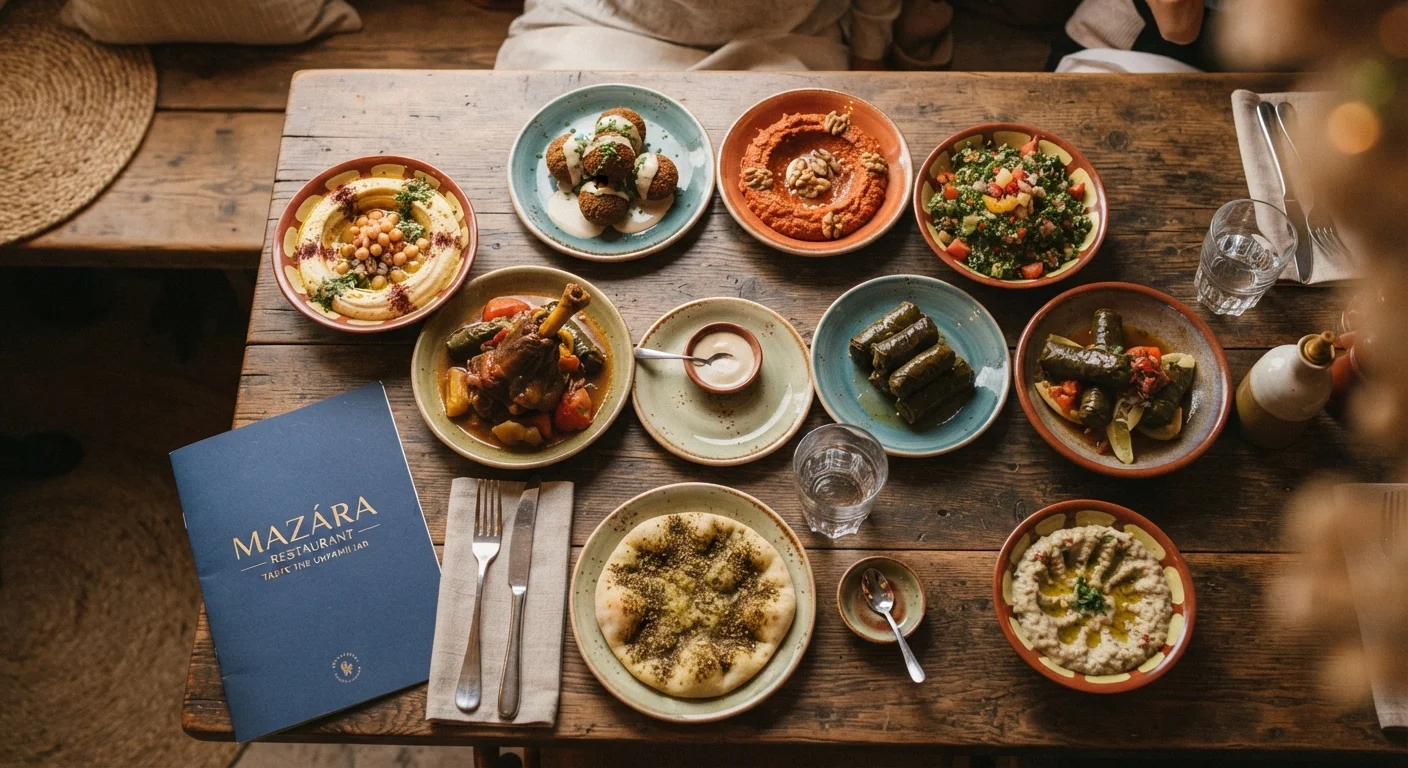
- Small plates and mezze: Georgian, Lebanese, and Greek restaurants often center meals around multiple small dishes served simultaneously or in waves. Ordering 'one of everything' that interests you is a perfectly valid strategy.
- Course-based but unfamiliar: Japanese omakase or a traditional Vietnamese meal may follow a progression, but the logic of that progression is different from European fine dining - lighter dishes don't always come first.
- Build-your-own: Some South Asian and Mexican traditions invite you to assemble - choosing a base, a protein, and accompaniments rather than selecting a finished dish.
Scanning the menu for clues about format - are dishes listed individually or as sets? Are prices per person or per dish? - tells you a lot before you've identified a single ingredient.
Key Terms and Concepts Worth Learning
Mezze
A style of eating common in Middle Eastern and Eastern Mediterranean cuisines where many small dishes are served together, meant for sharing rather than individual portions.
Injera
A spongy, slightly sour flatbread from Ethiopia and Eritrea that functions as both plate and utensil - stews and salads are placed on top and eaten by tearing pieces of the bread.
Omakase
A Japanese dining style where you leave the meal selection entirely to the chef, typically used in sushi restaurants to experience the chef's best seasonal choices.
Dal
A broad term used across South Asian cuisines for dishes made from cooked lentils, beans, or split peas - the specific type and spicing vary widely by region.
Mole
A rich, complex sauce from Mexican cuisine typically made with dried chilies and a long list of other ingredients, often including chocolate, nuts, and spices.
Umami
Often described as a savory, deep, or meaty taste - one of the five basic tastes, commonly associated with fermented, aged, or slow-cooked foods across many cuisines.
Beyond individual dish names, a cuisine's vocabulary tends to cluster around its core techniques and staple ingredients. Learning a handful of recurring terms dramatically reduces the cognitive load of a new menu.
For instance, understanding that dal across South Asian menus always refers to a lentil preparation - regardless of which lentil or which spice blend - means you've unlocked an entire category. Knowing that mole in Mexican cooking signals a complex sauce (often containing chili, chocolate, and dozens of other ingredients) tells you something about flavor depth before you read the description. Similarly, recognizing fermented or pickled as flavor signals helps you anticipate sourness or funk that might surprise an unprepared palate.
The history of spice and ingredient movement across regions also explains why certain flavor profiles recur in cuisines that seem geographically unrelated - useful context when a menu feels surprisingly familiar.
How to Ask Smart Questions Without Feeling Lost
Your server is genuinely your best resource. Most people working at specialty restaurants are passionate about the food they serve, and a well-placed question signals respect rather than ignorance. A few approaches that work well:
- Ask for the most traditional dish. This gives you an anchor - the dish most representative of the cuisine's identity, rather than one adapted for a broader audience.
- Ask about heat or intensity. 'Is this dish quite spicy, or more aromatic?' is an easy, non-embarrassing way to get the information you need.
- Ask what's shared vs. individual. In communal-style restaurants, ordering for the table is often the whole point - your server can help you calibrate portions.
- Mention an allergy or strong dislike clearly and early. Staff at good restaurants will navigate this honestly.
You don't need to pretend expertise you don't have. Genuine curiosity - 'I haven't eaten much Georgian food before, what would you suggest starting with?' - is almost always met warmly. For more on navigating food culture respectfully, see our piece on dining etiquette across cultures.
Building Your Curiosity Over Time
Reading an unfamiliar menu gets meaningfully easier the more cuisines you encounter - not because you memorize everything, but because you start recognizing patterns. Fermented flavors appear across Korean, Ethiopian, and Eastern European tables. Flatbreads serve as utensil, plate, and staple simultaneously in dozens of traditions. Slow-braised proteins show up wherever people needed to make tough cuts tender and flavorful.
If you're curious about how food cultures develop and travel, diaspora cooking is a fascinating lens - immigrant communities often bring the most authentic and evolved versions of a cuisine to new places, which is exactly why the restaurant you're sitting in might offer something you won't find anywhere else.
When you're traveling and navigating menus abroad, eating well abroad without overspending offers practical strategies for getting the most out of unfamiliar food scenes. And the difference between street food and restaurant culture can tell you something meaningful about which menus deserve the most attention in any given destination.
The real skill isn't knowing what everything on the menu means. It's being comfortable not knowing - and staying curious long enough to find out.
Frequently Asked Questions
Start by scanning for familiar ingredients in the descriptions, then ask your server what they personally enjoy or what's popular. Ordering a widely shared staple dish is a low-risk way to get oriented. Many restaurants also welcome questions about preparation methods or spice levels.
Ask your server directly - most are happy to explain heat levels. You can also look for descriptors like 'mild,' 'aromatic,' or 'braised,' which often signal gentler dishes. Starting with a milder option and trying condiments on the side gives you control over the experience.
Not at all. In most cultures, showing genuine curiosity about the food is considered respectful and often flattering. Staff at specialty restaurants are usually proud of their cuisine and happy to guide first-timers toward dishes they'll enjoy.
No - that structure is primarily Western. Many cuisines serve dishes simultaneously or as a spread, including Georgian, Ethiopian, and many Southeast Asian traditions. Others, like Spanish tapas culture, are built entirely around small shared plates.
A quick search for the cuisine's staple dishes, cooking techniques, and common ingredients goes a long way. Many restaurants post menus online, giving you time to look up unfamiliar terms before you arrive. This kind of light research makes the actual meal much more enjoyable.
The content on this site is for informational purposes only and is not a substitute for professional advice. Always consult a qualified professional for guidance specific to your situation.