

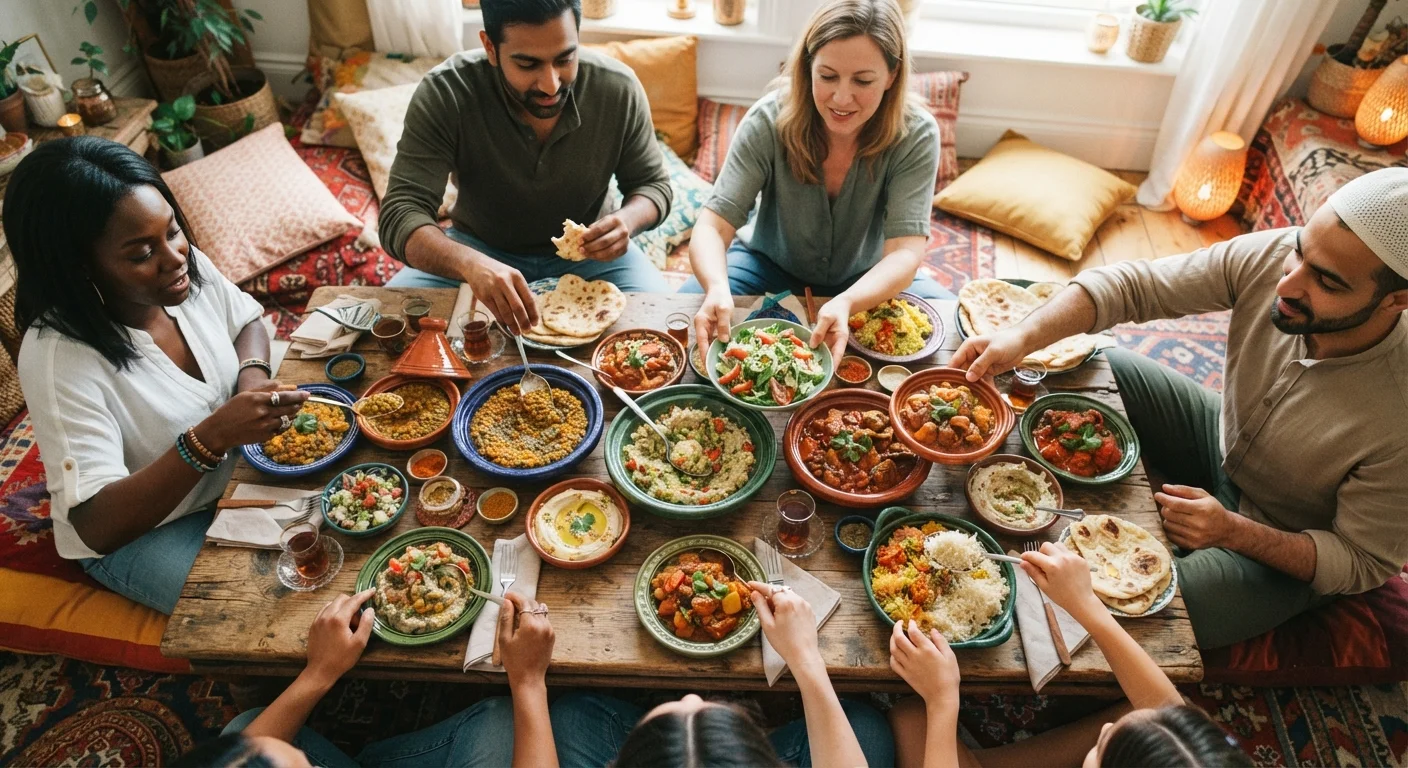
Why Dining Etiquette Varies So Dramatically
Food has never been just fuel. It's wrapped in history, religion, social hierarchy, and community values that have evolved over centuries. The way a family eats together reflects who they are and what they hold important - which is exactly why stepping into someone else's home for a meal can feel both thrilling and quietly nerve-wracking.
The good news is that most hosts around the world extend genuine grace to curious, well-meaning guests. What tends to cause real discomfort isn't ignorance of specific rules - it's indifference to them. Showing up with genuine curiosity already puts you miles ahead.
Understanding why customs exist makes them easier to navigate. Food taboos and traditions are almost never arbitrary - they're grounded in ecology, religion, or social history. Knowing that context helps you engage with respect rather than just compliance.
Best Practices for Eating as a Cultural Guest
These practices won't cover every situation - cultures are too varied for that - but they'll help you move through most cross-cultural dining experiences with confidence and genuine respect.
Observe your host before you start eating or drinking
In many cultures - Japan and South Korea among them - it's customary to wait for the eldest or most senior person to begin before anyone else touches the food. Diving in too early can read as disrespectful or self-centered, even if completely unintentional.
Ask about dietary customs and restrictions before the meal, not during
Springing dietary restrictions or preferences on a host mid-meal can create embarrassment or significant extra effort. Raising the conversation beforehand gives your host time to plan and shows consideration for the work that goes into preparing a meal.
Accept food when it is offered, even if you only take a small amount
In many Middle Eastern, South Asian, and African households, refusing food can be interpreted as a rejection of the host's hospitality rather than a personal preference. Food is often an expression of care and status - declining it can carry unintended weight.
Be mindful of which hand you use to eat or pass food
In many cultures across South Asia, the Middle East, and parts of Africa, the left hand is traditionally considered unclean and should not be used for eating or passing dishes. Using the wrong hand, however innocently, can cause quiet discomfort.
Follow the host's lead on whether to leave food on your plate
This is one of the most misunderstood aspects of cross-cultural dining. In some East Asian traditions, finishing everything signals you weren't given enough food; in others, leaving food is wasteful and impolite. There's no universal rule - the context dictates the interpretation.
Express genuine appreciation, with specificity if possible
Vague compliments like "this is nice" can feel hollow. Specific appreciation - naming a dish or a flavor - signals that you were actually paying attention, which most hosts find deeply gratifying regardless of cultural background.
Quick Wins Before You Even Sit Down
A little preparation before the meal starts pays dividends at the table. These are small, low-effort actions with an outsized effect on how welcome you'll feel - and how welcome your host will feel in sharing their traditions with you.
If you're navigating an unfamiliar cuisine for the first time, it also helps to do a little orientation before you arrive. Reading an unfamiliar menu can give you a useful framework for what to expect on the table.
The Spirit Behind the Rules
Cross-cultural dining isn't about memorizing an encyclopedia of dos and don'ts. It's about recognizing that sharing food carries deep social meaning in every culture - and that your presence at someone's table is already an act of trust on their part.
No Two Households Are Identical
Cultural norms are real, but they're also starting points - not scripts. Individual families may observe traditions very differently depending on generation, region, religion, or personal preference. What applies broadly to a culture may not apply to one specific household. When you're unsure, watching and asking is always more reliable than assuming a general rule covers your specific situation.
When in doubt, watch before you act, ask before you assume, and thank your host sincerely. Those three things translate across almost every cultural context - and they matter far more than knowing which fork to use.
Curiosity about food is also a way into understanding people. The more you engage with different food traditions, the more you'll notice how much they reveal about a culture's relationship with land, community, time, and care. That's a perspective worth carrying with you well beyond the dinner table.
The content on this site is for informational purposes only and is not a substitute for professional advice. Always consult a qualified professional for guidance specific to your situation.