

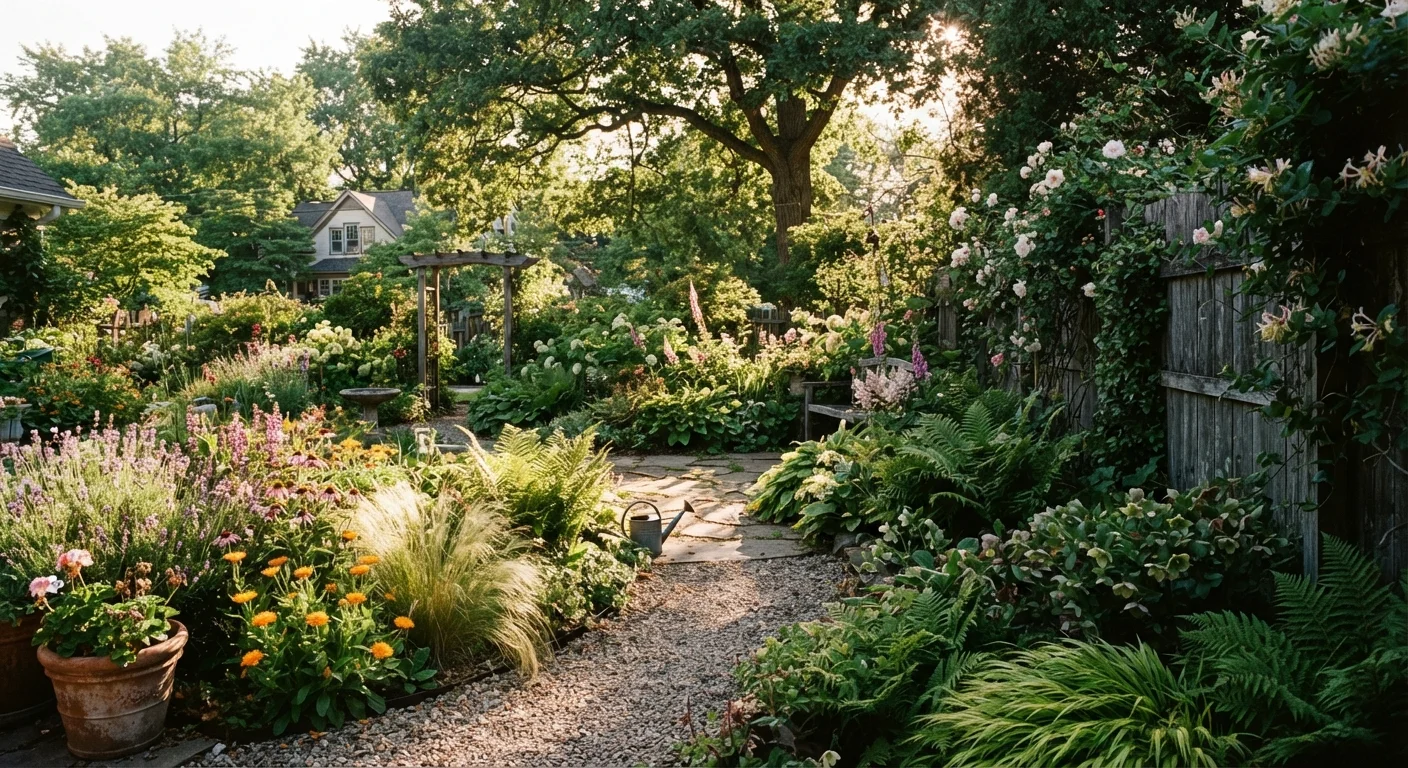
Why These Labels Matter More Than You Might Think
If you've ever followed the instructions on a plant tag and still watched your plant wilt, yellow, or just sit there doing nothing - sunlight mismatch is often the culprit. The terms 'full sun,' 'partial shade,' and 'deep shade' aren't decorative. They describe a real biological requirement, and plants that don't get the right light tend to struggle no matter how well you water or fertilize them.
The good news: once you understand what each label actually means, you can read your yard more accurately and make plant choices that are much more likely to work. It doesn't require special equipment - just some attention and a clear day.
This also connects to broader garden planning decisions. Whether you're choosing annuals or perennials, light requirements will shape what plants are even on the table for a given spot.
Full Sun: More Demanding Than It Sounds
Full sun means at least 6 hours of direct sunlight per day. Direct means the sun is actually hitting the plant - not reflecting off a wall nearby or coming through a sheer curtain. Six hours is a floor, not a target. Many full-sun plants do best with 8 hours or more.
Common full-sun plants include most vegetables (tomatoes, peppers, squash), lavender, black-eyed Susans, and most ornamental grasses. These plants have evolved to photosynthesize efficiently in bright conditions - shade causes them to stretch, produce less, and become more disease-prone.
One important nuance: afternoon sun is considerably more intense than morning sun. A spot that gets morning shade and blazing west-facing afternoon sun might technically hit 6 hours but deliver far more heat stress than a gentler east-facing spot with the same hours. For sensitive full-sun plants, this distinction can matter.
6+ hrs
Daily direct sun required for full-sun plants
This threshold is widely cited by cooperative extension programs across the U.S. as the standard definition of full-sun growing conditions.
3-6 hrs
Direct sun range for partial shade plants
Most gardening reference guides and university extension services define partial shade within this window, with quality of light hours also playing a role.
< 3 hrs
Daily direct sun in deep shade conditions
Areas receiving fewer than 3 hours of direct sun daily are generally classified as deep or full shade by horticultural standards.
Partial Shade (and Part Sun): The Widest and Trickiest Category
Partial shade typically means 3 to 6 hours of direct sun per day, usually with some protection from the most intense midday or afternoon rays. You'll also see 'part sun' used - the two terms overlap significantly, though 'part sun' sometimes implies a preference for the higher end of that range.
This is the most variable category because the quality of those hours matters as much as the count. A plant getting 4 hours of brutal afternoon sun is in a very different situation than one getting 4 hours of gentle morning light. Plants like impatiens, astilbe, coral bells, and many ferns generally prefer the morning-sun version of partial shade.
Dappled light - like the shifting patterns under an open-canopied tree - can also count as partial shade, though it's harder to measure precisely. If you're gardening under trees, keep in mind that root competition adds another layer of challenge. Our guide on low-maintenance plants includes some solid options for these trickier spots.
Deep Shade: Fewer Than 3 Hours, and That's Okay
Deep shade spots receive fewer than 3 hours of direct sun per day - think the north side of a house, under a dense evergreen, or a narrow alley between buildings. This sounds limiting, and it is, but there's a real set of plants that not only tolerate these conditions but actively prefer them.
Hostas, many ferns, pachysandra, sweet woodruff, and some native groundcovers are genuinely adapted to low light. Trying to grow sun-lovers in these spots is a losing battle, but committing to shade-adapted plants can actually produce a lush, low-maintenance area that requires little intervention once established.
If deep shade spots are near a seating area, planting them thoughtfully can also improve comfort and visual interest - something worth considering if you're planning an outdoor seating area.
How to Actually Measure Light in Your Yard
The most reliable method costs nothing: pick a clear day in summer and check each area of your yard once per hour. Note whether the spot is in direct sun or shade at each check. Tally up the direct-sun hours by end of day. Do this on two or three different days for a more accurate picture.
Things to watch for:
- Seasonal shift: Sun angles change significantly between spring and summer. A spot that gets good light in April may be shaded by a full-leafed tree by July.
- Reflected surfaces: Light-colored walls and fences can bounce extra heat and brightness onto nearby plants - sometimes enough to push a partial shade spot into full-sun territory in terms of stress.
- Overhead obstructions: An open sky overhead isn't the same as direct sun if something is blocking the sun's actual path.
For container gardeners, this flexibility is a real advantage - you can move pots to chase or avoid sun as the season changes. See our overview of container gardening trade-offs for more on that approach.
Frequently Asked Questions
Full sun means a spot receives at least 6 continuous or cumulative hours of direct sunlight per day. Bright, indirect light or light filtered through clouds doesn't count toward that total. Most vegetables, roses, and many flowering plants fall into this category.
Morning sun is gentler and less intense, making it generally better for partial shade plants. Afternoon sun - especially in summer - can scorch foliage on plants that prefer filtered light. A spot with morning sun and afternoon shade is often ideal for partial shade varieties.
Yes, but your options narrow considerably. Deep shade plants like hostas, ferns, and some native groundcovers are adapted to low-light environments. Keep in mind that tree roots also compete for water and nutrients, so soil conditions matter as much as light.
The simplest method is to check the spot every hour on a clear day and note whether it's in direct sun or shade. Do this in mid-summer when the sun angle is highest. A few observations on different days gives you a reliable picture.
It will likely grow slowly, produce fewer flowers or fruit, and become more susceptible to disease. Some plants will stretch toward light in an unhealthy way. The plant may survive but rarely performs as expected without adequate light.
They're often used interchangeably and generally refer to the same 3-6 hour range. However, 'part sun' sometimes leans toward the higher end of that range, implying the plant wants more sun than shade. When in doubt, check the specific plant's needs.
The content on this site is for informational purposes only and is not a substitute for professional advice. Always consult a qualified professional for guidance specific to your situation.