

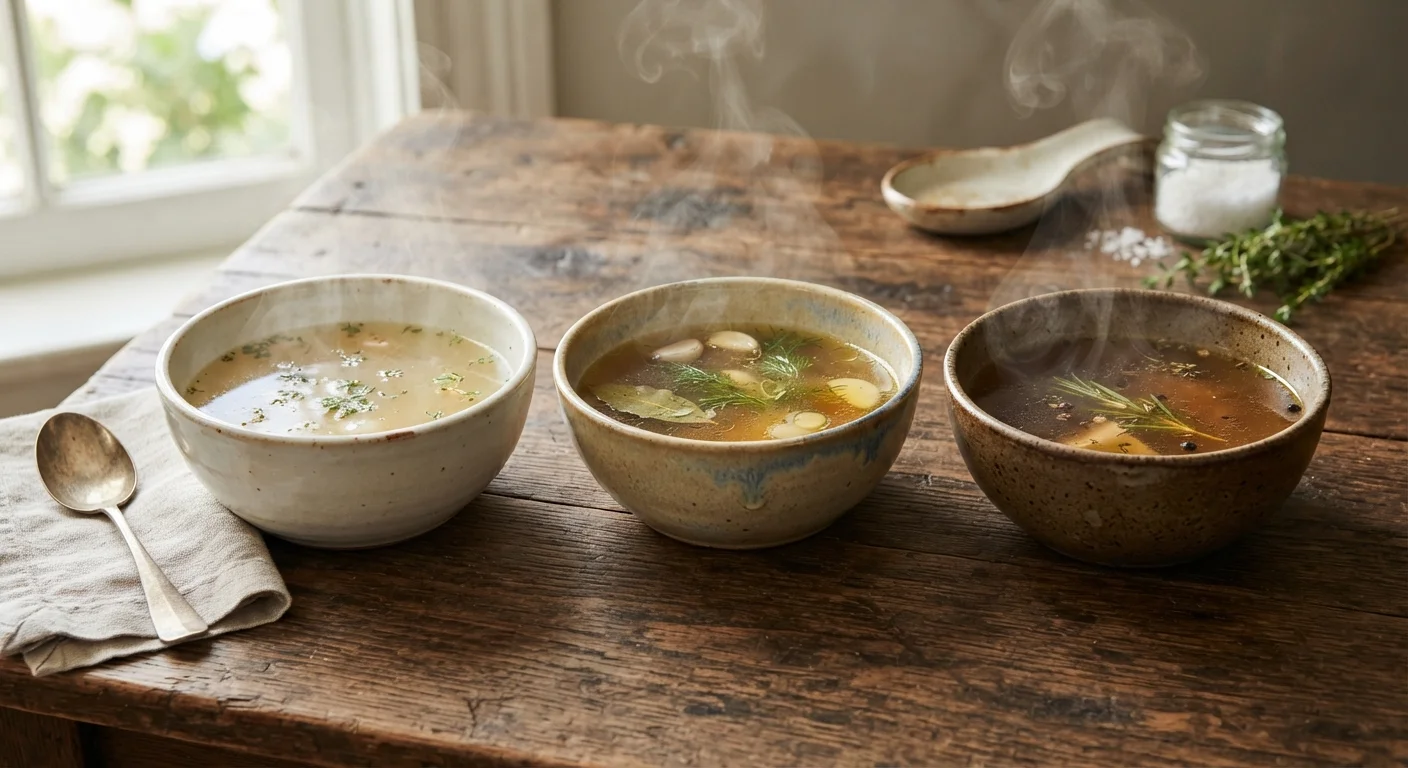
Our Verdict
Stock, broth, and bone broth are related but genuinely different liquids with distinct uses. Stock is the go-to for building sauces and braises; broth shines when you want a seasoned, drinkable base; bone broth falls somewhere between the two, offering rich body from extended simmering. None is universally superior - the right pick depends on your recipe.
| Best for | Recommended |
|---|---|
| Sauce-making, risotto, and braises needing body | Stock |
| Soups and sipping liquids that need seasoning built in | Broth |
| Recipes calling for deep, gelatinous richness | Bone broth |
| Everyday cooking with minimal fuss | Broth |
Why These Three Terms Get Confused
Walk through a grocery store and you'll find cartons labeled "stock," "broth," and "bone broth" sitting on the same shelf, often priced very differently. The confusion is understandable - recipe writers use the terms loosely, and manufacturers don't always follow culinary conventions. But in a kitchen context, the three liquids do have meaningful differences worth understanding.
All three start the same way: you simmer animal ingredients in water, then strain the result. What changes is which ingredients go in, for how long, and whether the liquid gets seasoned before it leaves the pot. Those variables produce liquids with different textures, flavors, and best uses. Just like sauté, stir-fry, and pan-fry sound interchangeable but aren't, these three liquids reward a closer look.
What Makes Each One Different
Stock is built around bones - roasted or raw - often with cartilage-rich joints like chicken feet, knuckles, or veal bones included. As it simmers (typically two to six hours for poultry, longer for beef), collagen from connective tissue converts to gelatin. That gelatin is what gives a well-made stock its silky mouthfeel and, once chilled, its wobble. Crucially, traditional stock is unseasoned. That's intentional: it keeps the liquid flexible for reduction and seasoning later. Stock is a cook's ingredient, not a standalone sip.
Broth flips the emphasis. It's made primarily from meat rather than bones, which means less gelatin and a thinner body. It is typically seasoned with salt and aromatics - onion, celery, carrot, herbs - making it palatable straight from the pot. The tradeoff is versatility: because broth is already seasoned, it's harder to reduce without it becoming too salty. It's a natural fit for soups and dishes where the liquid's flavor carries the dish. Understanding the difference between boiling and simmering matters here - broth benefits from a gentle simmer to stay clear.
Bone broth is essentially stock taken further. It uses bones, connective tissue, and sometimes a splash of vinegar (thought to help draw out minerals), simmered anywhere from eight to twenty-four hours. The result is a deeply colored, strongly flavored liquid that gels firmly when cold. It's often consumed as a drink rather than purely as a cooking base - which is where the marketing gets heavy.
| Stock | Broth | Bone Broth | |
|---|---|---|---|
| Primary ingredient | Bones and cartilage | Meat (with some bone) | Bones and connective tissue |
| Typical simmer time | 2-6 hours (poultry) | 1-3 hours | 8-24 hours |
| Seasoned? | No (unseasoned) | Yes | Usually lightly seasoned |
| Gelatin content | Medium to high | Low | High |
| Body/texture | Silky, gels when cold | Thin, watery | Thick, firmly gels |
| Best used for | Sauces, braises, risotto | Soups, everyday cooking | Sipping, rich braises |
| Reducible without oversalting? | Yes | No | Depends on seasoning |
The Nutrition Picture - Without the Hype
Bone broth has attracted considerable health claims in recent years - collagen for joints, gut lining support, mineral absorption. It's worth separating what's established from what's speculative. Bone broth does contain collagen-derived peptides and some minerals, but the quantities vary significantly depending on preparation, and most of these compounds are broken down during digestion. The body doesn't absorb dietary collagen intact and redirect it to joints. That's not how digestion works.
Similarly, the idea that bone broth is an exceptional protein source needs context. A typical cup provides roughly four to six grams of protein - useful, but modest compared to whole food protein sources. If the nutrition claims draw you to bone broth, it's worth reading up on nutrition claims that sound scientific but don't hold up.
None of that makes bone broth a bad choice - it's flavorful, warming, and a genuinely useful cooking liquid. Just don't expect it to outperform a balanced diet.
Practical Guidance: Which to Use When
For sauces and pan gravies, reach for stock. Its unseasoned gelatin base lets you reduce it aggressively without oversalting, and it gives finished sauces a glossy, restaurant-style body.
For soups and stews where the liquid is the flavor backbone, broth is often more convenient - it's already balanced and ready to go. If you're adjusting seasoning throughout cooking anyway, the distinction matters less.
For braising meats, either stock or bone broth works well. The higher gelatin content adds moisture retention and richness to long-cooked dishes.
If you're simply looking to sip something warm or add liquid to grains, broth wins on ease. Bone broth works here too, though its assertive flavor can be polarizing.
Beyond Western cooking, these fundamentals show up across cultures in fascinating ways. Different cultures approach broths very differently, and understanding that spectrum is half the fun of exploring global food.
The content on this site is for informational purposes only and is not a substitute for professional advice. Always consult a qualified professional for guidance specific to your situation.