

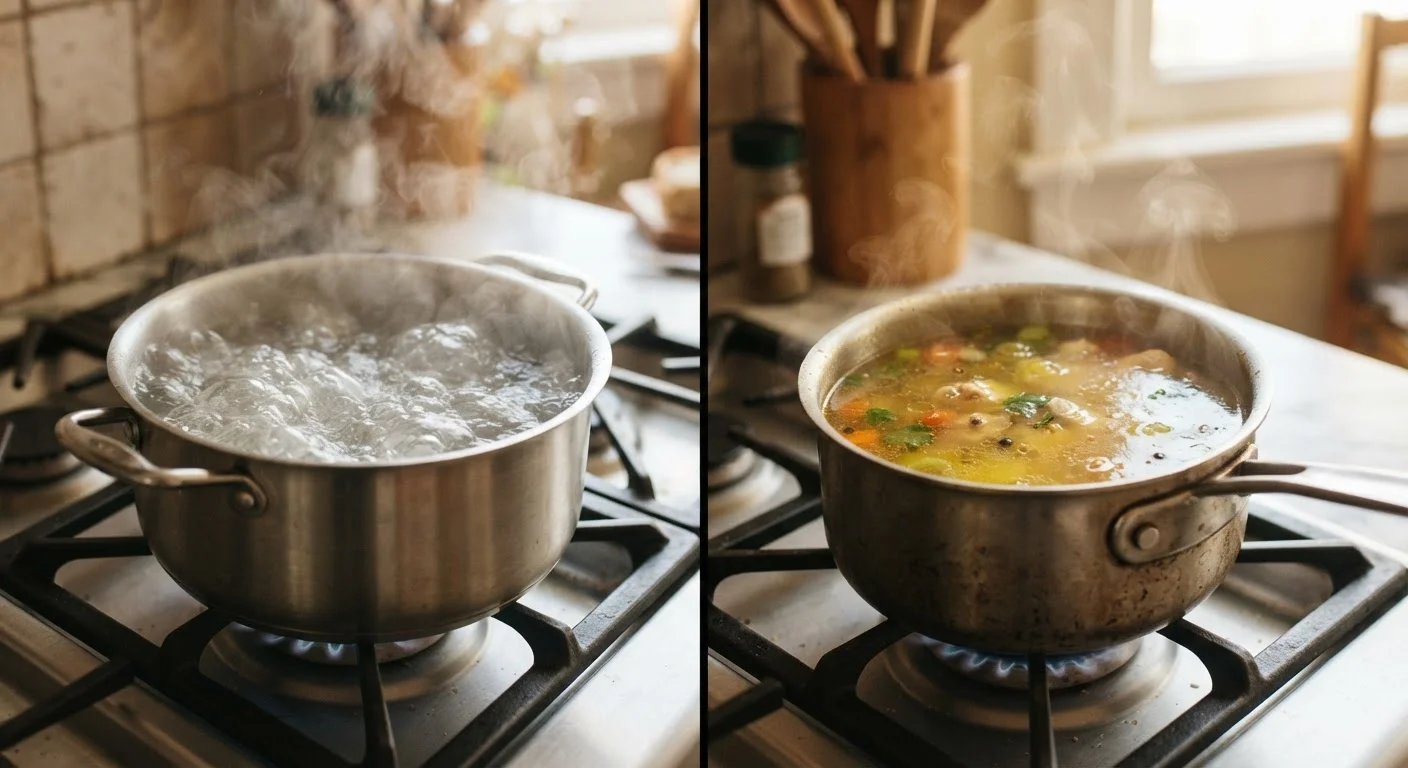
Option A
Boiling
High-heat, high-energy cooking at full throttle.
Best for: Best for pasta, blanching vegetables, and cooking grains quickly when you need fast results and aren't worried about delicate flavors.
Option B
Simmering
Low-and-slow liquid cooking for depth and tenderness.
Best for: Best for soups, stocks, braises, and sauces where you want flavors to develop gradually without toughening proteins or clouding liquid.
What Actually Separates a Boil from a Simmer
Both boiling and simmering involve heating liquid - but temperature and energy level make them completely different cooking environments. A full boil reaches 212°F (100°C) at sea level, producing large, rapid, churning bubbles across the entire surface. A simmer stays lower, typically between 185°F and 205°F, creating small, gentle bubbles that break the surface intermittently - sometimes described as a lazy bubble or a soft blip.
The visual cues are your most reliable guide. A simmer looks almost calm, with wisps of steam and the occasional bubble rising lazily. A rolling boil is unmistakable - vigorous, loud, and impossible to stir down. Between the two sits a brisk simmer or low boil, where bubbles are more frequent but not yet frantic. Knowing where your pot sits on that spectrum is one of those foundational kitchen skills that quietly improves everything you cook.
| Criterion | Boiling | Simmering |
|---|---|---|
| Temperature range | 212°F / 100°C | 185-205°F / 85-96°C |
| Bubble appearance | Large, rapid, rolling bubbles | Small, gentle, intermittent bubbles |
| Best for | Pasta, grains, blanching | Soups, stocks, braises, sauces |
| Effect on proteins | Can toughen and dry out | Tenderizes slowly, preserves moisture |
| Effect on broth clarity | Clouds and emulsifies fats | Keeps liquid clear |
| Time efficiency | Faster for basic cooking tasks | Slower, but builds more depth |
| Energy/heat required | High heat throughout | Medium-low, easy to maintain |
When Boiling Is the Right Call
Boiling earns its place with foods that benefit from high, aggressive heat and plenty of water movement. Pasta is the classic example - the rolling action keeps pieces separated and circulating for even cooking. For more on whether common pasta habits are actually helping or hurting you, see our piece on common pasta cooking myths.
Blanching vegetables is another boiling win. The rapid heat sets color and halts enzyme activity quickly, which is exactly what you want before freezing or before a quick ice bath. Grains like rice, farro, and barley can also be started at a boil, though many recipes then drop the heat to let them absorb liquid at a gentler pace.
Where boiling struggles: proteins. Cooking chicken breasts or fish at a rolling boil squeezes out moisture rapidly, leaving them rubbery. And a hard boil will turn a clear broth opaque as fats and proteins are violently emulsified into the liquid - something stock-makers specifically try to avoid.
Why Simmering Builds Better Flavor
Simmering is where most of the interesting kitchen magic happens. The lower temperature allows collagen in tougher cuts of meat to gradually convert to gelatin - the process that makes a braised short rib fall apart or gives a homemade stock its silky body. That transformation takes time and patience, and a full boil can't replicate it by going faster; it just dries things out and hardens proteins instead.
For soups and stocks, the gentle agitation of a simmer coaxes flavor compounds out of aromatics, bones, and vegetables without violently breaking down the liquid into an opaque, greasy mess. Our guide on stock, broth, and bone broth differences goes deeper into why that clarity matters and how each liquid is made. The world's most beloved broths - explored through a cultural lens in our piece on soup as a cultural mirror - are almost universally simmered, not boiled.
Sauces also respond well to the simmer. Controlled, low-heat reduction concentrates flavors without scorching the bottom of the pan. If you're building a pan sauce and want to understand how fat and liquid stay together as it reduces, emulsification in sauces is worth a read.
~27°F
Temperature gap between simmering and boiling
Water simmers from roughly 185°F and doesn't reach a full boil until 212°F at sea level - a gap that makes a significant difference in how food cooks.
Hours
Typical simmer time for bone broth
Traditional bone broths are often simmered for 6-24 hours to extract collagen and minerals from bones, a process that would produce very different results at a boil.
Reading the Pot: Practical Tips for Getting It Right
The single most common mistake home cooks make is walking away after setting liquid to boil and never adjusting the heat. Recipes that say "bring to a boil, then simmer" mean exactly that - reduce the heat once you've hit the boil, or you'll overcook and dry out whatever is in the pot.
A few practical habits help:
- Use a lid strategically. A covered pot holds heat and reaches a boil faster, but once you're simmering, a partially cracked lid lets steam escape and prevents the temperature from climbing back up.
- Watch the edges, not the center. Simmering activity often shows first at the sides of the pot where heat from the burner is closest.
- Trust your thermometer. If you're ever unsure whether you're simmering or at a low boil, an instant-read thermometer removes all guesswork.
Both techniques are just tools - and like the difference between sautéing and stir-frying (explored in our breakdown of sauté, stir-fry, and pan-fry), the right choice depends entirely on what the food needs, not on habit or convenience.
The content on this site is for informational purposes only and is not a substitute for professional advice. Always consult a qualified professional for guidance specific to your situation.