

More Than a Shaker on the Table
Most of us encounter salt as the last step - a few shakes over a finished plate. But professional cooks treat salt completely differently. They add it in stages, at different points in the cooking process, because they understand that salt isn't just a flavoring agent. It's a tool that physically changes ingredients and controls what happens inside food as it cooks.
Think of it this way: sugar makes things sweet, acid makes things bright, fat makes things rich. Salt does something harder to pin down - it makes everything more itself. A ripe tomato tastes more like a tomato with a pinch of salt. A piece of grilled chicken tastes deeper and more savory. That's not just perception; it's chemistry.
For anyone building kitchen confidence, understanding salt's many functions is as foundational as learning the difference between sautéing and stir-frying. Once it clicks, a lot of other cooking decisions start to make more sense.
Salt and Moisture: The Osmosis Effect
One of salt's most practical functions is drawing moisture out of food - a process driven by osmosis. When salt is applied to a vegetable or protein, water moves from inside the cells toward the surface where salt concentration is higher. This happens surprisingly quickly.
For vegetables like eggplant, zucchini, or cucumber, this is useful in a few ways. It removes excess water that would otherwise steam the vegetable during cooking instead of letting it brown properly. It also concentrates flavor. A salted cucumber that sits for 20 minutes before being dressed will taste more intensely like cucumber - and stay crunchier in the salad - than one that hasn't been treated.
With proteins, this gets more interesting. Salting a steak or chicken breast in advance (a technique called dry brining) pulls moisture to the surface initially, but then the liquid gets reabsorbed along with the dissolved salt. The result is meat that's seasoned all the way through rather than just on the outer layer - and the salt restructures proteins in a way that actually helps retain moisture during cooking.
30-40 min
Optimal dry-brine time for chicken breasts
Food science sources generally suggest that even a short salting window of 30-40 minutes improves moisture retention and surface browning in poultry.
~1-2%
Salt concentration in fermentation brines
Traditional lacto-fermentation recipes typically use a 2-3% salt-to-water ratio by weight to safely encourage beneficial bacterial activity.
3x
Volume difference between table salt and flaky salt
By volume, flaky salts can measure up to three times less sodium per teaspoon than fine table salt, making type-swapping in recipes risky without adjustment.
Salt as a Flavor Architect
Salt's flavor-enhancing role goes well beyond making things taste salty. It suppresses bitterness, which is why a pinch of salt in coffee or dark chocolate makes the flavor rounder and more pleasant. It also amplifies aromas and sweetness, which is why salted caramel became so popular - the salt doesn't fight the sugar, it elevates it.
This is also why properly salted pasta water matters so much. Pasta absorbs the cooking water as it softens, which means the water itself seasons the noodles from within. No amount of sauce will fully compensate for bland pasta. There are a lot of pasta myths worth unpacking, but under-salted water is genuinely one of the most common mistakes home cooks make.
Salt also interacts with the five basic tastes differently, which helps explain why different culinary traditions balance it in distinct ways. How cultures prioritize tastes like umami, sour, and bitter reflects centuries of understanding how salt plays alongside other flavor notes.
Controlling Fermentation and Preservation
Before refrigeration, salt was one of the primary tools humans used to keep food safe. That's not just historical trivia - salt preservation has shaped entire food cultures. Preserved foods traveled the Silk Road, and salt made that possible.
The mechanism is straightforward: salt creates an environment that harmful bacteria struggle to survive in, while beneficial microorganisms like lactobacillus thrive. This is how fermented foods like sauerkraut, kimchi, and pickles are made - salt draws moisture out of vegetables to create a brine, then controls which microbes dominate the fermentation process.
In bread baking, salt plays a related role. It slows yeast activity, preventing dough from rising too fast. This longer, slower rise is responsible for the complex flavor of a good sourdough or baguette. Skip the salt, and the bread rises quickly but tastes flat and gummy.
Understanding salt this way - as a biological regulator, not just a seasoning - reframes how it shows up across global food traditions. Miso, preserved lemons, anchovies, aged cheese: salt is a quiet architect behind all of them. See how single ingredients can define entire culinary traditions in our look at ingredients that define their home cuisines.
A Quick Note on Salt Types and Measurement
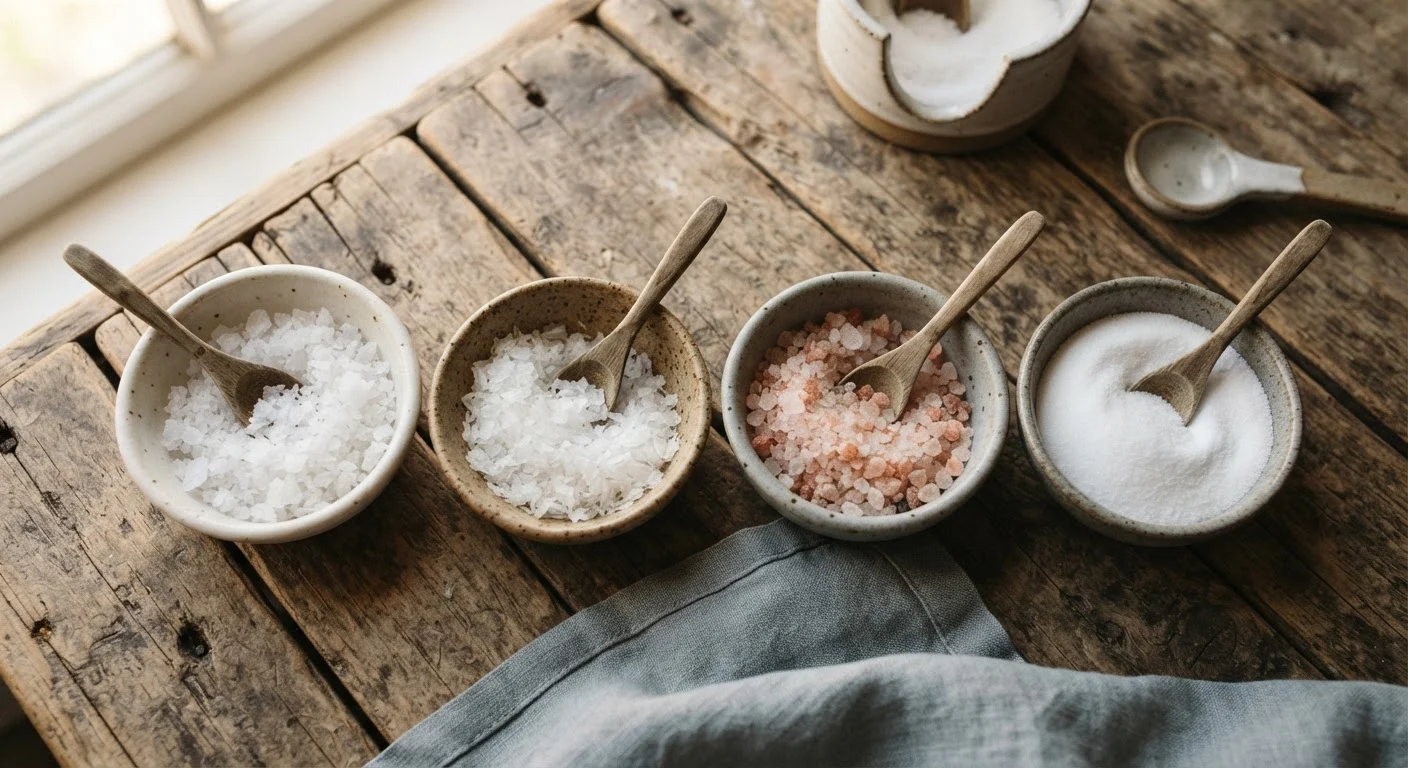
Not all salt behaves identically, and grain size matters more than most beginners realize. Table salt is very fine and dense - a teaspoon contains significantly more sodium than a teaspoon of coarse kosher salt. This is why a recipe developed with kosher salt can end up over-salted if you substitute table salt volume for volume.
Flaky sea salts like fleur de sel are typically used as finishing salts - added at the end for texture and a burst of flavor - rather than for cooking, where their delicate structure dissolves and the difference disappears. Coarser salts work well for seasoning meat, blanching vegetables, or adding to pasta water, where their slower dissolution is actually an advantage.
The practical takeaway: when in doubt, add salt gradually, taste as you go, and remember that layering salt throughout the cooking process - not just at the end - gives you far more control over the final result.
Layer Salt Throughout Cooking
Rather than salting only at the end, add small amounts at each stage - when you start cooking onions, when you add proteins, when you add liquid. This builds depth of flavor gradually and gives you much better control over the final seasoning. Tasting as you go is the most reliable way to get it right.
Frequently Asked Questions
Salt suppresses bitter compounds and amplifies aromas, making other flavors more prominent. It doesn't just add a salty taste - it acts as a flavor amplifier for sweetness, savoriness, and complexity already present in the ingredients.
Kosher salt has larger, coarser grains and no additives, while table salt is finely ground and often contains iodine and anti-caking agents. Because of the difference in grain size, the same volume of table salt is significantly saltier than kosher salt, so they're not always interchangeable measure for measure.
Yes. Salting draws out excess moisture through osmosis, which concentrates flavor and improves texture. For eggplant or zucchini, pre-salting prevents sogginess. For cucumber salads, it creates a crunchier, more flavorful result.
Pasta absorbs water as it cooks, and that water seasons the pasta from within. Without salt in the water, the noodles themselves will taste bland no matter how flavorful the sauce is. Many cooks describe well-salted pasta water as tasting 'pleasantly like the sea.'
Absolutely. Salt controls yeast activity, slowing fermentation to give dough a more complex flavor and a stronger gluten structure. Bread made without salt tends to rise too fast and tastes flat.
Yes, and it's difficult to fix once it's in a dish. The key is to add salt gradually and taste as you go, rather than salting heavily at the end. Layering salt throughout cooking - not just at the table - gives the best results.
The content on this site is for informational purposes only and is not a substitute for professional advice. Always consult a qualified professional for guidance specific to your situation.