

Why Pasta Myths Are So Stubborn
Pasta is one of the simplest foods to cook - boil water, add noodles, drain. And yet a surprising number of well-meaning kitchen habits are based on folklore rather than food science. These myths spread because pasta cooking often produces acceptable results even when you do it wrong. The dish ends up on the table, so no one questions the method.
But understanding what actually happens in that pot of boiling water can make a real difference in texture, flavor, and how well your sauce sticks. Whether you're a complete beginner or someone who has been making pasta for years, a few of these corrections might surprise you. For a deeper look at the cultural history behind the noodle itself, see Noodles, Pasta, and Everything In Between.
Myth
Adding oil to the pasta water keeps the noodles from sticking together.
Fact
Oil floats on water and has almost no contact with noodles while they cook. It does coat noodles after draining - which actually makes sauce slide off.
The oil-in-the-water habit is one of the most widespread pasta myths. Because oil and water don't mix, the oil sits on the surface of the boiling water and has minimal interaction with the pasta as it cooks. Once you drain the pasta, any residual oil coats the noodle surface - creating a barrier that prevents sauce from clinging properly.
The real way to prevent sticking is to use plenty of water, stir the pasta within the first couple of minutes of cooking (when the surface starch is most sticky), and not let it sit in the colander too long after draining.
Myth
You should rinse pasta with cold water after draining to stop it from cooking.
Fact
Rinsing strips away surface starch that helps sauce adhere. It also cools the pasta rapidly, which makes it absorb sauce less readily.
Cold rinsing is occasionally appropriate - for pasta salads, for example, where you want the noodles cool and separate. But for a hot pasta dish, rinsing is counterproductive. The starchy surface of a freshly drained noodle is exactly what a sauce grips onto. Remove it, and even a well-made sauce will pool at the bottom of the bowl rather than coat each strand.
If you're worried about overcooking, the better move is to pull the pasta out of the water about a minute before the package suggests, then finish it briefly in the pan with your sauce. This lets the pasta absorb flavor rather than just water.
Myth
Adding salt to pasta water raises the boiling point and speeds up cooking.
Fact
Salt does technically raise water's boiling point, but the quantity used in cooking has almost no measurable effect on boiling time. The real value is flavor.
This is one of those technically-true-but-practically-irrelevant facts. Yes, dissolved salt raises the boiling point of water - but the effect at typical cooking quantities (even a generous tablespoon in a large pot) is so small it's essentially unmeasurable. You would need to add an impractical amount of salt to actually speed up cooking.
What salting pasta water genuinely does is season the pasta throughout the cooking process. Pasta is porous when hot, and it absorbs some of the cooking water as it cooks. Unsalted pasta cooked in unsalted water will taste flat regardless of how good your sauce is. The general guidance from cooks is that pasta water should taste noticeably salty - often described as "like the sea," though that's an exaggeration.
Myth
Breaking long pasta like spaghetti before cooking makes it easier to handle and eat.
Fact
Long pasta is designed to be twirled, and breaking it shortens the strands in a way that changes both texture and how the sauce behaves on the noodle.
Breaking spaghetti or linguine is a practical shortcut, but it's worth knowing what you're giving up. Long strands are engineered (and traditional) to be wound around a fork, which naturally picks up sauce in the twirl. Shorter broken pieces behave more like a different pasta shape - and certain shapes genuinely work better with certain sauces.
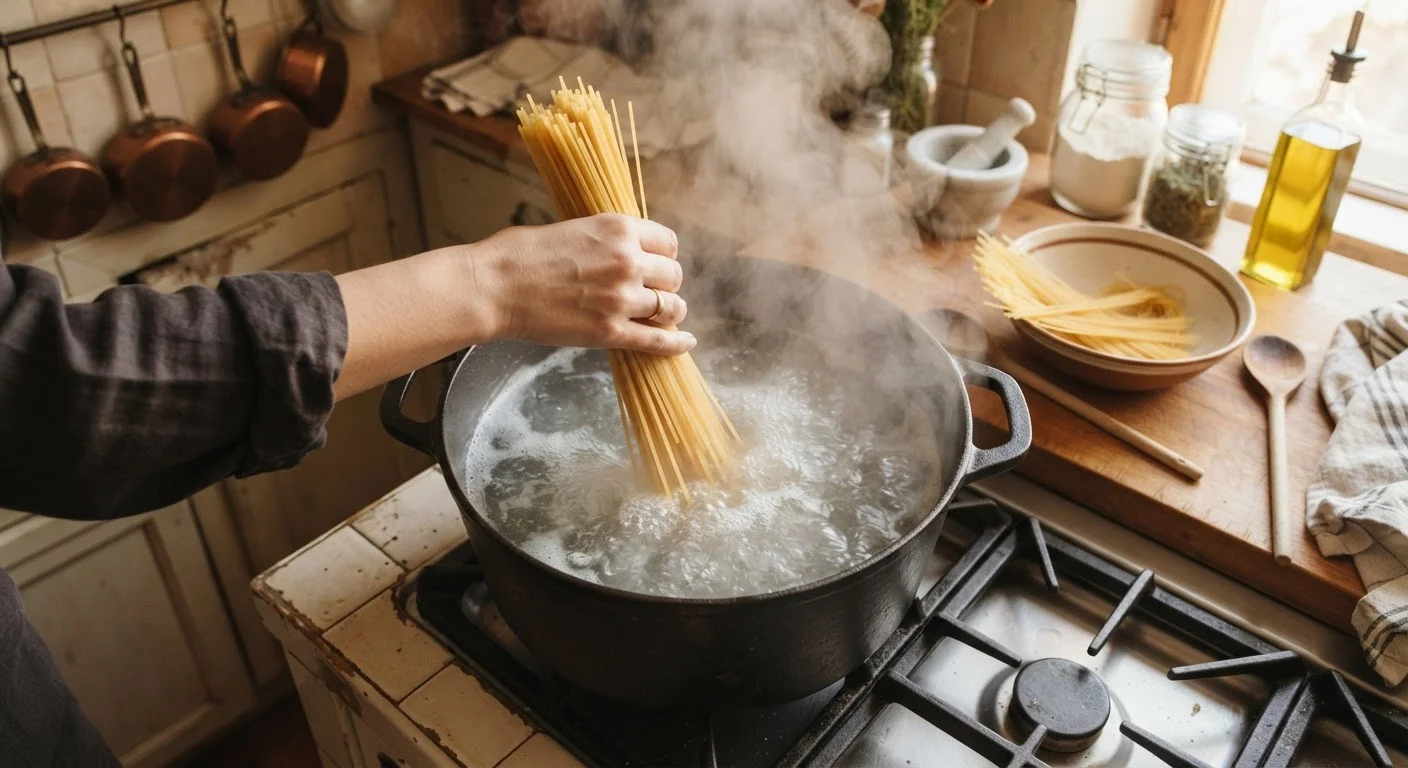
To fit long pasta in the pot without breaking it, simply hold the bundle at one end and lower it in. As the submerged ends soften (usually within 30-45 seconds), gently push the rest in and stir. No snapping required.
Myth
Pasta water is useless once the pasta is done - just pour it down the drain.
Fact
Starchy pasta water is a useful cooking ingredient. A ladle or two stirred into your sauce can improve texture and help sauce cling to noodles.
Professional pasta cooking almost always involves pasta water as a finishing ingredient. The dissolved starch acts as a mild thickener and emulsifier, helping oil-based sauces like aglio e olio stay cohesive rather than separating. It also adjusts consistency - if a sauce is too thick, pasta water loosens it without diluting flavor the way plain water would.
Get in the habit of scooping out a mug or small bowl of pasta water before you drain. You may not always need it, but when you do, it's a simple way to improve the final dish.
The Science Behind a Better Bowl
Several of these myths trace back to a misunderstanding of what starch, salt, and heat actually do. When pasta cooks, it releases surface starch into the water - that's what makes the water look cloudy. That starchy water is genuinely useful. Stirred into a sauce at the end of cooking, it acts as a light emulsifier, helping fat and liquid stay cohesive. The science of emulsification is the same reason a splash of pasta water can rescue a broken or greasy sauce.
Salt, meanwhile, does far more in cooking than most people realize. In pasta water, it seasons the noodle from the inside out during cooking - something you simply can't replicate by salting the finished dish. For more on what salt actually does beyond seasoning, this piece on salt's many roles is worth a read.
~10g
Salt needed to season a large pot of pasta water
Food science educators commonly recommend around 10 grams of salt per liter of water for pasta - more than most home cooks typically use.
2-3 min
Stir window to prevent pasta clumping
Pasta releases the most surface starch - and is most prone to sticking - in the first two to three minutes after entering the water, making early stirring essential.
Heat management matters too. A rolling boil - not a gentle simmer - is what pasta needs. The vigorous movement keeps noodles from clumping and cooks them more evenly. If you've ever wondered why the same difference matters in other contexts, boiling vs. simmering breaks down how those two states produce genuinely different results across many dishes.
The content on this site is for informational purposes only and is not a substitute for professional advice. Always consult a qualified professional for guidance specific to your situation.