

Our Verdict
No single flavour hierarchy is more correct than another - each reflects a culture's ingredients, history, and sense of balance. Western palates historically skewed sweet and salty, but that's shifting as global cuisines gain wider exposure. Understanding why other traditions centre sour, bitter, or umami opens up both better cooking and genuine culinary curiosity.
| Best for | Recommended |
|---|---|
| Readers curious about why certain cuisines taste so different | Learning the dominant taste logic of that cuisine first |
| Home cooks wanting to add depth to their dishes | Incorporating umami-rich or sour ingredients for balance |
| Those exploring unfamiliar cuisines for the first time | Starting with sour or fermented flavours as an entry point |
The Five Tastes Aren't Equally Valued Everywhere
Scientists recognise five primary tastes: sweet, salty, sour, bitter, and umami (the savoury, protein-rich quality found in aged cheeses, mushrooms, and fermented foods). Every human palate can detect all five - but which ones get celebrated, amplified, or actively sought in a meal varies enormously by culture.
In much of the industrialised West, sweet and salty have historically dominated. Processed food development leaned heavily into both, partly because they trigger immediate reward responses. But step into Ethiopian, Filipino, Japanese, or Georgian cooking, and you'll quickly find that other tastes take the wheel - sometimes boldly.
This isn't about one culture having more sophisticated tastes than another. It's about different flavour philosophies shaped by climate, available ingredients, fermentation traditions, and centuries of culinary refinement. As ancient trade routes reshaped regional cuisines, so too did the ingredients they carried - and the tastes they introduced.
Sour as a Cornerstone, Not an Accent
In many cuisines, sourness isn't a garnish - it's the structural backbone of a dish. Consider the following:
- Filipino cooking relies heavily on asim (sourness), with dishes like sinigang built around tamarind, guava, or green mango as a souring base rather than as an afterthought.
- Georgian cuisine uses tkemali (sour plum sauce) and pomegranate as everyday condiments, giving meals a tart brightness that anchors rich meat dishes.
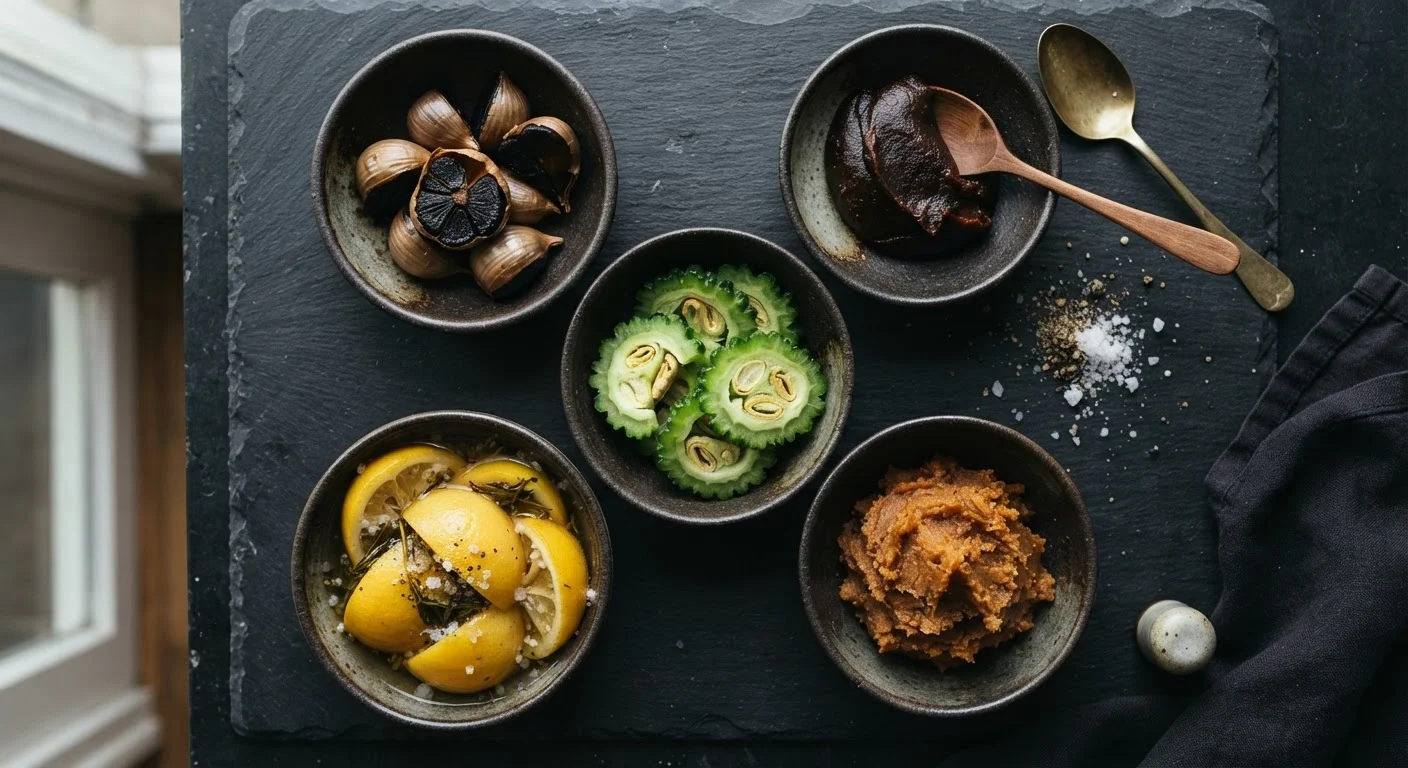
- West African and Levantine kitchens reach for ingredients like sumac, preserved lemon, and hibiscus - each delivering assertive acidity that the dish is designed around, not corrected.
The contrast with mainstream Western cooking is instructive. Acid often appears at the end of a Western recipe as a finishing touch - a squeeze of lemon to "brighten" a sauce. In sour-forward traditions, the acid is the point. Single ingredients like sumac or tamarind can define an entire cuisine's identity.
Try Building Around Sour First
If you want to explore sour-forward cooking, pick a single souring agent - tamarind paste, sumac powder, or preserved lemon - and build a simple dish where it plays the leading role rather than a supporting one. This quickly demonstrates how differently a meal feels when acid is a structural choice rather than a last-minute squeeze. You don't need to abandon your existing cooking style; just try one dish where sourness is the point.
Bitter: Misunderstood in the West, Celebrated Elsewhere
Bitterness gets a rough reception in modern Western food culture - it's been largely bred or processed out of commercial vegetables, and most people associate it with something going wrong. Yet across much of the world, it's a valued and intentional part of balanced eating.
In Indian Ayurvedic cooking, bitter is one of six tastes that a complete meal should include, with bitter melon (karela) cooked not despite its intensity but because of what it contributes to balance. Italian and Greek cuisine features bitter greens like radicchio, chicory, and dandelion as standard - often dressed simply to let the bitterness come through. Japanese cuisine honours nigai (bitterness) in ingredients like matcha, certain mountain vegetables, and the char on grilled foods.
Research suggests that repeated exposure to bitter foods increases tolerance and even preference over time, meaning much of what feels like a biological aversion is actually cultural conditioning. That same logic applies to spice tolerance - as explored in the piece on how heat tolerance is more cultural than biological.
| Taste | Culturally Central In | Common Sources | Western Status | |
|---|---|---|---|---|
| Sour | Filipino, Georgian, Levantine | Tamarind, preserved lemon, sumac | Finishing accent, not core | |
| Bitter | Indian, Italian, Japanese | Bitter melon, chicory, matcha | Often bred or processed out | |
| Umami | Japanese, Southeast Asian | Miso, fish sauce, dried seafood | Present but rarely named | |
| Sweet | Western, South Asian desserts | Sugar, fruit, honey | Dominant, widely commercialised | |
| Salty | Near-universal | Salt, cured meats, soy | Dominant alongside sweet | |
| Pungent / Astringent | Indian Ayurvedic tradition | Raw onion, turmeric, green tea | Rarely categorised as a taste |
Umami and the Fermentation Connection
Umami - the glutamate-driven savouriness identified and named in Japan in the early 20th century - is arguably the taste that most dramatically illustrates cultural divergence. East and Southeast Asian cuisines had been building umami depth for millennia through fermented pastes, aged fish sauces, dried seafood, and slow-cooked stocks long before Western food science gave it a name.
Miso, soy sauce, fish sauce (nam pla in Thailand, prahok in Cambodia), shrimp paste, and dried kombu all work as umami foundations. They're rarely the flavour you taste directly - they're the reason everything else tastes more like itself. Miso in Japan tells a cultural story that goes far beyond flavour.
Western cooking has its own umami traditions - aged Parmesan, Worcestershire sauce, dried mushrooms, anchovies in Italian cooking - but they've rarely been framed as a primary flavour goal the way sweet or salty have been. That's beginning to shift as understanding of umami becomes more widespread.
What Taste Priorities Reveal About a Food Culture
The way a cuisine weights its tastes reflects something deeper: what it considers a satisfying, complete meal. Japanese cooking often aims for balance across all five tastes in a single sitting. Many South Asian traditions structure meals around the interplay of six tastes (adding pungent and astringent to the Western five). French classical cuisine seeks harmony between fat, salt, and acid. Ethiopian injera-based meals layer fermented sourness against spiced stews deliberately.
None of these is a more evolved approach - they're different answers to the same question of what "delicious" means. Engaging with that difference with genuine curiosity rather than instinctive resistance is, in many ways, what adventurous eating actually looks like. It also connects to broader questions about why food choices are shaped by history and culture, not just personal preference.
If a dish tastes unfamiliar rather than unpleasant, that gap is almost always cultural rather than biological - and it's a gap that tends to close quickly once you understand what a cuisine is actually trying to do with flavour.
The content on this site is for informational purposes only and is not a substitute for professional advice. Always consult a qualified professional for guidance specific to your situation.