

Start here
How Long-Haul Travel Is Different
Next
Choosing the Right Luggage
Then
What to Pack for the Flight Itself
Almost there
Pre-Departure Habits That Actually Help
Final check
Common First-Timer Packing Mistakes
How Long-Haul Travel Is Different
A long-haul flight - generally defined as a flight lasting more than six hours - introduces packing challenges that a short domestic hop never does. You're not just packing for a destination; you're packing for the journey itself. Cabin pressure, recycled air, time zone shifts, and a confined seat for eight to fourteen hours all make demands on your body and your bag.
The core shift in mindset: your carry-on becomes your survival kit, not just a bag for things you might want. And your checked luggage needs to work smarter because you'll likely be covering multiple climates, activities, or both. If you haven't already walked through the basics of trip planning, the planning from scratch guide is a solid starting point before you open a suitcase.
Choosing the Right Luggage
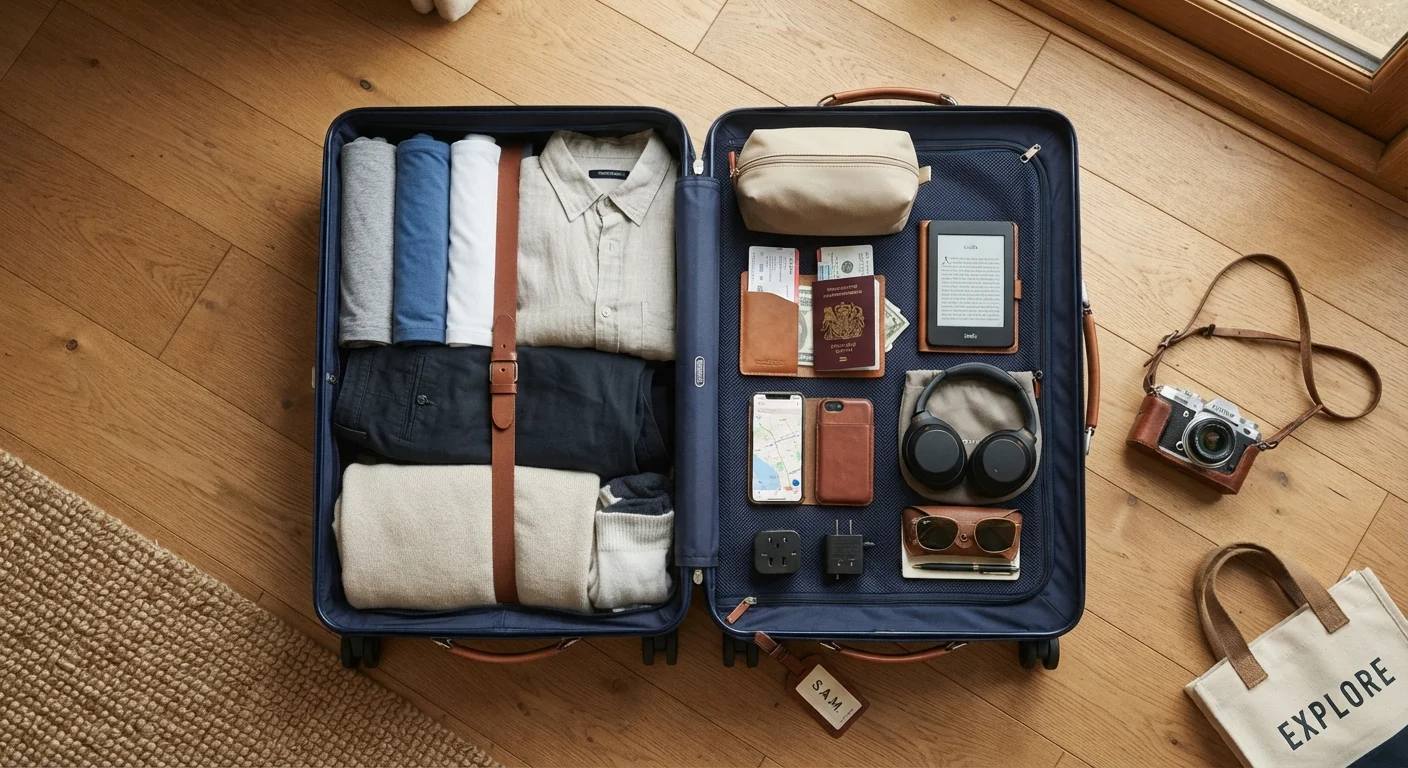
Luggage choice has real consequences on a long-haul trip. A hard-shell spinner suitcase offers better protection for fragile items and resists compression in overhead bins; a soft-sided bag gives you flexibility when you need to squeeze into a taxi trunk or overhead compartment. Neither is universally better - it depends on your itinerary.
Key considerations before you buy or borrow:
- Weight: Checked bag limits commonly run from 44 to 50 lbs (20-23 kg) in economy. Weigh your bag before you leave - overweight fees can be steep.
- Dimensions: Carry-on size limits differ between airlines, particularly on international routes. Verify your specific carrier's rules.
- Wheels and handles: You'll log more airport miles than you expect. A smooth-rolling, quality-handled bag reduces fatigue meaningfully.
For packing principles that hold regardless of bag type, smart packing fundamentals are worth reviewing before you start loading anything in.
Pack Your Bag, Then Remove 20%
A reliable rule of thumb among experienced travelers: once you think you're done packing, take out roughly a fifth of what's in the bag. Long-haul trips almost always involve more movement, more purchases, and more unexpected items than you anticipate. Starting with a little room to spare is a comfort, not a compromise.
What to Pack for the Flight Itself
Your in-flight bag deserves its own packing session, separate from your destination packing. The goal is comfort and contingency - not entertainment overload.
Comfort layer
- Neck pillow (inflatable versions save space)
- Eye mask and earplugs or noise-canceling headphones
- Compression socks - circulation support on flights over seven hours is genuinely useful
- A light layer like a thin zip hoodie; cabin temperatures vary widely
Contingency layer
- Any prescription medications in their original packaging
- A full change of clothes - spills and delays happen
- Copies of your passport, visa, and travel insurance documents
- A portable charger and the cables for your devices
Liquid restrictions apply here - see what carry-on liquid rules actually mean for a clear breakdown of the 100ml rule and its exceptions.
For items that experienced travelers quietly swear by, what seasoned travelers pack that first-timers miss is worth a read after you've got your list drafted.
Pre-Departure Habits That Actually Help
The 48 hours before a long-haul flight are where preparation either pays off or falls apart. A few targeted actions make a material difference:
- Confirm entry requirements. Visa rules, vaccination records, and customs declaration requirements vary by destination and change more often than most travelers expect. Always verify with your destination country's official government source and the US State Department's travel advisories before departure.
- Notify your bank. Flag your travel dates so your cards aren't flagged for fraud. It takes five minutes and prevents the frustrating experience of a declined card abroad.
- Check in online. Most airlines open check-in 24 hours before departure. Doing it early often gives you more seat selection options.
- Weigh your bags. Do this at home, not at the check-in counter.
- Photograph your luggage. A quick photo of your open bag contents and the outside of your suitcase is useful if something is lost or damaged.
For a full pre-departure walkthrough, the pre-departure checklist covers documents, devices, and home prep in one place.
Common First-Timer Packing Mistakes
Knowing what to avoid is as useful as knowing what to bring. These are the patterns that repeatedly catch first-time long-haul travelers off guard:
- Overpacking clothing. Most long-haul destinations have laundry options. Packing for every scenario leads to a bag you can barely lift. Why you keep overpacking breaks down the habits behind this instinct.
- Ignoring checked bag weight until the airport. Overweight fees can run $50-$200 per bag on international routes - a preventable expense.
- Packing valuables in checked luggage. Electronics, medications, and important documents belong in your carry-on, always.
- No buffer items for delays. Long-haul connections can go wrong. A snack, a phone charger, and a basic toiletry kit in your carry-on handle a several-hour delay far more comfortably.
- Forgetting destination-specific needs. Adapter plugs, local currency, and appropriate clothing for cultural norms are easy to overlook during home packing.
For a comprehensive end-to-end resource as your trip gets closer, the complete packing and prep guide covers the full picture from list-building to arriving at the gate.
Frequently Asked Questions
Most travelers do well with one checked bag and one carry-on, plus a personal item. Check your airline's specific allowances before packing - ticket class and route affect what's included. Consolidating into fewer bags also means less to manage at connections.
Keep medications, a change of clothes, travel documents, chargers, and any valuables in your carry-on. If checked luggage is delayed, these items keep you functional. A neck pillow, eye mask, and earplugs or noise-canceling headphones round out the comfort basics.
Adjust your sleep schedule a day or two before departure if possible, stay hydrated on the flight, and try to sync to local time when you arrive. Avoiding alcohol and heavy meals on the plane also helps your body adjust faster.
Yes - carry-on liquid restrictions apply only to your carry-on bag. Full-size toiletries are generally fine in checked luggage, though bottles can spill in transit, so sealing them in zip-lock bags is a practical precaution.
Give yourself at least three to five days. Starting early lets you spot gaps without last-minute panic buying, and it gives time to do laundry, locate documents, and confirm airline restrictions on luggage dimensions and weight.
Travel insurance can cover flight cancellations, medical emergencies abroad, and lost luggage - risks that are more consequential on long-haul trips where costs and distances are greater. Coverage terms vary widely by provider and policy, so read the fine print carefully before purchasing.
The content on this site is for informational purposes only and is not a substitute for professional advice. Always consult a qualified professional for guidance specific to your situation.