

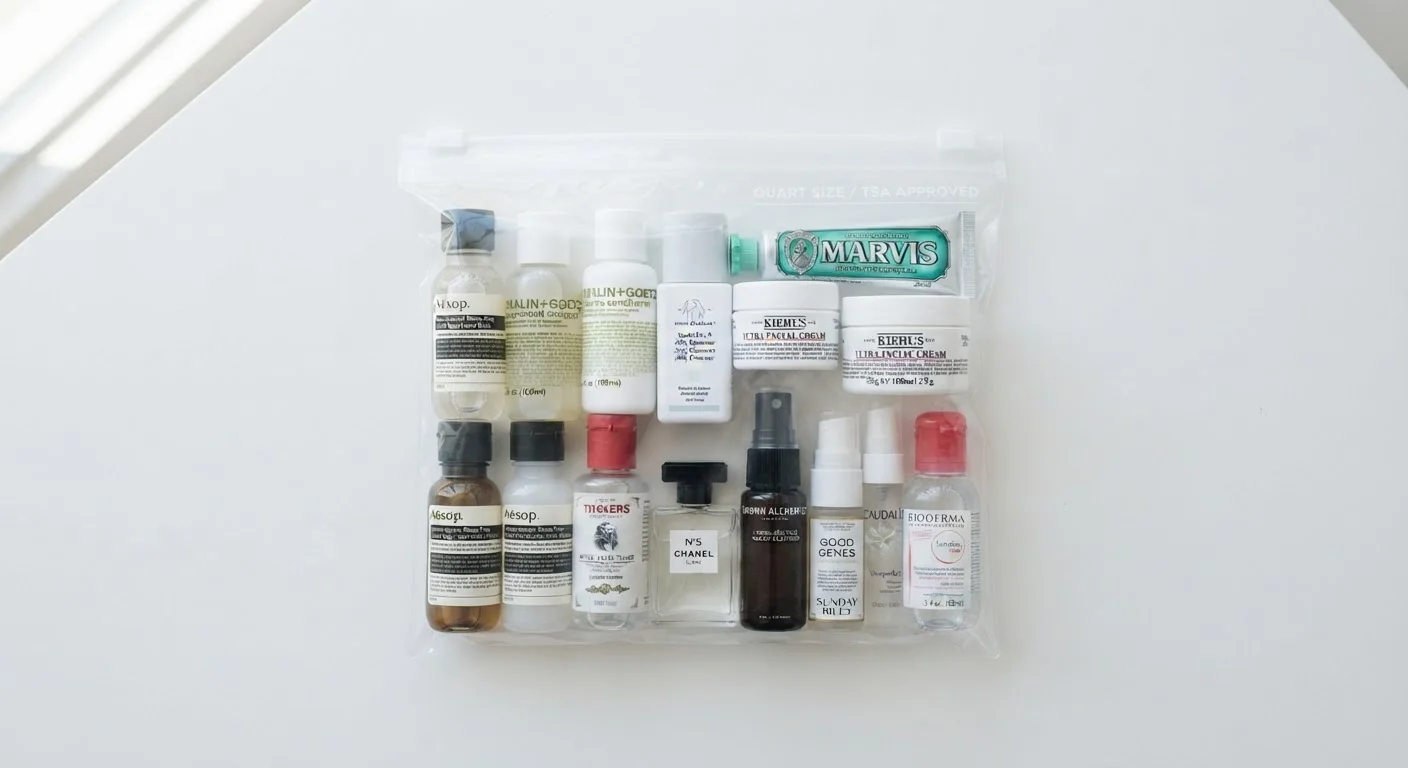
What Counts as a 'Liquid' at the Security Checkpoint
The word "liquid" in the 3-1-1 rule is much broader than most travelers expect. The TSA applies it to anything that can pour, spread, spray, squirt, or smear. That means:
- Gels - hair gel, aloe vera gel, contact lens solution
- Aerosols - dry shampoo, spray sunscreen, deodorant sprays
- Creams and lotions - moisturizer, sunscreen, face wash
- Pastes - toothpaste, nut butter, hummus
- Foods with spreadable or pourable textures - jams, sauces, yogurt, dips
If you're unsure whether something qualifies, the practical test is: could it spill or spread? If yes, it likely falls under the rule. This catches a lot of travelers off guard - particularly with food items packed for the flight.
Rules Vary Outside the United States
The 3-1-1 framework is U.S.-specific, though many other countries follow similar 100ml/1-liter-bag policies based on ICAO guidance. Some airports or routes may have stricter requirements - particularly for flights to or from certain destinations. Always check the aviation authority rules for your specific departure airport before you travel.
The Container Rule: It's About Capacity, Not Fill Level
One of the most common checkpoint mistakes is assuming that a larger container is fine as long as it isn't full. That's not how the rule works. A 6-ounce shampoo bottle that's 90% empty is still a 6-ounce container - it will be pulled from your bag.
What matters is the labeled capacity printed on the container, typically in fluid ounces (fl oz) or milliliters (mL). To pass security, the container itself must hold 3.4 fl oz / 100 mL or less. Decanting into smaller reusable travel bottles before your trip is the standard workaround for products that only come in larger sizes.
All compliant containers must then fit - comfortably closed - inside a single 1-quart (approximately 1-liter) clear, resealable plastic bag. One bag per passenger. If your toiletries don't fit in one bag, that's a signal to pare down or shift items to checked luggage. For a deeper look at when checked luggage makes more sense, see our carry-on vs. checked luggage comparison.
What's Exempt - and How to Handle It
A few categories are explicitly exempt from the 3-1-1 rule but come with their own procedures:
- Prescription and over-the-counter medications
- Liquid medications in quantities exceeding 3.4 oz are permitted. Tell the security officer before screening begins, and keep them separate from your carry-on bag for inspection. Having a prescription label can help, though it's not always required domestically.
- Baby formula, breast milk, and juice for infants
- These are allowed in reasonable quantities above the standard limit. They'll be screened separately, and officers may test them. You don't need to travel with an infant to carry breast milk.
- Duty-free liquids purchased after security
- Bottles bought at airside duty-free shops are permitted on board in their original sealed, tamper-evident bags, provided you haven't opened them. On connecting flights - especially international ones - rules can tighten, so check requirements for any transit country.
Practical Strategies to Stay Compliant Without Over-Packing
The most friction-free approach to the liquids rule is reducing how much you need to carry through security in the first place.
Switch to solid formats where possible. Shampoo bars, conditioner bars, solid face wash, toothpaste tablets, and solid sunscreen sticks are all exempt from the rule. They're also lighter and won't leak. If you're committed to carry-on-only travel, this shift makes a meaningful difference - for more on that approach, see the one-bag travel philosophy.
Use hotel or accommodation supplies strategically. Most hotels provide shampoo, conditioner, and body wash. If you're staying somewhere that offers these, you may not need to carry them at all.
Pack your quart bag last and keep it accessible. TSA requires the bag to be removed from your carry-on and placed in the bin separately. Packing it in an exterior pocket saves time and reduces the chance of a secondary bag search.
Pre-Pack Your Quart Bag at Home
Assemble your liquids bag before you leave, not at the airport. Lay out every liquid, gel, and aerosol you plan to carry and check that each container is 3.4 oz or under and everything fits in the bag with room to seal it. This takes about five minutes at home and avoids a stressful reshuffle at the checkpoint.
For more packing strategies that hold up in practice, our packing myths explainer covers what popular advice actually gets wrong.
Frequently Asked Questions
It applies to all liquids, gels, aerosols, creams, and pastes in your carry-on bag and at the security checkpoint. Exemptions exist for medications, baby formula, and breast milk. Items purchased at duty-free shops after the security checkpoint are generally allowed in their original sealed bags.
No. The restriction applies to the container's stated capacity, not how much liquid is in it. A 6-ounce bottle is a 6-ounce container regardless of fill level and will be confiscated at the checkpoint.
Similar rules exist at airports worldwide, but the specifics can differ. Many countries follow the same 100ml/1-liter bag framework established by the International Civil Aviation Organization (ICAO), but screening procedures and enforcement vary. Always check the rules for your departure country's aviation authority.
Yes. TSA uses a broad definition that includes anything that can spread, pour, squirt, or smear - which covers peanut butter, yogurt, jams, dips, and similar foods. These must follow the 3.4oz container rule or go in checked luggage.
A security officer will flag it during X-ray screening. You'll typically have the option to return it to the check-in desk to store it in checked baggage, give it up at the checkpoint, or in some airports, mail it home. Don't count on being able to consume it quickly to resolve the situation.
No - solid bars of shampoo, conditioner, and soap are not subject to the liquid rule and don't need to go in your quart bag. Solid deodorant sticks are similarly exempt, though gel or roll-on deodorants are not.
The content on this site is for informational purposes only and is not a substitute for professional advice. Always consult a qualified professional for guidance specific to your situation.