

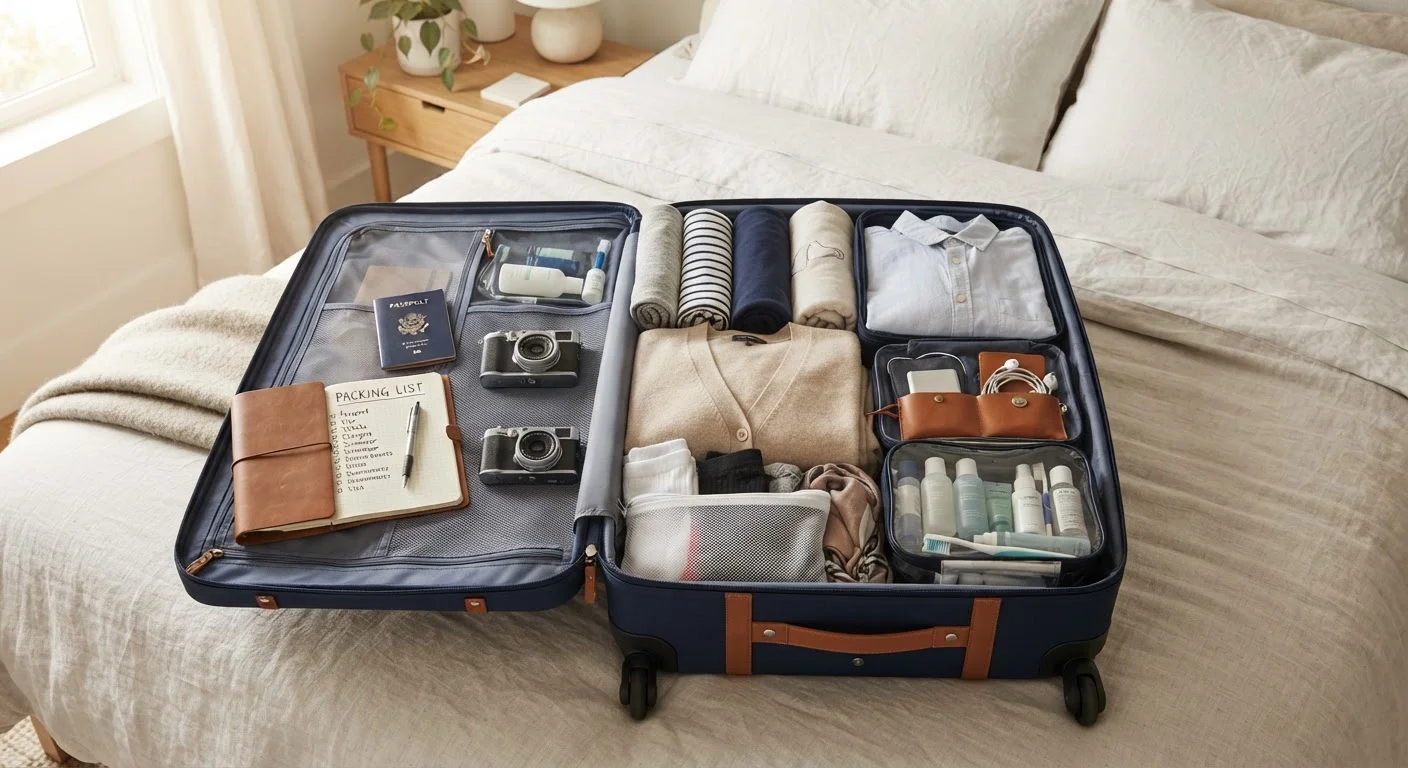
Why Packing Principles Matter More Than Packing Lists
A printed checklist is only as good as the thinking behind it. Most packing problems - lugging a bag that's too heavy, forgetting a critical item, or arriving with clothes you never wear - come from skipping the planning stage rather than from bad luck. Reliable packing habits apply whether you're heading out for a long weekend or three months abroad.
If you've ever wondered why you always seem to bring too much, the issue is rarely the list itself. It's usually the underlying habits and anxieties driving your choices - something worth understanding before you start. Explore what's really driving the overpack for a more honest look at that pattern.
The principles below are durable - they work across trip types, budgets, and traveller styles. Think of them as a decision framework, not a rigid formula.
Core Packing Practices That Actually Work
These practices are grounded in what experienced travellers consistently do differently - and what tends to go wrong when skipped.
Start with a master list, then subtract
Building a trip-specific list from a broad master template prevents both forgetting essentials and adding unnecessary items by impulse. It shifts packing from an emotional exercise into a deliberate one.
Choose your bag size before choosing what to pack
Your bag functions as a physical constraint on how much you bring. Selecting the right size for the trip type - before you start pulling items from the wardrobe - prevents the common habit of filling whatever space is available.
Pack clothing in a limited, cohesive colour palette
Neutral, interchangeable colours mean fewer total items cover more outfit combinations. This single habit often eliminates three to five clothing items without sacrificing flexibility.
Apply the one-third rule to toiletries and liquids
Toiletries are one of the heaviest and most duplicated categories in any bag. Buying travel-sized versions or decanting only what you'll actually use - roughly a third of a full bottle - keeps weight manageable and avoids security friction.
Pack for the activity, not the occasion
Overpacking frequently stems from imagining hypothetical scenarios rather than actual planned activities. Packing around confirmed itinerary items rather than 'just in case' events reduces dead weight significantly.
Do a full bag weigh-in before you leave home
Many travellers discover their bag is overweight at the check-in counter - an expensive, stressful moment. Weighing at home gives you time to remove items calmly rather than under pressure.
Common Mistakes Worth Avoiding
Even with good intentions, certain habits undermine otherwise solid packing. Popular advice isn't always accurate - before you reach for the vacuum bags or try to colour-coordinate six outfits, it's worth knowing which packing myths actually waste space.
One frequently overlooked factor: your bag size sets your packing ceiling. Travellers who consistently use a smaller bag report that constraints force better decisions. If your bag has room, most people fill it - even subconsciously.
Packing is also part of a broader trip-preparation picture. If you want an end-to-end framework covering everything from booking to day-of logistics, the complete packing and prep guide covers it all in one place.
After the Trip: The Review Habit That Compounds Over Time
The most underrated packing practice happens after you return home, not before you leave. Spend five minutes noting what you didn't use and what you wished you had. This review turns each trip into data for the next one.
Over time, you'll develop a personal packing baseline - a shorter, more accurate list that's specific to how you actually travel. This matters whether you're a solo traveller managing every bag yourself or part of a group where logistics get more complex. For context on how travel style affects preparation, see solo vs. group trip trade-offs.
Good packing also fits into broader planning habits. The complete trip planning framework shows how packing decisions connect to budgeting, itinerary structure, and booking - a useful read if you want to tighten up your whole approach.
The content on this site is for informational purposes only and is not a substitute for professional advice. Always consult a qualified professional for guidance specific to your situation.