

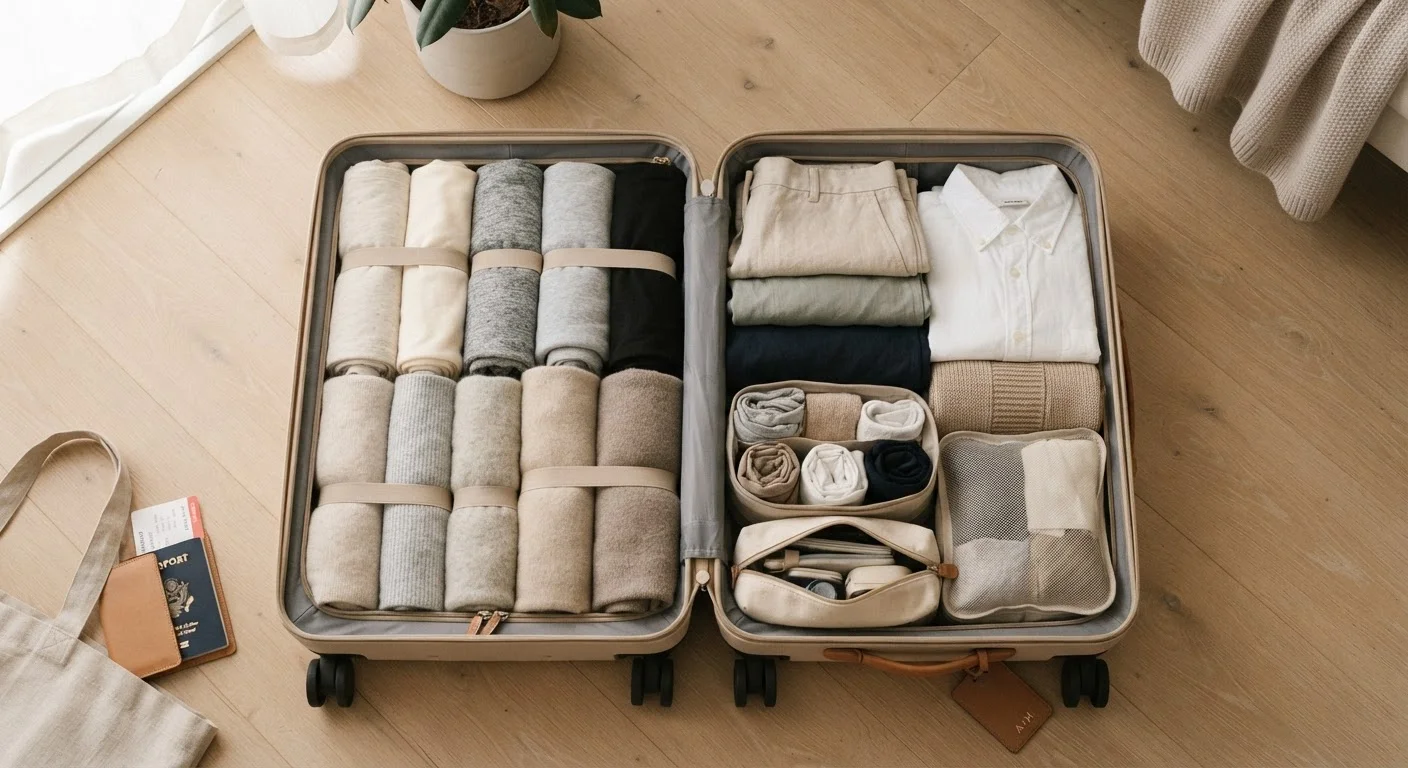
Option A
Rolling
The space-conscious, wrinkle-tolerant technique.
Best for: Casual travelers packing soft, wrinkle-resistant fabrics like T-shirts, jeans, and activewear.
Option B
Folding
The structured, shape-preserving classic.
Best for: Business travelers or anyone bringing dress shirts, blazers, or structured garments that need to hold their form.
What the Debate Actually Comes Down To
Packing method debates tend to get louder than the evidence warrants. The truth is that rolling and folding each have genuine strengths, and the right choice depends on what you're packing - not which camp you're loyal to.
The main variables worth comparing: space efficiency, wrinkle risk, and how well each method suits different fabric types. If you've been defaulting to one method for every item in your bag, you're likely leaving efficiency on the table. For a broader look at habits that lead to overstuffed luggage, understand why overpacking happens before you start packing at all.
| Criterion | Rolling | Folding |
|---|---|---|
| Space efficiency | Better for soft, flexible fabrics | Better for structured, flat-bottomed bags |
| Wrinkle risk | Low for casual fabrics; higher for delicates | Lower for formal/structured garments |
| Best fabric types | T-shirts, jeans, activewear, knits | Dress shirts, blazers, linen, silk |
| Bag compatibility | Duffels, backpacks, carry-ons | Hard-shell suitcases, flat-base bags |
| Visibility / access | Easy to see contents side-by-side | Stacked layers - top items easiest to access |
| Speed of packing | Slightly faster for casual items | Faster for structured garments |
Space Efficiency: Rolling Has the Edge for Soft Fabrics
Rolling compresses soft clothing more tightly than flat folding, which tends to trap air between layers. For items like T-shirts, athletic wear, underwear, and casual pants, rolling can meaningfully reduce the volume those items occupy. You can also fill awkward corners and gaps in your bag more easily with rolled items than with flat stacks.
Folding, by contrast, creates uniform flat layers that stack predictably - useful if you're fitting clothes into a rigid-sided suitcase with a flat base. Stacked folded clothes also make it easier to see everything at a glance, which some travelers prefer when they need quick access.
The space advantage of rolling is real but not dramatic. If your bag is already organized and you're not fighting for every inch, folding works fine. If you're trying to keep everything in a carry-on, rolling gives you more flexibility. For a reality check on what's worth optimizing, see packing myths that waste time and luggage space.
~30%
Estimated space saved by rolling vs folding
Travel and luggage experts commonly cite space savings of up to 30% when rolling soft fabrics, though results vary by item and bag type.
2-in-1
Methods used by experienced packers
Many frequent travelers report using both rolling and folding in the same bag, matching the method to the garment type rather than applying one approach universally.
Wrinkles: It Depends on the Fabric, Not Just the Method
Rolling is often credited with reducing wrinkles, and for wrinkle-resistant fabrics - polyester blends, merino wool, jersey knit - that holds up reasonably well. These materials don't crease deeply regardless of how they're packed.
For wrinkle-prone fabrics like linen, silk, rayon, or dress cotton, rolling can actually make things worse by creating tight spiral creases rather than the broader fold lines that come from flat folding. Structured garments - blazers, sport coats, tailored trousers - are best folded carefully or packed in a garment bag to preserve shape at the shoulders and seams.
The practical takeaway: match your method to your fabric. Roll the casual, soft, stretchy items. Fold or bag the structured, formal, or delicate ones. This hybrid approach is more effective than committing to one method across the board, and it maps well to the broader principles in smart packing habits for any trip.
When Your Luggage Type Changes the Equation
Your bag's shape influences which method works better. Soft duffel bags and backpacks suit rolling well - rolled clothes can be wedged into rounded corners and uneven spaces with minimal wasted room. Hard-shell suitcases with flat interiors often accommodate folded stacks more naturally, especially if they include dividers or compression panels.
For carry-on bags specifically, every cubic inch matters more. Rolling tends to pay off most in this context. If you're weighing whether to bring a carry-on versus checked luggage, the packing method question is secondary to that structural decision - compare carry-on vs checked luggage tradeoffs first, then optimize how you fill it.
One underused option: packing cubes. They work with both rolling and folding and add organization regardless of method. They don't compress clothing on their own, but they prevent your bag from becoming a jumbled mess mid-trip.
This article is for general informational purposes only. Travel conditions, airline baggage rules, and luggage sizing standards vary and are subject to change - always verify current requirements with your carrier before traveling.
The content on this site is for informational purposes only and is not a substitute for professional advice. Always consult a qualified professional for guidance specific to your situation.