

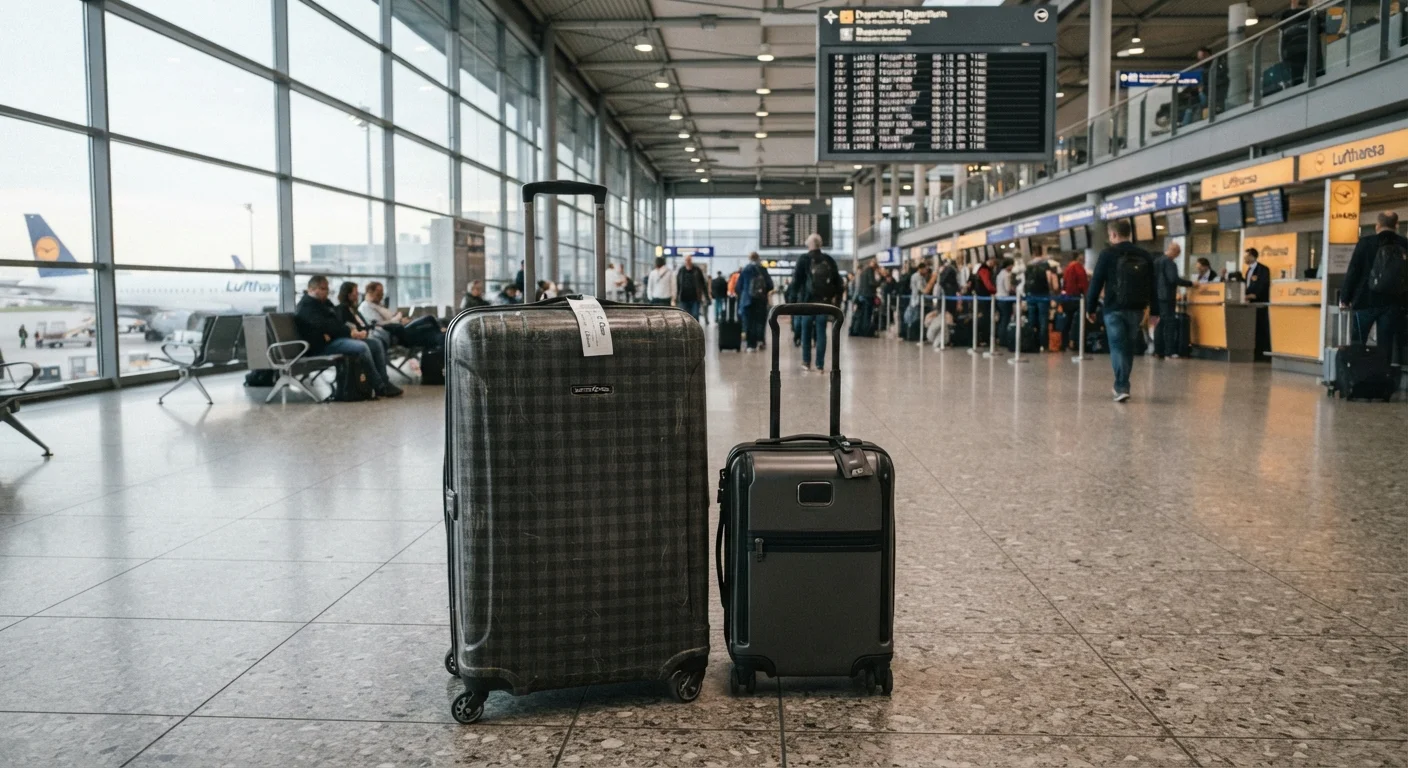
Option A
Checked Luggage
The spacious, flexible option for longer or more complex trips.
Best for: Travelers going longer than a week, checking in liquids or gear, or avoiding the hassle of overhead bin competition.
Option B
Carry-On
The streamlined, airport-friendly choice for speed and simplicity.
Best for: Short trips, business travel, or anyone who wants to skip baggage claim and move fast.
What You're Actually Choosing Between
The decision isn't really about suitcase size - it's about how you want your trip to feel. Checked luggage gives you space and freedom from liquid restrictions, but it costs more (many US carriers charge $30-$40 per checked bag each way), adds time at both ends of your flight, and introduces the risk of delayed or lost bags. A carry-on keeps you fast and self-sufficient, but imposes real constraints: most US airline overhead bin allowances cap bags at around 22 x 14 x 9 inches, and TSA's 3-1-1 liquid rule limits what you can bring in your cabin bag.
Neither setup is universally superior. The right call comes down to the specific demands of your trip - duration, activities, destinations, and how much friction you're willing to absorb. For a broader framework on building smarter packing habits regardless of bag type, see our core packing principles guide.
| Criterion | Checked Luggage | Carry-On |
|---|---|---|
| Typical additional cost | $30-$40 per bag, per way | Often included (varies by airline) |
| Time at airport | Check-in + baggage claim adds time | Faster - board and go |
| Liquid restrictions | No TSA 3-1-1 limit | 3-1-1 rule applies strictly |
| Risk of loss or delay | Yes - bags can be misrouted | Minimal - bag stays with you |
| Capacity | High - suits 10+ day trips | Limited - suits 7 days or fewer |
| Gear and specialty items | Accommodates bulky or restricted items | Strict size limits apply |
| Multi-city flexibility | More cumbersome between stops | Easier to move quickly |
When Checked Luggage Makes More Sense
Checked baggage earns its cost when the alternative is compromising your trip. A ten-day family vacation, a destination wedding, or a ski trip each involve items - dress clothes, ski boots, multiple pairs of shoes - that simply don't fit the carry-on format without serious sacrifice. If you're traveling somewhere that requires specific gear or formal attire, the checked bag fee is usually the smarter spend.
Longer trips also tip the math. Most experienced travelers find that beyond seven to ten days, the mental gymnastics of ultra-light packing start to outweigh the airport convenience. Re-wearing clothes more aggressively or hunting for laundromats in an unfamiliar city adds its own friction. Checked luggage removes that constraint.
One underrated scenario: traveling with liquids and toiletries for a longer stay. Full-size shampoo, medication in its original packaging, or skincare products don't comply with TSA carry-on rules. Checking a bag sidesteps the entire 3-1-1 calculation.
$30-$40
Typical US checked bag fee per leg
Most major US carriers charge per bag, per direction - a round trip with one bag commonly runs $60-$80 total.
20-30 min
Average baggage claim wait time
Industry estimates suggest domestic baggage claim averages between 20 and 30 minutes, though this varies by airport and flight load.
3-1-1
TSA liquid rule for carry-ons
The TSA requires liquids in carry-on bags to be in containers of 3.4 oz or less, all fitting in one quart-sized clear bag.
When a Carry-On Is the Smarter Call
For trips under a week - especially weekend getaways, solo business travel, or city-hopping - a well-packed carry-on is almost always worth the discipline it requires. You board faster, disembark faster, and never have to factor in a 20-minute carousel wait. On multi-leg itineraries or tight connection windows, that time savings is not trivial.
Carry-on travel also reduces financial exposure. Beyond bag fees, checked luggage can be delayed or misrouted - a real problem if your bag contains items you need immediately upon arrival. Keeping everything in the cabin gives you control. For travelers committed to making carry-on-only work consistently, the one-bag philosophy is worth understanding in full.
One practical note: carry-on size rules vary by airline and aircraft type. Regional jets sometimes require gate-checking carry-ons due to smaller overhead bins. Verify size limits with your specific carrier before you pack to avoid a surprise at the gate.
On the packing side, the method you use inside your bag matters too. See rolling vs folding clothes for a practical breakdown of which approach saves more space. And before you finalize your kit, it's worth checking common packing myths - some popular tactics actually cost you room rather than saving it.
The Cost Factor: More Than Just Bag Fees
The financial comparison is less straightforward than it appears. Yes, checked bag fees add up - a round trip with one checked bag on a major US carrier typically runs $60-$80. But carry-on-only travel can generate hidden costs too: buying travel-size toiletries repeatedly, shipping items ahead for longer trips, or paying to do laundry mid-trip.
Budget-conscious travelers should also account for the time cost of baggage claim. If you're renting a car or catching a connection, 20-30 minutes at the carousel is a real variable. For practical strategies on keeping overall trip costs manageable, the Travel on a Budget hub covers a wide range of approaches beyond just luggage decisions.
The calculation also shifts based on group size. A couple or family checking one shared bag splits the fee and can still pack efficiently - sometimes more so than two people each wrestling with carry-ons through a crowded terminal.
The content on this site is for informational purposes only and is not a substitute for professional advice. Always consult a qualified professional for guidance specific to your situation.