

Why Packing Myths Are So Sticky
Most packing myths spread because they contain a grain of truth. Vacuum bags do reduce volume. Rolling does reduce some wrinkles. Color coordination can help with outfit planning. The problem isn't that the advice is entirely wrong - it's that travelers apply it without understanding the conditions where it works and the ones where it backfires.
The result is bags that are over-packed, overweight, and full of items that never get used. For a ground-up approach to packing that actually holds across trip types, these core packing habits are a useful reference before you start loading anything into a bag.
Myth
Vacuum compression bags save significant luggage space and are worth the effort.
Fact
Vacuum bags reduce volume but not weight - and the weight limit is what usually grounds travelers, not volume.
Vacuum bags can halve the physical bulk of soft items like sweaters and jackets. But here's the problem most travelers discover at the check-in counter: compressed clothes still weigh exactly the same. If you're packing bulky winter gear, vacuum bags may let everything fit in the bag, but you'll frequently tip over the airline's weight limit and face fees. They also add the weight of the bags themselves, make mid-trip repacking a hassle, and can leave clothes badly creased. Use them selectively - for items you genuinely won't touch mid-trip - rather than as a default space solution.
Myth
Rolling your clothes always saves more space than folding them.
Fact
Rolling works well for casual fabrics but can create more bulk or worse wrinkles for structured or formal items.
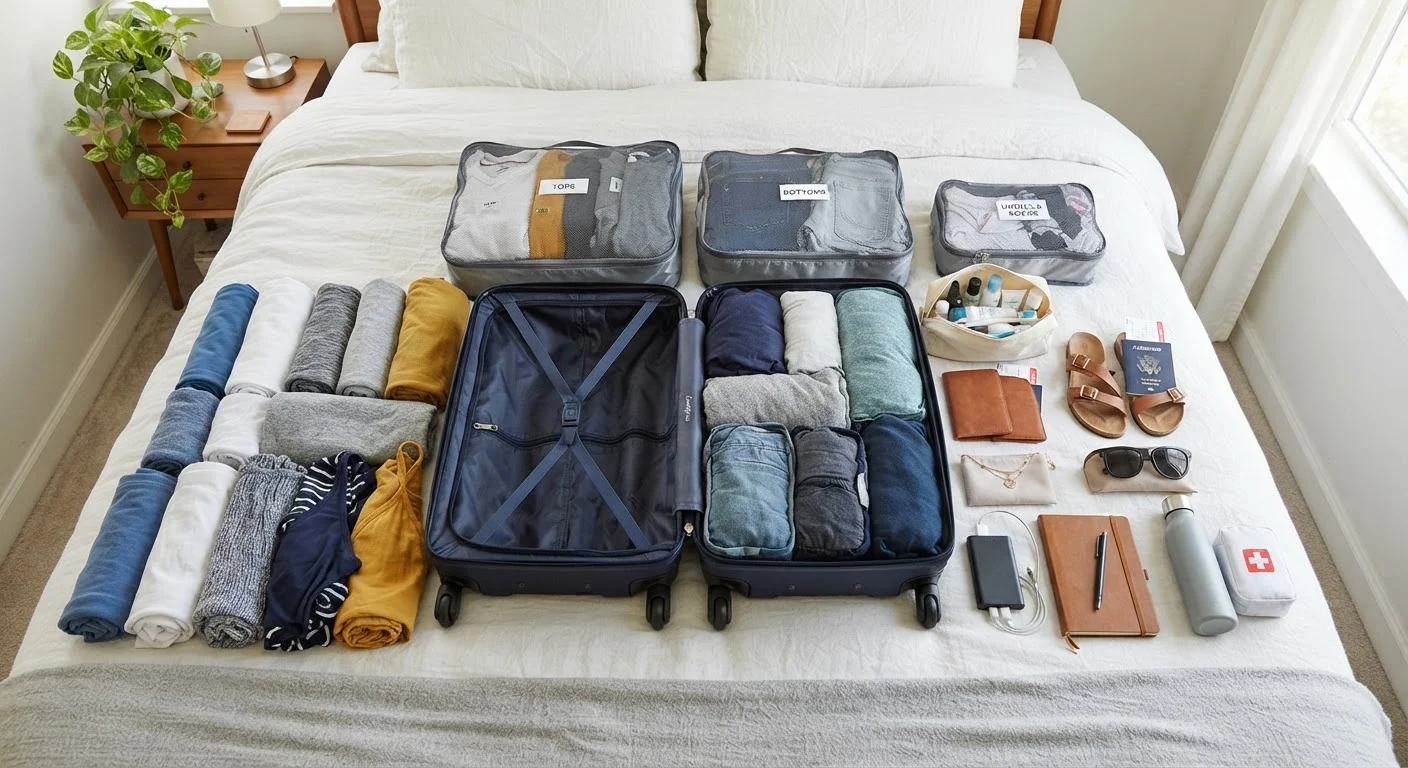
Rolling has earned its reputation - it genuinely works for t-shirts, jeans, and knitwear, and it does reduce wrinkles on those fabrics by preventing sharp creases. But it's not a universal win. Structured blazers, dress shirts, and formal trousers tend to wrinkle more when rolled than when folded flat or packed using the interfolding (bundle) method. The honest approach: roll casual pieces, fold or lay flat anything structured. For a balanced breakdown, see how rolling and folding compare across different clothing types.
Myth
Building a colour-coordinated wardrobe means you'll pack less.
Fact
Colour coordination is a useful mental framework, but it doesn't automatically reduce item count.
The idea is sound in theory: if everything matches everything, you can mix and match more outfits from fewer pieces. In practice, most people who colour-coordinate their travel wardrobe still pack the same number of items - they just feel better organised about it. The real space-saver is identifying how many wears you can get out of each item before it needs washing, then building around that number. A navy palette with 12 items isn't lighter than a mixed palette with 8. Restraint matters more than coordination. The habits behind overpacking go deeper than wardrobe strategy.
Myth
You should always pack for every scenario - you never know what might come up.
Fact
Packing for unlikely scenarios is the leading cause of overweight, overstuffed bags.
'Just in case' thinking is how a four-day trip ends up requiring a checked bag. The second pair of hiking boots for a city break, the formal outfit for a dinner that isn't scheduled, the rain jacket for a destination with a five-day clear forecast - these additions are individually reasonable and collectively crippling. A more useful framework: assess the probability and the consequence. Low probability, low consequence (a light drizzle)? Skip it or buy it there. High probability, high consequence (medication, a required adapter)? Pack it. Most 'just in case' items fall into the first category.
Myth
Checked luggage means less stress than managing a carry-on at the airport.
Fact
Checked luggage introduces delays, fees, and loss risk that carry-on travel avoids entirely.
Checking a bag feels like a release of responsibility - until it's delayed, misdirected, or adds 45 minutes to your arrival routine. For short or medium trips, a well-packed carry-on often means faster boarding, no baggage fees on many carriers, and walking straight out of arrivals. That said, checked luggage is the right call for trips requiring gear that can't go in the cabin, or when you're traveling for two weeks or more. The decision should be based on actual trip needs, not a default assumption that bigger luggage means more comfort. Compare the real tradeoffs of checked and carry-on luggage before you decide.
Myth
Packing cubes help you fit more into your bag.
Fact
Packing cubes organize your bag - they don't meaningfully compress clothes or add space.
Packing cubes have a genuine and loyal fan base, and they earn it - for organization, category separation, and making repacking at hotels faster. What they don't do is create extra room. Standard packing cubes simply contain your items in defined zones without compressing them. Compression cubes exist and do reduce bulk slightly, but the difference is modest. The real value of cubes is behavioral: they encourage you to commit to what fits in a defined space rather than stuffing the bag loosely until it zips. An honest look at what packing cubes actually do clarifies who benefits most.
Packing Smarter Starts Before You Open the Bag
The most consistent predictor of a well-packed bag isn't technique - it's intention. Travelers who decide upfront what they need for the specific trip they're taking, rather than the theoretical worst-case trip, pack lighter and report less travel stress.
Airline Weight Limits Are Non-Negotiable
No packing method - vacuum bags, compression cubes, or strategic folding - changes what your bag weighs on the scale. Airlines enforce weight limits at check-in, and fees for overweight bags can run $50-$100 or more per leg. Always weigh your packed bag before leaving home using a luggage scale.
That means checking the weather for your actual travel window, identifying how often you'll have laundry access, and being honest about how many formal or specialty-activity items you'll realistically use. If you're still working out how to get a full week's worth of clothing into minimal space, a realistic approach to week-long packing in a small bag covers the practical side. And if you're wondering whether carry-on-only travel suits your style, the one-bag philosophy lays out what it genuinely demands.
For a complete walkthrough from first packing decision to airport departure, the end-to-end packing and prep guide covers every stage in detail.
The content on this site is for informational purposes only and is not a substitute for professional advice. Always consult a qualified professional for guidance specific to your situation.