

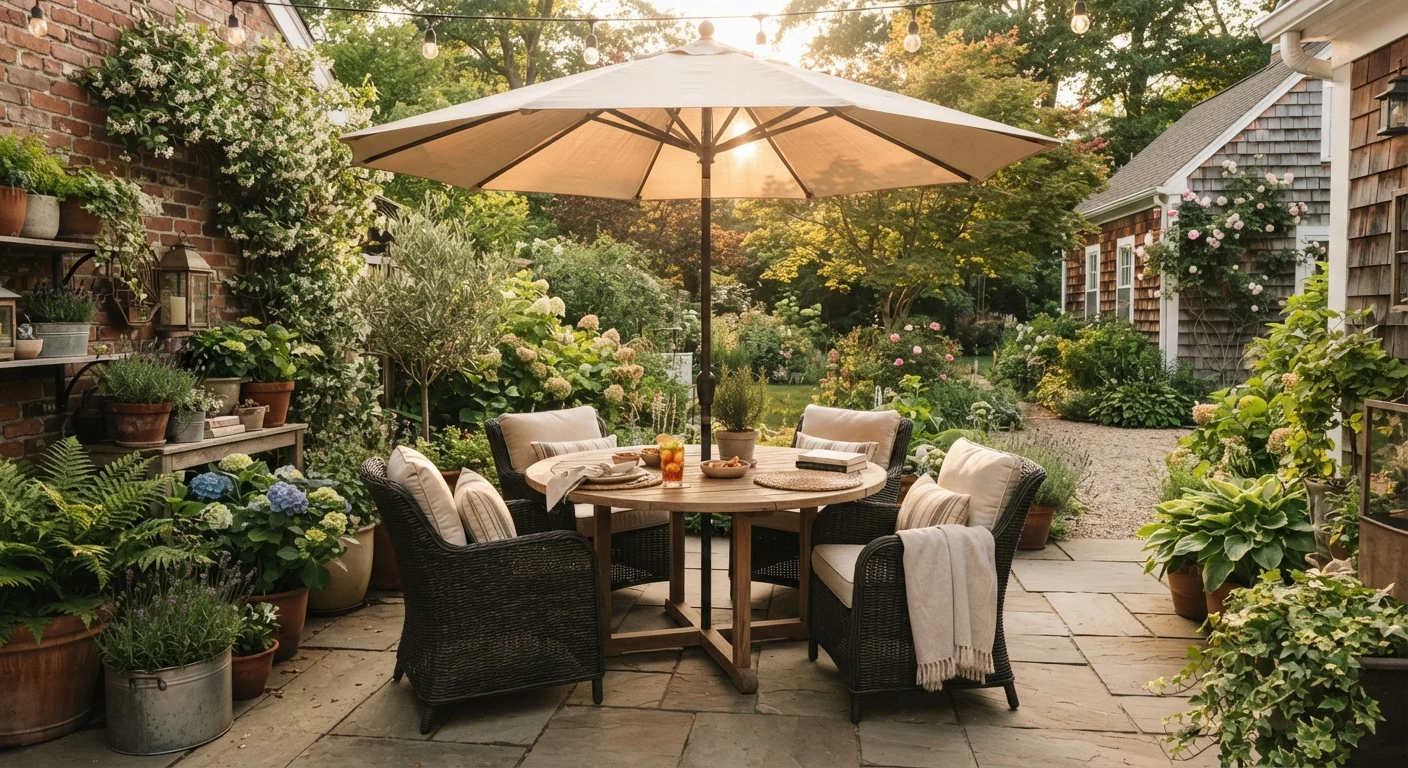
Why Most Outdoor Seating Areas Go Unused
Every neighborhood has one - a patio that looked great in the first summer and now collects leaves and the occasional forgotten lawn chair. The reasons outdoor seating areas fail aren't mysterious. They're usually too hot, too exposed, awkward to reach from the house, or just not sized for how the family actually sits together.
The good news is that most of these problems are solvable before a single paver gets laid. Planning around how you actually use your backyard - not how you imagine you might use it - is the difference between a space that earns regular use and one that doesn't.
Best Practices for a Seating Area That Works
These practices apply whether you're working with a modest concrete slab, a wood deck, or a gravel courtyard. The principles are the same.
Size the space for your realistic group, not your best-case scenario.
Oversized patios feel empty and uncomfortable for small gatherings; undersized ones feel cramped and go unused when guests arrive. Think about how many people typically sit together on an average weekend, not a holiday party.
Place the seating area as close to the house as the layout allows.
Convenience is a major driver of use. When people have to walk across the whole yard to reach a seating area, they often don't bother - especially for short breaks or morning coffee.
Prioritize a stable, level surface over decorative finishes.
Uneven or shifting surfaces cause wobbly furniture, tripping hazards, and water pooling. These annoyances add up fast and discourage use. A well-prepared base matters more than expensive materials on top.
Build in at least one form of privacy or visual enclosure.
Open spaces that feel exposed to neighbors or street traffic are psychologically uncomfortable, even if people can't articulate why. A sense of enclosure - even partial - makes a space feel like a destination rather than just an open patch of yard.
Choose furniture materials that can stay outside without constant upkeep.
If furniture has to be brought in every night or re-sealed every spring, it becomes a chore rather than a pleasure. Materials that stand up to weather without much intervention lower the barrier to using the space regularly.
Start With Shade, Then Everything Else
If you only fix one thing, make it shade. A seating area that bakes in direct afternoon sun from June through September simply won't be used - no matter how nice the furniture is. Before you finalize a location or layout, spend a few days observing where shade naturally falls in your yard at the hours you'd most like to sit outside.
Track Your Shade Before You Build
Spend a week noting where shadows fall in your yard at the hours you'd most likely sit outside - typically late morning through late afternoon. Photograph or sketch the patterns on a sunny day. This simple exercise prevents the most common outdoor seating mistake: placing a beautiful space in the wrong spot.
Understanding how sunlight moves across your outdoor space is the same skill that helps with plant placement. Our guide on what full sun and partial shade really mean can sharpen your eye for reading light patterns in any part of your yard.
Once you know your sun patterns, you can choose a naturally shaded spot, plan for a pergola or shade sail, or position a large umbrella for maximum coverage during peak hours.
Quick Wins to Get Started
You don't need a full renovation to improve your outdoor space. A few targeted moves can make a meaningful difference right away.
If you're also thinking about adding planting areas nearby, low-maintenance plants that forgive a busy schedule are worth a look - they add greenery and privacy without demanding constant attention.
The content on this site is for informational purposes only and is not a substitute for professional advice. Always consult a qualified professional for guidance specific to your situation.