

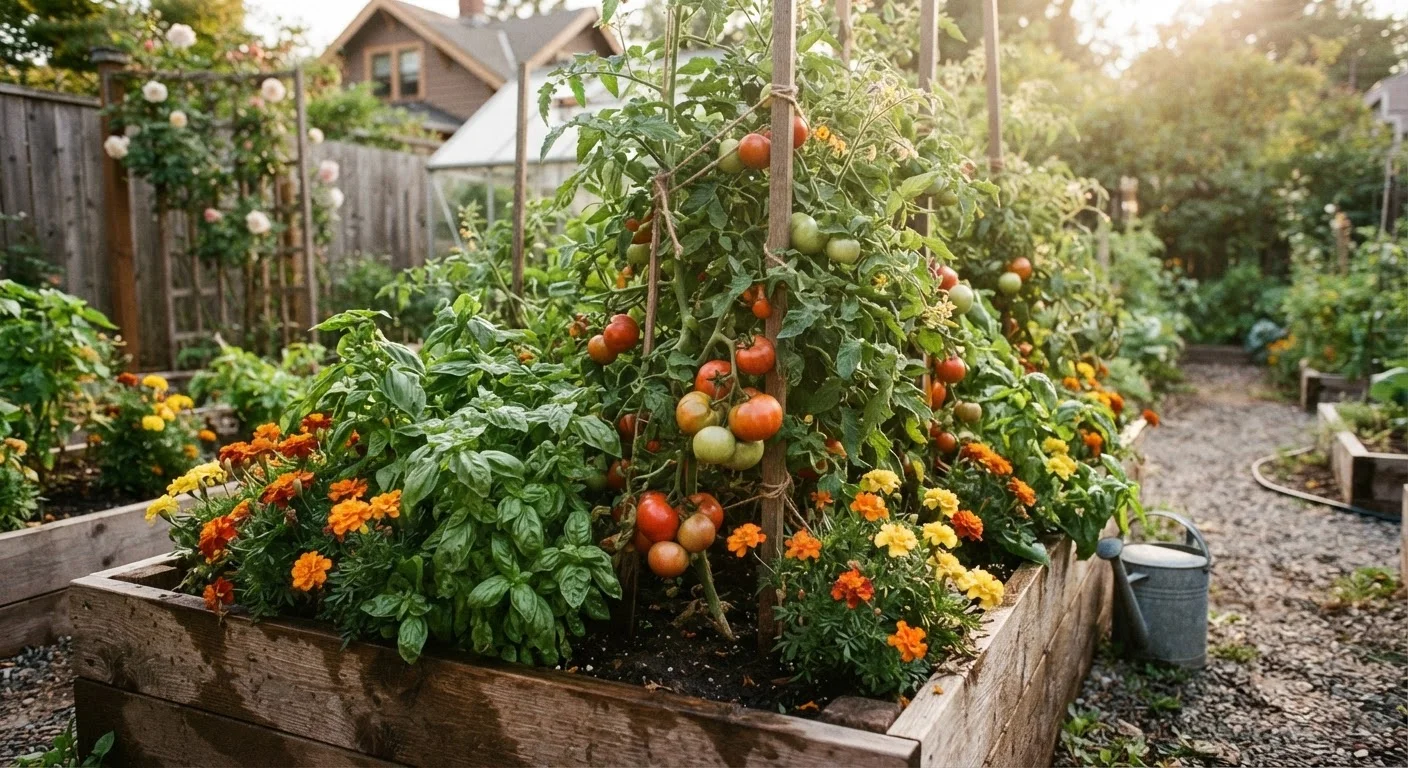
Why Plants Make Better Neighbors Than You Might Think
Plants don't exist in isolation in nature. They grow among dozens of other species, and over time they've developed chemical and physical relationships with the plants around them - some cooperative, some competitive. Companion planting is the gardener's way of deliberately using those relationships.
At its simplest, companion planting means putting plants near each other that do something useful for one another. That might mean one plant repels insects that would otherwise attack the other. It might mean one plant improves the soil so the other can access more nutrients. Or it might just mean two plants use vertical space efficiently without competing for resources.
If you're new to growing food at home, the first vegetable garden guide is a good place to get your footing before layering in companion strategies.
Traditional Knowledge vs. Research Evidence
Many companion planting recommendations come from centuries of agricultural tradition rather than controlled studies. This doesn't make them wrong - experienced gardeners have refined these practices through observation over generations. But it does mean some claimed benefits may vary in your specific conditions. Where solid research exists (like nitrogen fixation from legumes), the evidence is strong. Where claims are based mainly on tradition (like basil improving tomato flavor), treat them as reasonable experiments rather than guarantees.
How the Benefits Actually Work
There are several distinct mechanisms behind companion planting benefits, and it helps to understand them separately rather than treating companion planting as a single vague idea.
Pest Confusion and Repellent Effects
Strong-smelling herbs like basil, dill, and rosemary can mask the scent of neighboring crops, making it harder for pests to locate their target plants. Marigolds are perhaps the most well-known example - they emit a scent through their roots and foliage that is reported to deter certain nematodes and aphids. Research on marigold pest suppression is reasonably consistent, though results vary by pest species and garden conditions.
Nitrogen Fixation
Legumes - beans, peas, and clover - host bacteria in their root nodules that convert atmospheric nitrogen into a form plants can absorb. Growing legumes alongside or before heavy feeders like corn or leafy greens can reduce the need for added nitrogen fertilizer. This is one of the most scientifically supported companion mechanisms.
Habitat for Beneficial Insects
Flowers like dill, fennel (kept away from tomatoes), yarrow, and sweet alyssum attract predatory insects that eat common garden pests. Planting these near vegetables creates a habitat that naturally keeps aphid and caterpillar populations in check.
Physical Support and Shade
Taller plants can shelter shorter, shade-tolerant ones from harsh afternoon sun. Sprawling plants like squash can act as living mulch, shading the soil to conserve moisture and crowd out weeds.
Classic Combinations Worth Knowing
Some companion pairings have been used for centuries and hold up under modern observation.
The Three Sisters
Corn, beans, and squash planted together form one of the most studied companion systems in North American agriculture. Corn provides a climbing structure for beans. Beans fix nitrogen that feeds the corn. Squash spreads wide across the soil, suppressing weeds and reducing evaporation. Indigenous agricultural traditions developed this system long before Western science documented it.
Tomatoes and Basil
This pairing is a staple of kitchen gardens. While the evidence that basil improves tomato flavor is largely anecdotal, basil does appear to repel certain pests including thrips and aphids. Both plants also share similar growing conditions, making them practical neighbors regardless of the folklore.
Carrots and Onions
Carrot flies and onion flies are reportedly deterred by the scent of the other crop, making this a traditional pairing in European kitchen gardens. Results aren't guaranteed, but the planting overlap in timing and space use makes them compatible neighbors at minimum.
3,000+
Years the Three Sisters system has been in use
Indigenous communities across North America developed and refined the corn-beans-squash companion system long before European agricultural contact.
~78%
Of Earth's atmosphere that is nitrogen
Legumes work with soil bacteria to convert this atmospheric nitrogen into plant-available form - one of the most useful and well-documented companion planting mechanisms.
30%+
Potential reduction in pest pressure
Some intercropping and companion planting studies suggest meaningful reductions in pest damage, though results vary widely by crop, pest species, and growing conditions.
Combinations to Avoid
Companion planting includes knowing what not to put together. Some plants produce chemicals that inhibit their neighbors - a process called allelopathy.
- Fennel with almost everything: Fennel is widely considered one of the most disruptive garden plants. It releases compounds that suppress the growth of tomatoes, peppers, and many herbs. Keep it in its own container or a separate garden area.
- Brassicas and strawberries: Brassicas (cabbage, broccoli, kale) can inhibit strawberry growth when planted in close proximity.
- Onions and beans or peas: Alliums - onions, garlic, leeks - are generally reported to suppress legume growth, which undercuts the nitrogen-fixing benefit you'd be hoping for from beans.
Understanding your soil's health is also part of making companion planting work. The soil pH guide can help you understand what your plants are working with before you start arranging them.
For those growing in raised beds, pairing choices are even more deliberate since space is limited. The raised bed vs. ground planting comparison covers how each setup affects your planning options.
Start With Border Plantings
If you're not ready to reorganize your whole vegetable garden, plant marigolds, nasturtiums, or sweet alyssum around the outer edges of your beds. This attracts beneficial insects and creates a low-commitment introduction to companion planting. It also adds visual color with no downside if the pest-deterrent effect turns out to be modest in your yard.
Putting It Into Practice
Companion planting doesn't require a complete garden redesign. The easiest approach is to start with one or two known combinations in a section of your garden and observe what happens over a season.
Draw a rough sketch of your planned beds, note which plants are heavy feeders and which are light feeders, and identify where you have space to add a companion flower or herb without overcrowding. Marigolds along the border of a vegetable bed is one of the lowest-effort starting points available.
Layer in mulch around your plantings to retain moisture and reduce competition from weeds - the mulch types guide breaks down what each option does for your soil. At the end of the season, the end-of-season garden prep checklist will help you reset your beds and plan better combinations for the following year.
Companion planting rewards observation more than rigid rule-following. What works reliably in one region or soil type may perform differently in yours. Treat your first season as a genuine experiment, keep notes on what you saw, and adjust from there.
Frequently Asked Questions
Some combinations have solid research support, such as nitrogen fixation by legumes and pest confusion created by strong-scented herbs. Others are based primarily on gardening tradition. Results can also vary by climate, soil, and local pest pressure, so it's reasonable to experiment and observe what works in your specific yard.
Fennel and brassicas like cabbage or broccoli are generally considered poor neighbors for tomatoes. Fennel is notably allelopathic, meaning it releases compounds that can suppress growth in nearby plants. Keeping tomatoes away from fennel is one of the more consistently recommended separations.
Yes. Containers and raised beds can both support companion planting, though you'll need to account for root space and water needs of each plant. A pot with basil and a compact tomato variety is a straightforward starting point. See our guide on <a href="/home-and-living/garden-outdoors/container-gardening-the-trade-offs-every-beginner-should-know">container gardening trade-offs</a> for more detail.
Tomatoes with basil, beans with almost any vegetable, and marigolds planted around the border of a vegetable bed are all beginner-friendly options. These pairings are low-risk and well-established in gardening practice.
Spacing depends on the individual plants involved. The point is to grow them near enough that their root systems and above-ground growth interact, but not so crowded that they compete aggressively for light or water. Follow the standard spacing for each crop and plant them at the edge of their recommended zones.
No - companion planting is a helpful layer of garden management, not a complete replacement for other practices. It can reduce the need for inputs in some cases, but it works best as part of a broader approach that includes good soil preparation, watering, and seasonal care.
The content on this site is for informational purposes only and is not a substitute for professional advice. Always consult a qualified professional for guidance specific to your situation.