

Where the Distinction Actually Comes From
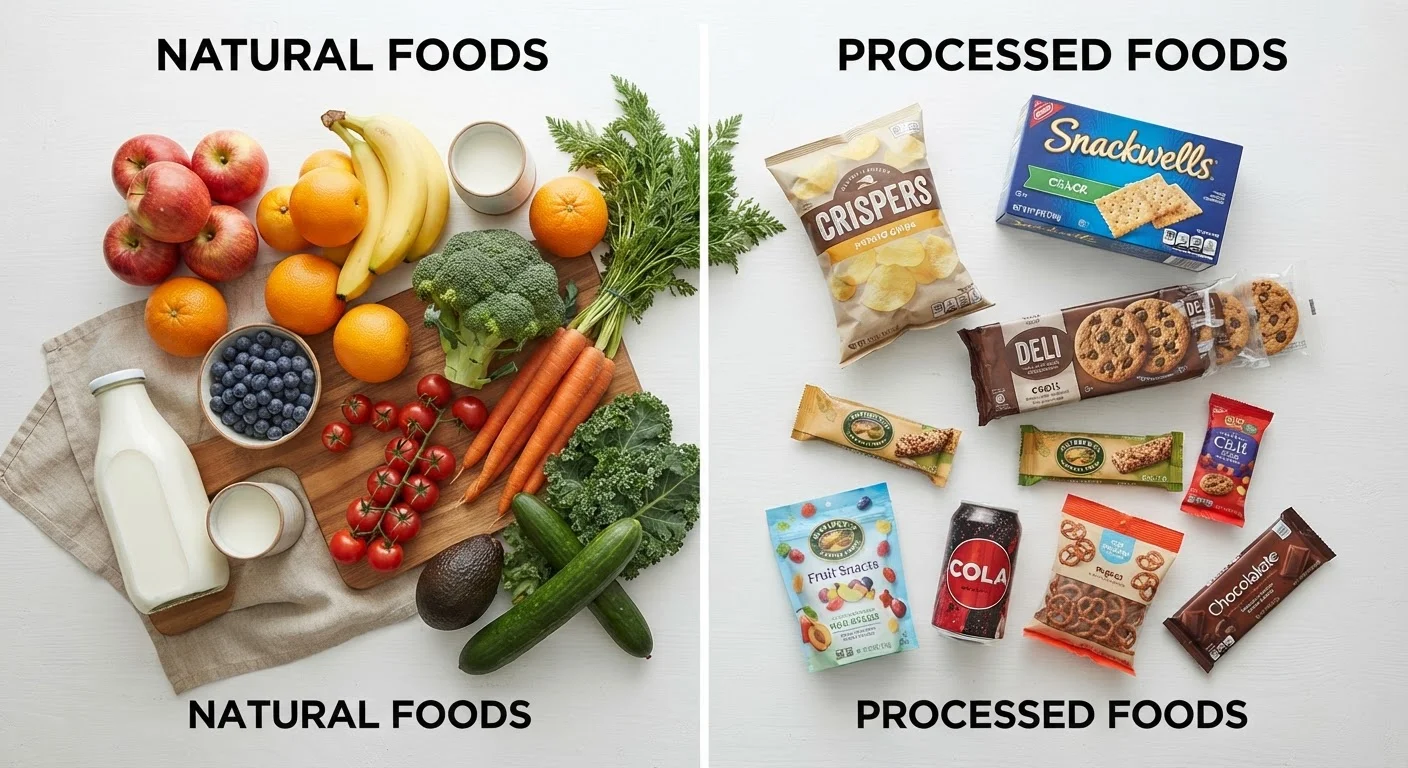
Pick up an apple and eat it. You're consuming sugar - fructose and glucose - but also fiber, water, vitamin C, and potassium. Now pour a glass of a fruit-flavored drink with added high-fructose corn syrup. You're consuming sugar too, but the surrounding context is almost entirely gone.
That surrounding context is the whole point of the natural-versus-added distinction. It's not about the sugar molecule being chemically different. It's about what comes with it - and what doesn't.
Naturally occurring sugars are found in three main places: whole fruit (fructose), vegetables (smaller amounts of fructose and glucose), and dairy products (lactose). In every case, those sugars share space with other nutrients: fiber slows digestion, protein buffers absorption, and water adds volume. The result is a slower, more gradual release of sugar into the bloodstream.
Added sugars are introduced during food manufacturing or preparation. That includes the obvious ones - table sugar, high-fructose corn syrup - and some that surprise people: honey, agave syrup, maple syrup, and fruit juice concentrate all count as added sugars when they're mixed into a product. They all deliver calories without the nutritional infrastructure of whole food.
<10%
Recommended daily calorie limit from added sugars
Per the 2020-2025 Dietary Guidelines for Americans, issued jointly by the USDA and HHS.
17 tsp
Average daily added sugar intake for U.S. adults
Based on National Health and Nutrition Examination Survey (NHANES) data analyzed by the CDC, significantly above recommended levels.
74%
Packaged foods in U.S. supermarkets containing added sugars
According to a study published in the journal Lancet Diabetes & Endocrinology analyzing U.S. food supply data.
What the Nutrition Label Tells You (and What It Doesn't)
Since 2020, the updated U.S. Nutrition Facts panel has been required to list "Added Sugars" as a separate indented line beneath "Total Sugars." This is genuinely useful. You can now see, at a glance, how much of a product's sugar was present in the ingredients versus added during processing.
For example: plain yogurt might show 12g of Total Sugars and 0g of Added Sugars. That 12g is lactose - naturally present in the dairy. A flavored yogurt might show 22g of Total Sugars and 10g of Added Sugars, signaling that sweeteners were mixed in.
What the label can't tell you is everything. A food can be high in natural sugars and still be less nutritious than it looks - think fruit juice, which loses most of its fiber during pressing. And a food labeled "no added sugar" can still be dense in calories, refined carbs, or sodium. For a fuller picture of how to read each section of the panel, see our plain-language label walk-through. It's also worth knowing that label claims like "natural" or "no added sugar" on the front of the package are regulated terms - but they only tell part of the story, as our article on nutrition claims on packaging explains.
Why the Gap Between Them Matters Practically
From a pure calorie-counting standpoint, a gram of sugar from an orange and a gram of sugar from a soda are equal. But nutrition science has moved well past pure calorie counting, and the gap between these two sugar sources shows up in a few practical ways.
Satiety: Whole foods with natural sugars tend to be more filling. The fiber in fruit, for instance, slows gastric emptying - you feel full longer, which often means eating less overall without trying.
Blood sugar response: Foods with fiber, protein, and fat surrounding their sugars produce a gentler blood glucose curve than foods where sugar arrives quickly and alone. This is why the glycemic index - and its limitations is more nuanced than a single number suggests: the whole food matrix matters enormously.
Nutrient density: Natural sugar sources are often genuinely nutritious. Added sugar sources typically are not. When added sugars crowd out more nutritious foods in the diet - even without pushing calories over a personal limit - overall diet quality tends to decline.
This doesn't mean added sugar is a dietary villain to be avoided at all costs. It means that treating all sugar as interchangeable misses information worth having. If you're curious about how similar packaging language can obscure these distinctions, common nutrition claims that sound scientific but aren't covers that territory directly.
This article is for general informational purposes only and is not a substitute for personalized nutrition or medical advice. Consult a qualified healthcare professional or registered dietitian for guidance specific to your health situation.
Frequently Asked Questions
No - the sugar in whole fruit comes packaged with fiber, water, and nutrients that slow how quickly it enters your bloodstream. Most health guidance encourages eating whole fruit freely as part of a balanced diet. Fruit juice is a different story, since juicing removes much of the fiber.
Yes, when honey is added to a food product during manufacturing, it counts as an added sugar under FDA labeling rules. The same applies to agave syrup, maple syrup, and fruit juice concentrate. These may carry a "natural" halo, but nutritionally they behave similarly to table sugar when added to processed foods.
The 2020-2025 Dietary Guidelines for Americans recommend that added sugars make up less than 10% of total daily calories. For a 2,000-calorie diet, that works out to about 50 grams or roughly 12 teaspoons. This is general guidance - a qualified healthcare or nutrition professional can help you apply it to your own situation.
On U.S. Nutrition Facts panels, "Added Sugars" appears as an indented line directly below "Total Sugars." It's listed in grams and as a percentage of the Daily Value. Our <a href="/health-made-simple/everyday-nutrition/reading-a-nutrition-label-without-a-science-degree">plain-language label guide</a> walks through each section in detail.
Not necessarily. "No added sugar" means no sugar was added during processing, but the product may still be high in naturally occurring sugars, fat, sodium, or refined carbohydrates. It's worth reading the full Nutrition Facts panel rather than relying on front-of-pack claims alone.
At the molecular level, glucose is glucose and fructose is fructose regardless of source. The difference lies in context: fiber, protein, and water in whole foods slow digestion and moderate blood sugar response. Isolated added sugars lack this buffer, leading to faster absorption. The food matrix - everything surrounding the sugar - matters considerably.
The content on this site is for informational purposes only and is not a substitute for professional advice. Always consult a qualified professional for guidance specific to your situation.