

Why Bother With the Label at All?
Packaged food in the US is required to carry a Nutrition Facts panel - a standardized box that breaks down what's actually in a product, not just what the front of the package wants you to believe. The front might say "wholesome" or "light," but the label on the back gives you the actual numbers.
You don't need to scrutinize every label every time you shop. But knowing how to read one means you can make a quick, informed call when it matters - comparing two cereals, figuring out how much sodium is in a can of soup, or checking whether a snack has any fiber worth mentioning. For a deeper look at front-of-package phrasing, see what common label claims actually mean.
How to Read a Nutrition Facts Panel, Step by Step
Work through the label top to bottom - the sections are ordered deliberately, and the top informs everything below it.
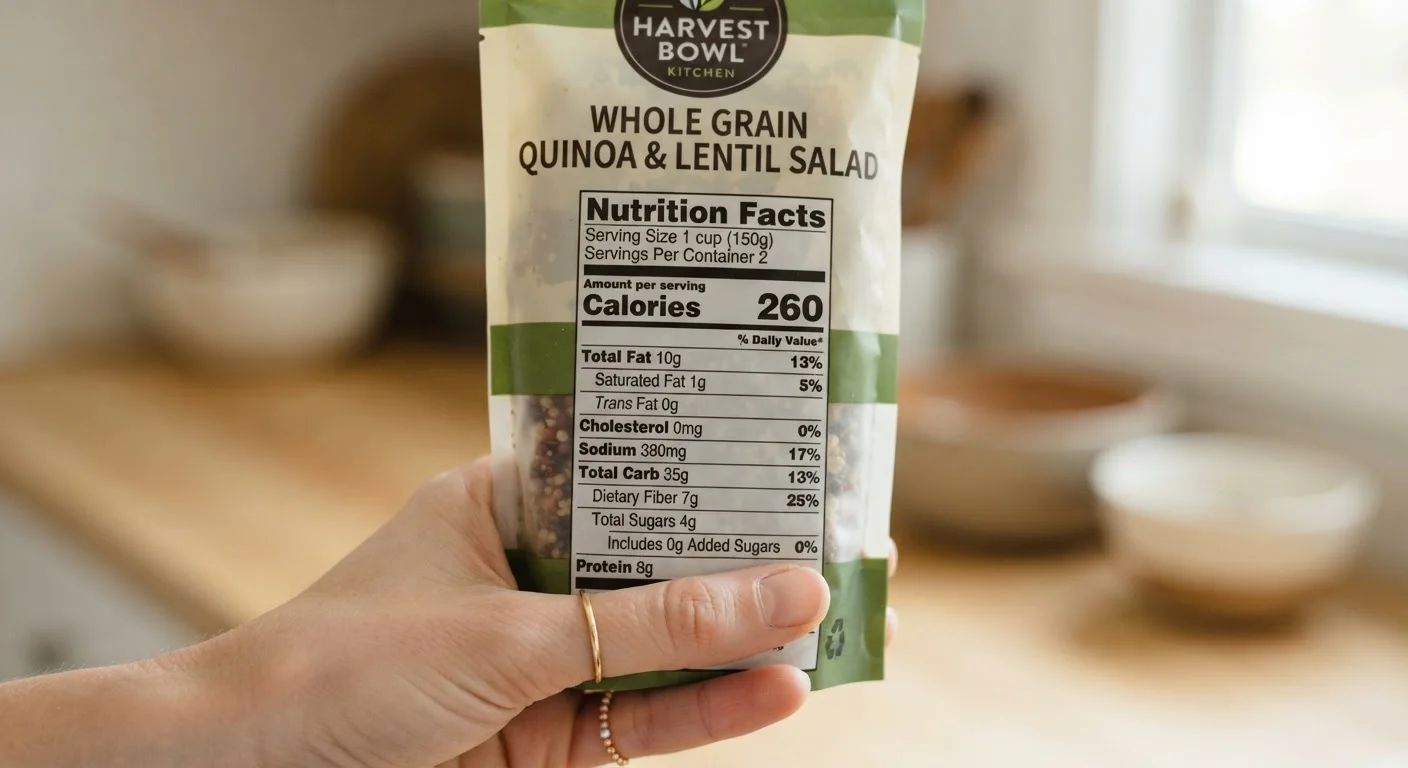
Start with serving size
The very first line under "Nutrition Facts" shows the serving size - for example, 2/3 cup (55g) - followed by the number of servings per container. Every single number that follows is based on that serving size, not the whole package.
If the package contains 3 servings and you eat the whole thing, multiply every number by 3. This is the step most people skip, and it leads to the biggest misreads.
Check calories per serving
Just below serving size, you'll see Calories in large type. This is the total energy in one serving from all sources - fat, carbohydrates, and protein combined. Calories are a useful reference but not the only thing worth considering. A food can be calorie-dense and nutritious, or calorie-light and nutritionally empty.
Look at total fat, saturated fat, and trans fat
Total fat covers all fat types. Underneath it, you'll see breakdowns for saturated fat and trans fat, which are the two the FDA requires because they have the clearest links to cardiovascular health in the research literature. Aim to keep saturated fat moderate and trans fat as close to zero as possible. Unsaturated fats (found in nuts, fish, and oils) are not broken out prominently but are generally considered beneficial.
Read sodium
Sodium is listed in milligrams. Many packaged and processed foods are high in sodium, and it can add up quickly across a day's meals. The % Daily Value column (covered in the next step) is especially handy here - 20% DV or more per serving is considered high.
Understand % Daily Value (%DV)
The right-hand column shows % Daily Value for most nutrients. This tells you how much of a nutrient one serving contributes toward a general daily target, based on a 2,000-calorie diet. A quick rule of thumb: 5% DV or less is low; 20% DV or more is high. Use %DV to compare products at a glance or to check whether a single food is heavily weighted toward one nutrient.
Separate total carbs, fiber, and sugars
Total carbohydrates include three sub-categories: dietary fiber, total sugars, and - critically - added sugars. Dietary fiber is generally something to look for more of. Total sugars includes both naturally occurring sugars (like those in fruit or dairy) and sugars added during processing. Added sugars is its own indented line and is the more actionable number - it tells you how much sugar was put in, not how much was there naturally. For more on that distinction, see the difference between natural and added sugars.
Note protein and micronutrients
Protein appears below sugars. Unlike most other nutrients, protein doesn't have a %DV listed - the gram amount is what to reference. Below protein, you'll find required micronutrients: Vitamin D, Calcium, Iron, and Potassium. These are listed because many Americans don't get enough of them. Higher %DV here is generally a good sign.
Once you're comfortable with the basics, a more detailed field guide to each number on the panel can take your understanding further. And when you're ready to go beyond numbers, reading ingredient lists is a natural next step.
A Quick Label-Reading Shortcut
If you only have a few seconds, check three things: serving size (so the numbers make sense), the %DV for sodium and saturated fat (lower is usually better), and the added sugars line. Those three points will give you a reasonable snapshot of most packaged foods without reading every row.
A Few Things the Label Won't Tell You
The Nutrition Facts panel is a tool, not a complete picture. It doesn't account for how a food is cooked, what else you ate that day, or your individual health context. The % Daily Values shown are based on a 2,000-calorie diet, which won't match everyone's actual needs.
Labels also don't distinguish between types of fat beyond saturated and trans fats, and they say nothing about the quality of ingredients - only the quantities. That's where the ingredient list picks up. Understanding the difference between naturally occurring and added sugar is one area worth exploring further; this breakdown of natural vs. added sugar explains the practical difference clearly.
If you're managing a health condition or have specific dietary needs, a registered dietitian can help you apply label information to your own situation. The nutrition facts panel is general guidance - your needs may differ.
This article is for general informational and educational purposes only and is not a substitute for personalized nutrition or medical advice. Consult a qualified healthcare professional for guidance specific to your health needs.
The content on this site is for informational purposes only and is not a substitute for professional advice. Always consult a qualified professional for guidance specific to your situation.