

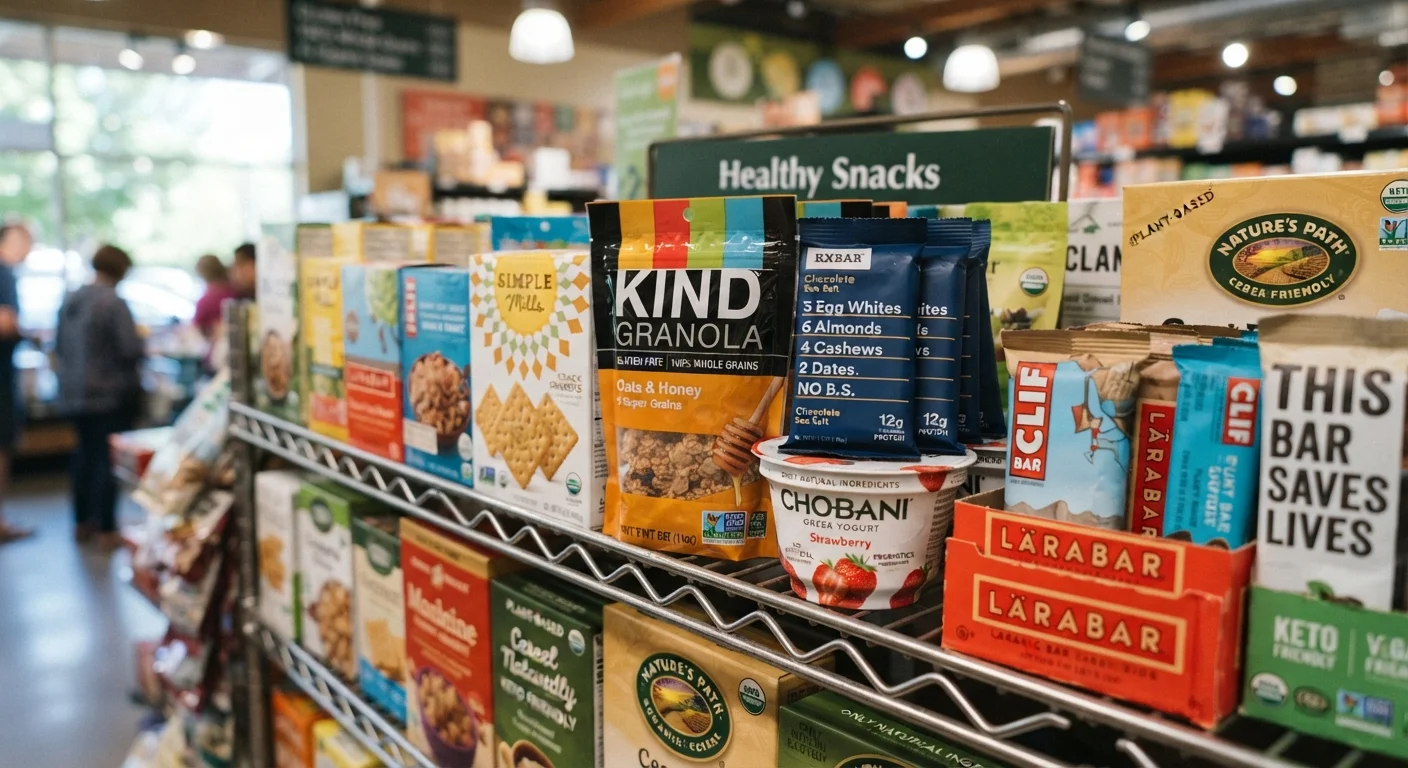
Why Front-of-Package Claims Exist
Food packaging is a marketing surface. Manufacturers use the front of the box or bag to attract attention and signal value - and certain words do that job very effectively. Terms like "low fat," "natural," and "made with whole grains" are chosen because they resonate with health-conscious shoppers, not necessarily because they convey precise nutritional information.
Some of these claims are tightly defined by the U.S. Food and Drug Administration (FDA). Others are essentially unregulated and mean whatever the manufacturer wants them to mean. Knowing which is which takes a lot of the guesswork out of the grocery aisle. The nutrition facts panel on the back or side of the package is always the more reliable read.
Common Claims - What They Actually Mean
Here's a plain-language breakdown of the most frequently misread nutrition claims. The myth-and-fact pairs below walk through each one.
Myth
"Low fat" means the food is a healthier choice.
Fact
"Low fat" has a specific FDA definition - 3 grams of fat or less per serving - but it says nothing about sugar, sodium, or calories.
When fat is removed from a product, manufacturers often add sugar, salt, or refined starch to compensate for the lost flavor and texture. A low-fat flavored yogurt, for example, can contain more added sugar than a full-fat version. The claim is technically accurate by FDA standards, but it frames one nutrient change while potentially obscuring others. Always check the full panel, not just the fat row.
Myth
"No added sugar" means the product contains little or no sugar.
Fact
"No added sugar" means no sugar was added during processing - but the product can still be high in naturally occurring sugars or sugar alcohols.
Fruit juice, dried fruit, and dairy all carry significant natural sugars. A "no added sugar" fruit smoothie or dried cranberry product can still deliver a substantial sugar load per serving. Additionally, some products use sugar alcohols (like sorbitol or xylitol) or high-intensity sweeteners to replace added sugar; these aren't counted as "added sugars" but affect taste and, in the case of sugar alcohols, digestion. Check total sugars on the panel alongside the added sugars line.
Myth
"Natural" on a label signals that a product is minimally processed and wholesome.
Fact
The FDA has not formally defined "natural" for food labeling, which means manufacturers use it with significant latitude.
The FDA has historically allowed "natural" to appear on products that don't contain added color, artificial flavors, or synthetic substances - but the agency itself has noted this policy is not a formal definition and doesn't address processing methods, pesticide use, or nutritional quality. A product can be labeled "natural" and still be heavily processed, calorie-dense, or high in sodium. The word is primarily a marketing signal, not a regulated nutritional one. For terms that do carry clearer definitions, our everyday nutrition glossary is a useful reference.
Myth
"Made with whole grains" means the product is a good source of whole grains.
Fact
This claim only requires that some whole grain is present - it could be a very small amount relative to refined flour.
The FDA does not set a minimum whole-grain content for this claim. A cereal or bread can lead with refined flour in the ingredient list and still carry a "made with whole grains" banner because a small percentage of whole grain was included. To assess whether whole grain is a significant component, check the ingredient list: the first ingredient should say "whole wheat," "whole oat," or another whole grain. See our breakdown of what refining removes from grains for context on why this distinction matters.
Myth
"Reduced sodium" means the product is low in salt.
Fact
"Reduced sodium" means the product contains at least 25% less sodium than the original version - not that it's low in sodium overall.
If the original product was very high in sodium, a 25% reduction still leaves a product that is high in sodium by most dietary standards. The FDA's regulated term "low sodium" means 140 mg or less per serving - a meaningfully different threshold. "Reduced sodium" soups, sauces, and canned goods can still contribute significantly to daily sodium intake, especially if you eat more than one serving.
Myth
"High protein" means this food is a nutritionally complete protein source.
Fact
"High protein" describes quantity - typically 20% or more of the daily value per serving - but says nothing about protein quality or amino acid completeness.
Protein quality depends on its amino acid profile and how efficiently the body absorbs it. A snack bar labeled "high protein" may derive that protein from sources with a lower completeness score than whole-food sources like eggs or legumes. The label claim is about grams, not about how usable those grams are. For a fuller picture of what protein quality means, see our comparison of plant and animal protein sources.
For a closer look at how sweeteners are listed and counted, see our guide to natural vs. added sugar in food.
What to Do Instead of Trusting the Front Label
The most reliable habit is to flip the package over. The Nutrition Facts panel is standardized by the FDA, which means the serving size, calorie count, macronutrients, and added sugars figures follow consistent rules. The ingredient list is equally useful - ingredients are listed in descending order by weight, so the first few tell you what the food is primarily made of. Our guide to reading ingredient lists explains exactly how to use that order to your advantage.
A few practical habits help cut through the noise:
- Check the serving size first. Many calorie or fat figures look modest until you realize the serving is half of what you'd actually eat.
- Look at added sugars, not just total sugars. The Nutrition Facts panel now distinguishes between the two.
- Scan the first three ingredients. If refined flour, sugar, or oil lead the list, the front-label claim deserves extra skepticism.
- Compare products on a per-serving basis, not on front-of-package language.
Front-of-package claims aren't always wrong or misleading - but they're summaries written by the seller. The panel and ingredient list are written to a standard. When in doubt, go to the standard. For a broader look at how nutrition information can be distorted, see where nutrition advice goes wrong.
This article is for general informational purposes only and is not a substitute for professional dietary or medical advice. Consult a registered dietitian or qualified healthcare provider for guidance tailored to your individual health needs.
The content on this site is for informational purposes only and is not a substitute for professional advice. Always consult a qualified professional for guidance specific to your situation.