

Why Nutrition Advice Is So Easy to Get Wrong
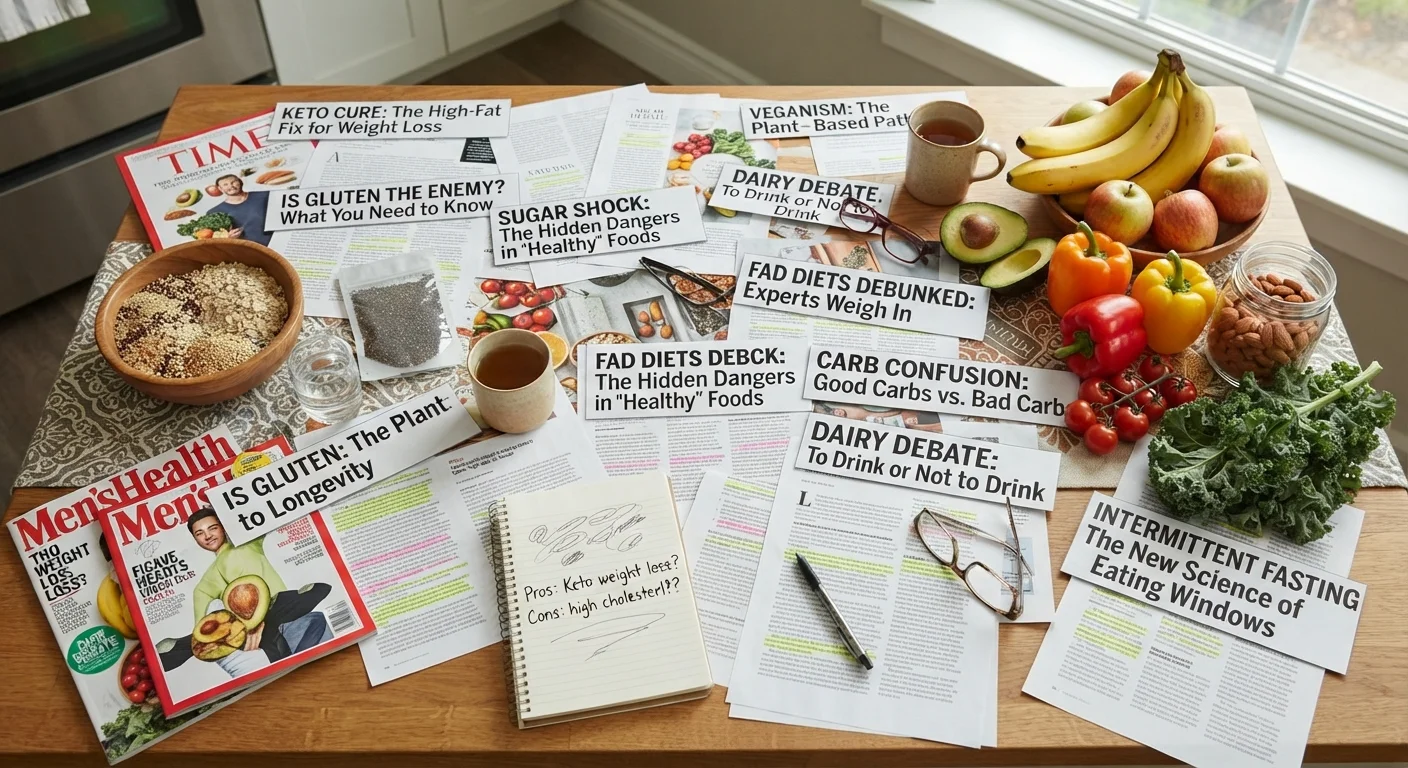
Nutrition sits at an awkward crossroads: it's a genuine scientific field, but it's also deeply tied to personal identity, marketing, and media cycles that reward bold claims over careful ones. The result is a steady stream of headlines that contradict each other, leaving readers understandably confused about whether eggs are good or bad this week.
Most of the confusion isn't random. It follows recognizable patterns - specific ways that legitimate research gets distorted, oversimplified, or simply misrepresented before it reaches you. Learning to spot those patterns is one of the most practical things you can do as a food consumer. It's less about memorizing rules and more about asking a few better questions.
For a broader look at how shaky nutrition language shows up in everyday product claims, see common nutrition claims that sound scientific but aren't.
Treating a single study as settled science.
Why it happens: Media outlets need a hook, and a new study provides one. One paper, even a well-conducted one, is rarely enough to overturn existing nutritional understanding.
Confusing correlation with causation in observational research.
Why it happens: Observational studies track large groups over time and are genuinely useful, but they can't control for every variable. People who eat more vegetables may also sleep more, exercise regularly, and smoke less - any of those factors could explain a health outcome.
Taking headlines at face value without reading further.
Why it happens: Headlines are written to attract clicks, not to accurately summarize research. Nuance, caveats, and population-specific findings routinely get stripped out.
Assuming that what works in a controlled trial will work identically in real life.
Why it happens: Controlled studies impose strict conditions - specific meal plans, supervised intake, regular monitoring - that don't reflect how most people actually eat.
Accepting dramatic claims without checking who's making them and why.
Why it happens: Influencers, supplement companies, and even some practitioners have financial incentives tied to specific dietary narratives. The packaging of health claims can make them feel authoritative when they aren't.
How to Build a More Reliable Filter for Nutrition Information
Once you recognize these patterns, the goal isn't to dismiss all nutrition information - it's to weigh it more accurately. A few practical habits make a real difference.
Check what kind of study it is. Nutrition research spans a wide spectrum: randomized controlled trials (where people are deliberately assigned different diets) carry more weight than surveys asking people to recall what they ate last month. Neither is perfect, but they're not equivalent either.
Look for the size and duration. A study of 40 people over two weeks tells you much less than a long-term cohort following thousands of participants. Neither should be ignored, but scale matters when drawing practical conclusions.
Notice whether the headline matches the finding. Researchers are typically careful to note limitations; headlines usually aren't. If a story says a food "prevents" disease, check whether the paper actually says "was associated with a reduced risk in this population" - that's a meaningful difference.
It also helps to remember that nutrition science is genuinely hard. People eat dozens of different foods in combinations, live different lifestyles, and carry different genetics. As research into individual food responses makes clear, the same meal can affect two people quite differently - which is exactly why sweeping universal rules so often fall apart in practice.
The durable principles in nutrition - variety, balance, mostly whole foods - aren't exciting enough to dominate headlines, but they've held up remarkably well over decades of research. Building a varied plate without overthinking it is still one of the most evidence-consistent approaches available. And if you want a practical way to check in on your own eating habits, a weekly eating audit can help you notice patterns without turning food into a source of stress.
Big Promises Are Usually a Warning Sign
Credible nutrition guidance rarely comes with guarantees. If a claim promises dramatic results - rapid transformation, disease reversal, universal effectiveness - that's a signal to slow down and look more carefully at the evidence behind it. Solid nutritional science tends to be measured, qualified, and honest about what it doesn't yet know.
This article is for general informational purposes only and is not a substitute for advice from a qualified healthcare professional or registered dietitian.
The content on this site is for informational purposes only and is not a substitute for professional advice. Always consult a qualified professional for guidance specific to your situation.