

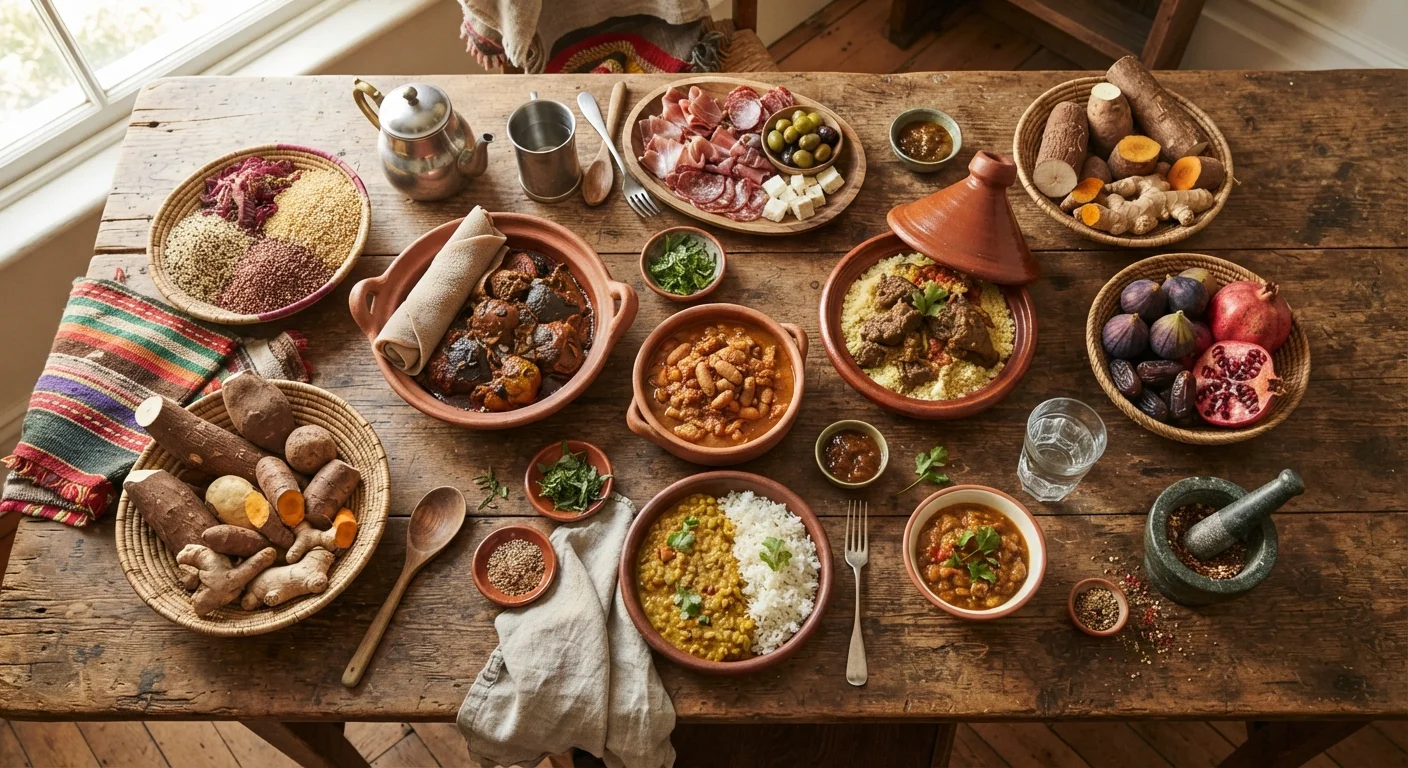
When Food Becomes a Tool of Control
Food has never been just about sustenance. It carries identity, spirituality, seasonal knowledge, and social structure. That's precisely why, when colonial powers sought to control populations, food systems became an instrument of that control.
The mechanisms varied by region and era, but the patterns are consistent: land was seized and converted to export crops; traditional agricultural knowledge was devalued; communities were moved away from the environments their food cultures depended on; and in some cases, indigenous languages - which carried the vocabulary of farming, foraging, and cooking - were actively suppressed.
This isn't ancient history with no modern relevance. The cuisines eaten around the world today - including many celebrated as vibrant and distinctive - are partly shaped by what was lost, altered, or forcibly introduced during colonial periods. Understanding that context doesn't diminish the food; if anything, it deepens appreciation for what communities managed to preserve and adapt.
For a contrasting perspective on how food traditions spread through exchange rather than force, see how the Silk Road shaped global flavours.
Specific Cuisines: What Was Lost and How
Indigenous North American food systems were among the most thoroughly disrupted. Hundreds of distinct nations had sophisticated food cultures - cultivating the 'Three Sisters' (corn, beans, squash), fishing, hunting, and foraging across highly specific ecosystems. Forced relocation onto reservations severed communities from the lands and waterways those food systems depended on. Government-issued commodity foods - white flour, lard, canned goods - replaced traditional diets, contributing to health disparities that researchers continue to document today.
Aboriginal Australian cuisine is one of the world's oldest food traditions, built over tens of thousands of years around hundreds of native plants and animals. Colonisation disrupted access to traditional lands, and the knowledge of native food sources - many of which have significant nutritional value - was actively devalued by settler culture. Today, 'bush tucker' is seeing a meaningful revival, with indigenous chefs and communities leading the way.
West and Central African cuisines were transformed in multiple directions by the transatlantic slave trade and later European colonisation. Enslaved Africans were often denied access to their own foods and forced to subsist on minimal rations, yet they managed to preserve culinary knowledge and adapt it to New World ingredients - giving rise to the rich food cultures of the American South, the Caribbean, and Brazil. Meanwhile, colonisation in Africa itself promoted cash crops like cocoa, coffee, and groundnuts for export, reducing the agricultural diversity communities had maintained for generations.
Indian subcontinental food is a case study in transformation rather than erasure. British colonial rule didn't erase Indian cuisine - it was too deeply rooted - but it did reshape agricultural priorities, promote tea monoculture in ways that displaced other crops, and impose taxation structures that affected what smallholders could viably grow. The Bengal famines of the colonial era are a stark example of how food policy can become catastrophic when divorced from local knowledge and need.
Complexity Worth Acknowledging
Colonial food history resists simple narratives. The same period that suppressed indigenous food systems also produced hybrid cuisines of genuine creativity and depth. Ingredients moved in multiple directions, and communities found ways to adapt and preserve knowledge under difficult conditions. Holding both truths - the harm and the resilience - is more accurate than either alone.
For further context on how ingredients themselves carry cultural stories, see ingredients that define home cuisines.
Hybridity, Resilience, and What Survived
Not every story here is one of pure loss. Culinary resilience is real, and many traditions survived precisely because food knowledge was passed informally - in kitchens, at markets, through festivals - rather than through institutions that colonial powers could easily control.
Creole and mestizo cuisines across Latin America, the Caribbean, and Southeast Asia reflect genuine hybridity: indigenous ingredients and techniques meeting African, European, and Asian ones in ways that produced something genuinely new. This complexity is worth holding carefully - acknowledging the coercion involved doesn't mean dismissing the creative fusion that emerged.
The role of diaspora communities in keeping culinary traditions alive is significant too. When people were displaced - whether through slavery, indentured labour, or migration - they carried food knowledge with them and adapted it in new contexts. Diaspora cooking is one of the most powerful engines of culinary preservation.
“Cuisine is an archive. What a people eat - and what they have been prevented from eating - tells you as much about their history as any written document.”
— Michael Twitty, Culinary historian and author of 'The Cooking Gene'
Today, a growing number of chefs, scholars, and community organisations are engaged in what's sometimes called 'culinary decolonisation' - researching pre-colonial food records, working with elders to recover traditional knowledge, and reintroducing heritage crops. It's painstaking, and not everything can be recovered. But the effort itself reflects something important: the understanding that food identity is inseparable from political and cultural identity.
Why This History Matters at the Table
None of this means that enjoying a dish requires a lecture in colonial history. But it does suggest that culinary curiosity goes deeper than flavour. Asking where a food comes from - not just geographically, but historically - opens up genuine understanding of the people who created it.
Food taboos, too, are often entangled with these histories in ways that aren't obvious. Food taboos around the world are shaped by religion, ecology, and history - sometimes including the history of what was forbidden or made unavailable by outside forces.
The revival movements happening in indigenous and formerly colonised communities deserve to be understood on their own terms - not as exotic novelties or trend-driven rediscoveries, but as genuine acts of cultural continuity. When a chef in Oaxaca works to reintroduce heritage corn varieties, or a Māori community revives traditional hāngi methods, they're doing something that goes beyond gastronomy. They're making a claim about belonging, memory, and the right to define their own food future.
This article is for general informational and educational purposes. It does not represent the full scope of any community's history and is not intended as a substitute for scholarship by researchers and community members directly connected to these traditions.
Frequently Asked Questions
Colonial powers controlled land, labour, and trade - all of which determine what people grow, cook, and eat. Through plantation agriculture, forced resettlement, and cultural suppression, colonial rule reshaped food systems worldwide in ways that persisted long after independence.
Some have been entirely lost, particularly where whole communities were destroyed or displaced. Others survive in fragments - through oral tradition, archaeology, or the memories of elders - and are being carefully reconstructed by researchers and chefs.
Yes, and this is part of the complexity. The Columbian Exchange brought chillies, tomatoes, and potatoes to parts of the world where they became central to local cuisines. But these introductions often came alongside the destruction of existing food systems, so the exchange was rarely equal.
Food sovereignty is the principle that communities should control their own food systems - what they grow, how they grow it, and what they eat. Many former colonies now frame culinary revival explicitly within this framework, linking food rights to broader self-determination.
Learning where dishes and ingredients come from, supporting indigenous and diaspora food producers, and reading food history critically are all meaningful starting points. Being curious about culinary context - not just flavour - is itself a form of respect.
The content on this site is for informational purposes only and is not a substitute for professional advice. Always consult a qualified professional for guidance specific to your situation.