

Start here
Why Roasting Works: The Science in Plain Terms
Next
Choosing and Prepping Your Vegetables
Then
Temperature, Spacing, and Timing
Finally
Finishing Touches and Letting Them Rest
Why Roasting Works: The Science in Plain Terms
Roasting is one of the most beginner-friendly cooking methods around, and understanding why it works makes it much easier to get right every time. When vegetables hit a hot oven, two important things happen: water evaporates from the surface, and sugars in the vegetable begin to brown through a process called the Maillard reaction and, separately, caramelization.
The Maillard reaction is the same browning that happens when you sear a steak - it creates hundreds of new flavor compounds that taste complex and deeply savory. Caramelization is what happens to natural sugars at high heat, producing that slightly sweet, nutty depth you get on the edges of a well-roasted carrot or onion. If you've ever wondered why a roasted vegetable tastes so much more interesting than a boiled one, this is the reason.
For both reactions to happen, you need dry heat and enough temperature - which is why oven temperature and pan setup matter more than most beginners expect. You can read more about how oven temperatures behave in our guide to cooking temperatures every home cook should know.
Maillard reaction
A chemical reaction between amino acids and sugars that occurs when food is exposed to high heat, creating the brown color and complex, savory flavors associated with roasted or seared food.
Caramelization
The process by which natural sugars in food break down under heat to produce a golden-brown color and a sweet, slightly nutty flavor.
Pan crowding
Placing too many pieces of food on a single pan so they touch or overlap, which traps steam and prevents browning - one of the most common roasting mistakes.
Resting
Leaving cooked food to sit off the heat for a few minutes before serving, allowing residual heat to complete cooking evenly and letting moisture and texture stabilize.
Dry heat cooking
A cooking method that uses hot air or direct contact with a hot surface rather than water or liquid, which is what makes browning possible in roasting and searing.
Choosing and Prepping Your Vegetables
Almost any vegetable can be roasted, but the prep varies a little depending on the type. The goal is always the same: pieces that are dry on the surface, evenly coated in oil, and cut to a size that will cook through at a similar rate.
Cut for evenness, not perfection
Aim for pieces that are roughly the same size - about 1 to 1.5 inches is a reliable starting point for most vegetables. Uneven chunks mean some pieces will be burnt while others are still underdone. You don't need perfectly geometric cuts; just keep the sizes consistent.
Dry the surface
Moisture is the enemy of browning. Pat vegetables dry with a paper towel after washing, especially for watery vegetables like zucchini or mushrooms. Any surface moisture will steam off in the oven before browning can begin, which slows down the whole process.
Coat with oil and season
Toss your vegetables in a bowl with enough oil to lightly coat every surface - roughly one to two tablespoons per pound. Season with salt and pepper at minimum; add dried herbs, garlic, or spices based on what you're making. Tossing in a bowl gives far more even coverage than drizzling oil on the pan after the vegetables are already spread out.
If you're still getting set up in the kitchen, our first kitchen essentials guide covers the sheet pans and tools that make roasting much easier.
Temperature, Spacing, and Timing
These three variables - temperature, spacing, and timing - are where most beginners run into trouble. Getting all three right turns a soggy, limp result into something genuinely caramelized and flavorful.
Temperature: go higher than you think
The sweet spot for most vegetables is 400°F to 425°F (200°C to 220°C). Below 375°F, vegetables tend to cook slowly and steam in their own moisture before browning sets in. Higher heat drives faster evaporation and quicker browning. Dense root vegetables like beets, carrots, and parsnips can handle the higher end of this range.
Spacing: the single most common mistake
Give your vegetables room to breathe. Pieces should be in a single layer with a small gap between them. When the pan is too crowded, steam can't escape, and the vegetables essentially stew rather than roast. If your pan looks overfull, use two pans rather than forcing everything onto one.
Timing: check early, adjust as needed
Timing varies widely depending on the vegetable and how large the pieces are. As a rough guide:
- Quick-roasting (15-20 min): asparagus, cherry tomatoes, thinly sliced zucchini
- Medium (25-35 min): broccoli, cauliflower, bell peppers, Brussels sprouts
- Slow (40-50 min): beets, whole carrots, butternut squash cubes, potatoes
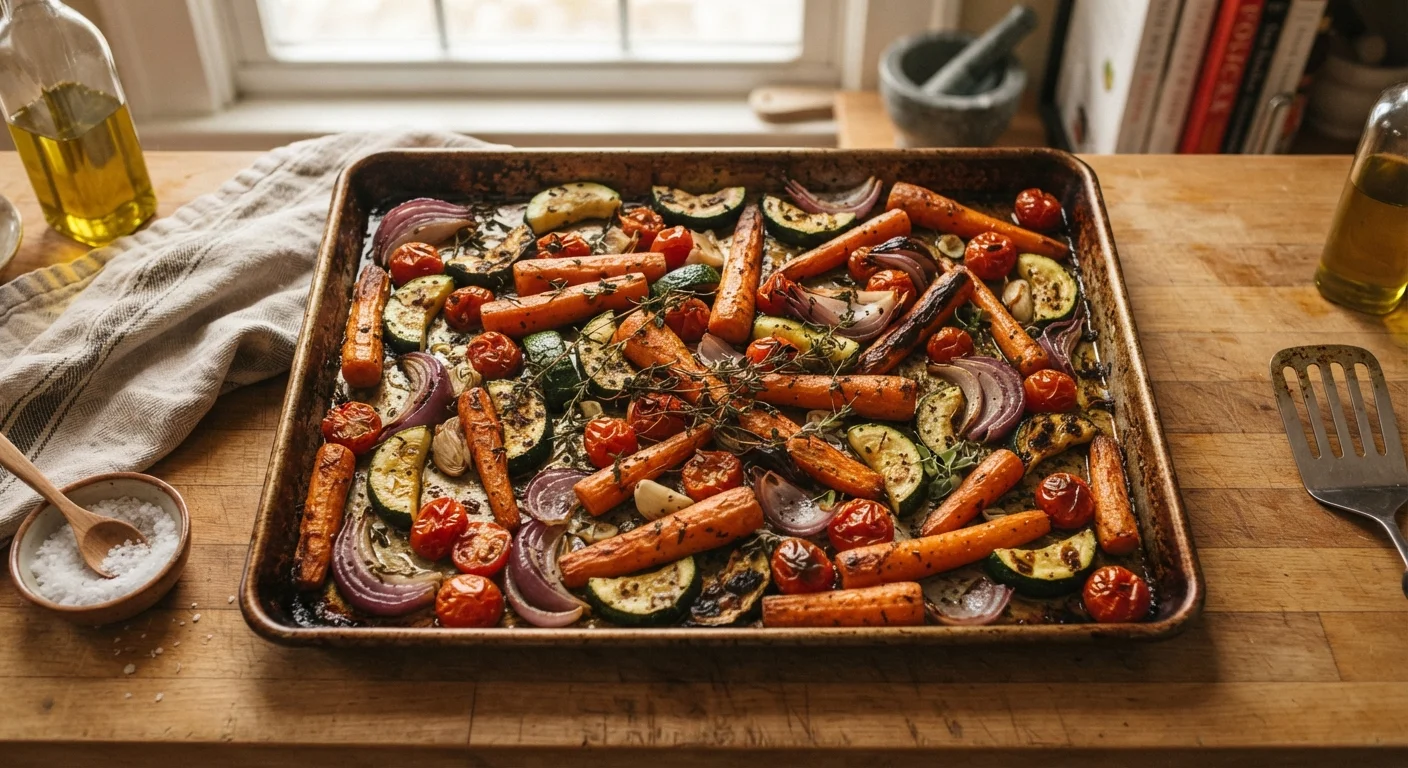
Flip pieces once halfway through for browning on multiple sides. Your visual cue: edges should be visibly golden to deep brown, and a fork should slide in without resistance.
Finishing Touches and Letting Them Rest
The vegetables are out of the oven - now what? Most people plate immediately, but a short rest makes a real difference. Letting roasted vegetables sit on the pan for three to five minutes allows residual heat to finish any cooking at the center of thicker pieces, and lets the surface caramelization firm up slightly so it doesn't smear when served. The concept is similar to resting meat - our explanation of what resting actually does covers the science in more detail.
Season again before serving
Salt applied before roasting seasons the interior as moisture moves through the vegetable. A small pinch of flaky salt added right before serving seasons the surface and adds a pleasant crunch. A squeeze of lemon juice or a splash of vinegar at the end also lifts the flavor considerably - the acidity contrasts with the richness of the oil and the sweetness of caramelization.
Finishing add-ons worth trying
- Fresh herbs (parsley, basil, thyme) stirred through just before serving
- A drizzle of honey for extra sweetness with root vegetables
- Crumbled cheese (feta, goat cheese) added after roasting, not before
- Toasted nuts or seeds for texture
Once you're comfortable with roasting, the technique translates naturally to high-heat cooking methods like searing. See our guide to getting a proper sear on meat to build on these same principles.
Keep a Second Pan Ready
When in doubt about whether your pan is crowded, pull out a second one. Roasting in two batches or across two pans always produces better results than forcing too many vegetables onto one sheet. The extra browning you get is worth the minor hassle of managing two pans at once.
Frequently Asked Questions
Most vegetables roast well between 400°F and 425°F. Higher heat encourages browning and caramelization rather than steaming. Dense vegetables like carrots or beets may need a full 40-45 minutes, while delicate ones like zucchini or asparagus can be done in 15-20 minutes.
Sogginess almost always comes from overcrowding the pan. When pieces are too close together, they steam in each other's moisture instead of roasting. Spread them in a single layer with a little breathing room, and use a rimmed sheet pan rather than a deep dish.
Not always. Thin-skinned vegetables like zucchini, cherry tomatoes, and asparagus need no peeling. Root vegetables like carrots and beets can be roasted skin-on if scrubbed well - the skin crisps up nicely. Butternut squash and older beets are easier to peel before cutting.
Yes, but cut denser vegetables smaller so they cook at a similar rate as softer ones. Alternatively, add quick-cooking vegetables like cherry tomatoes or spinach partway through, once the slower ones are nearly done.
A light, even coat is the goal - usually one to two tablespoons per pound of vegetables. You want every surface lightly glistening, not soaking or pooling in the pan. Toss in a bowl before spreading onto the pan for the most even coverage.
Flipping once about halfway through is generally worthwhile for larger pieces - it gives you browning on multiple sides. Small pieces or halved cherry tomatoes can often stay put and roast undisturbed.
The content on this site is for informational purposes only and is not a substitute for professional advice. Always consult a qualified professional for guidance specific to your situation.