

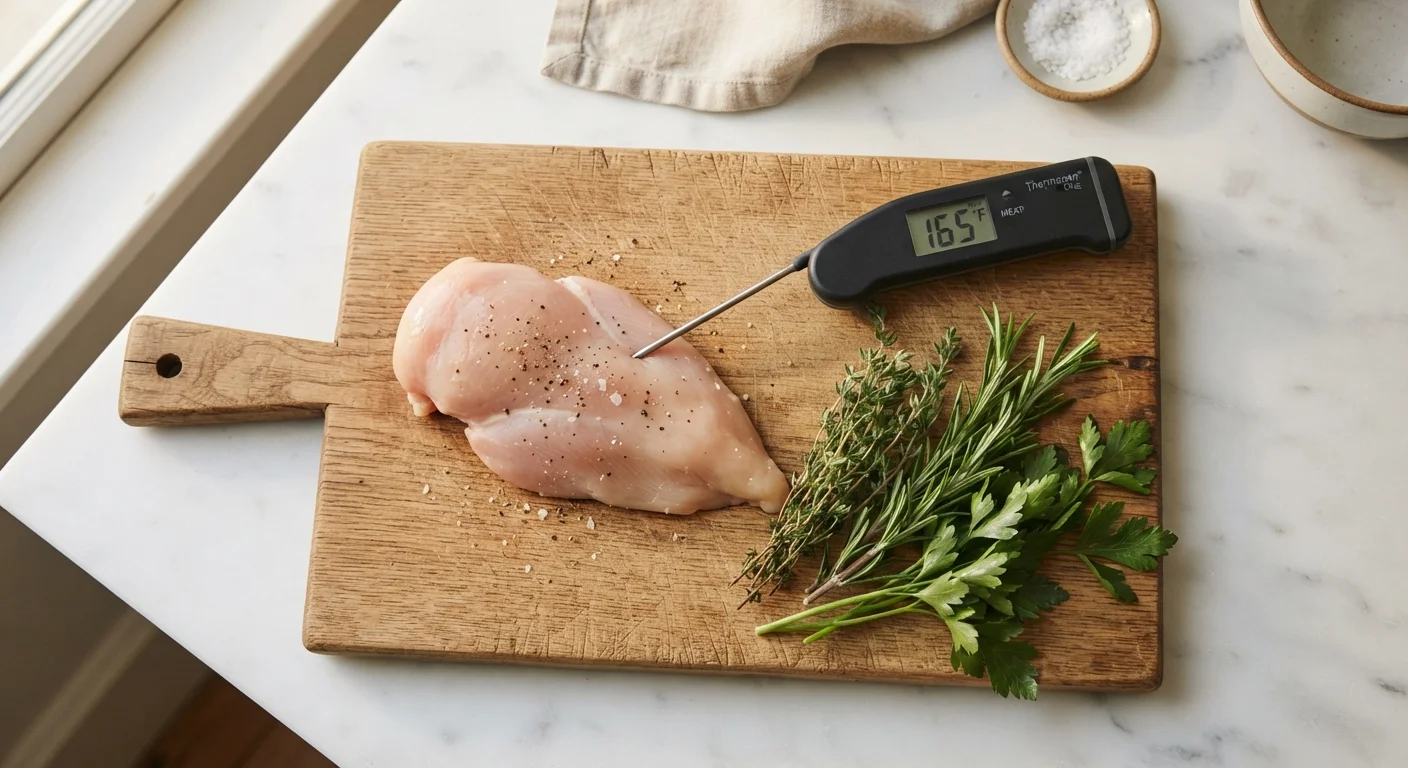
Why Temperature Is the Real Recipe
Most cooking failures - dry chicken, rubbery eggs, burnt caramel - trace back to temperature. Knowing what to cook isn't enough; knowing how hot to cook it is what separates guesswork from reliable results. Temperature affects texture, safety, color, and flavor all at once. This reference pulls together the numbers you'll reach for again and again, whether you're roasting, frying, or baking.
Understanding how heat travels through food is equally useful. Our guide to heat transfer in the kitchen explains why a cast-iron pan behaves so differently from a thin stainless-steel skillet - and why that matters for every dish you make.
| Safe temp for chicken | 165°F (74°C) (USDA Food Safety and Inspection Service) |
| Safe temp for whole beef/pork cuts | 145°F (63°C) + 3-min rest (USDA Food Safety and Inspection Service) |
| Hard-crack sugar stage | 300-310°F (149-154°C) |
| Moderate baking oven range | 325-375°F (160-190°C) |
| Butter smoke point (approx.) | 300-350°F (150-175°C) |
| Refined avocado oil smoke point | ~520°F (270°C) |
Safe Internal Temperatures for Meat and Poultry
The USDA publishes minimum safe internal temperatures for cooked proteins. These numbers reflect the point at which harmful bacteria - including Salmonella and E. coli - are reliably destroyed. An instant-read thermometer inserted into the thickest part of the food (away from bone) is the most accurate way to check.
- Poultry (whole birds, pieces, ground) - 165°F (74°C)
- Ground beef, pork, veal, lamb - 160°F (71°C)
- Whole cuts of beef, pork, veal, lamb - 145°F (63°C), with a 3-minute rest
- Fish and shellfish - 145°F (63°C)
- Eggs and egg dishes - 160°F (71°C)
- Leftovers and casseroles - 165°F (74°C)
For whole cuts of beef, many cooks prefer to stop at lower internal temps for medium-rare or medium doneness. That's a personal preference - but it does mean accepting more risk, particularly for vulnerable individuals such as young children, pregnant people, and those who are immunocompromised.
When aiming for a good sear before finishing in the oven, check our guide to searing meat at home for technique details.
Internal temperature
The temperature measured at the center or thickest part of a food item, away from bone or fat. It's the most reliable indicator of whether food is safely cooked.
Smoke point
The temperature at which a cooking fat begins to visibly smoke and break down, releasing bitter compounds. Choosing a fat with a smoke point above your cooking temperature protects both flavor and the fat's integrity.
Candy stage
A specific temperature range in sugar cooking that determines the texture of the finished confection. Each stage - soft ball, hard crack, caramel, etc. - produces distinctly different results.
Rest time
A short period after removing meat from heat during which juices redistribute and the internal temperature continues to rise slightly (called carryover cooking). USDA guidelines include a 3-minute rest for whole cuts of pork and beef.
Clarified butter (ghee)
Butter from which water and milk solids have been removed, leaving pure butterfat. Without milk solids, it has a significantly higher smoke point than whole butter, making it suitable for higher-heat cooking.
Common Oven Temperatures and Fat Smoke Points
Oven temperatures shape the texture of baked goods and roasted dishes more than most cooks realize. Below are the ranges you'll see most often in recipes:
| Setting | Fahrenheit | Celsius |
|---|---|---|
| Low / Slow roast | 250-300°F | 120-150°C |
| Moderate / Bake | 325-375°F | 160-190°C |
| Hot / Roast | 400-425°F | 200-220°C |
| Very hot / High roast | 450-500°F | 230-260°C |
Smoke point matters when choosing a fat for high-heat cooking. Using an oil below its smoke point means clean flavor; exceeding it produces acrid smoke and degraded flavor compounds. Some general ranges (approximate, as refining and freshness affect the actual point):
- Extra-virgin olive oil - around 375°F (190°C)
- Refined coconut oil - around 400°F (205°C)
- Refined avocado oil - around 520°F (270°C)
- Butter - around 300-350°F (150-175°C)
- Clarified butter / ghee - around 450°F (230°C)
If a recipe calls for a screaming-hot pan - the kind needed for a proper sear - reach for a high smoke-point oil rather than butter or unrefined olive oil.
Sugar Stages and Candy Temperatures
Sugar behaves predictably at specific temperatures, which is why candy-making is considered technical baking. Each stage produces a different texture when the syrup cools:
| Stage | Temperature Range | Result When Cooled |
|---|---|---|
| Thread | 230-235°F (110-113°C) | Thin, breakable threads |
| Soft ball | 235-240°F (113-116°C) | Fudge, fondant |
| Firm ball | 245-250°F (118-121°C) | Caramels |
| Hard ball | 250-265°F (121-130°C) | Nougat, marshmallows |
| Soft crack | 270-290°F (132-143°C) | Toffee, butterscotch |
| Hard crack | 300-310°F (149-154°C) | Brittles, lollipops |
| Caramel | 320-350°F (160-177°C) | Dry caramel, pralines |
A candy thermometer removes the guesswork. Without one, the traditional cold-water drop test gives a rough indication of stage - but a thermometer is far more reliable.
This article is for informational purposes only. Safe internal temperature guidelines are based on publicly available USDA recommendations; consult official food safety sources for the most current guidance, and speak with a healthcare professional if you have specific dietary or health concerns.
The content on this site is for informational purposes only and is not a substitute for professional advice. Always consult a qualified professional for guidance specific to your situation.