

Summary
28 items · 30-60 minutes
Why Your First Kitchen Setup Matters
Moving into your own place - or simply taking cooking more seriously - is genuinely exciting. But it's also easy to feel overwhelmed in a kitchen aisle surrounded by gadgets promising to change your life. The reality? Most beginner cooks need far fewer tools than they think, and far more of the right foundational ones.
This checklist cuts through the noise. It's organized around what you'll actually use week in and week out, not what looks impressive on a shelf. Whether you're furnishing your first apartment or starting fresh after years of takeout, this is where to begin.
If you're also thinking about how to budget for these purchases without blowing your savings, our guide to building your first budget is a solid companion read.
Core Cookware
Knives and Cutting
Prep and Mixing Tools
Heat and Measuring
Pantry Staples
Tools, Techniques, and What Comes Next
Once your kitchen is set up, the learning really begins. Having a good chef's knife is only useful if you know what to do with it - our knife skills glossary explains the cuts you'll see in most recipes in plain, beginner-friendly language.
The same logic applies to heat. Knowing roughly what temperature you're working with - whether you're searing a steak or roasting vegetables - takes a lot of the guesswork out of cooking. Cooking temperatures every home cook should know is a practical reference worth bookmarking early.
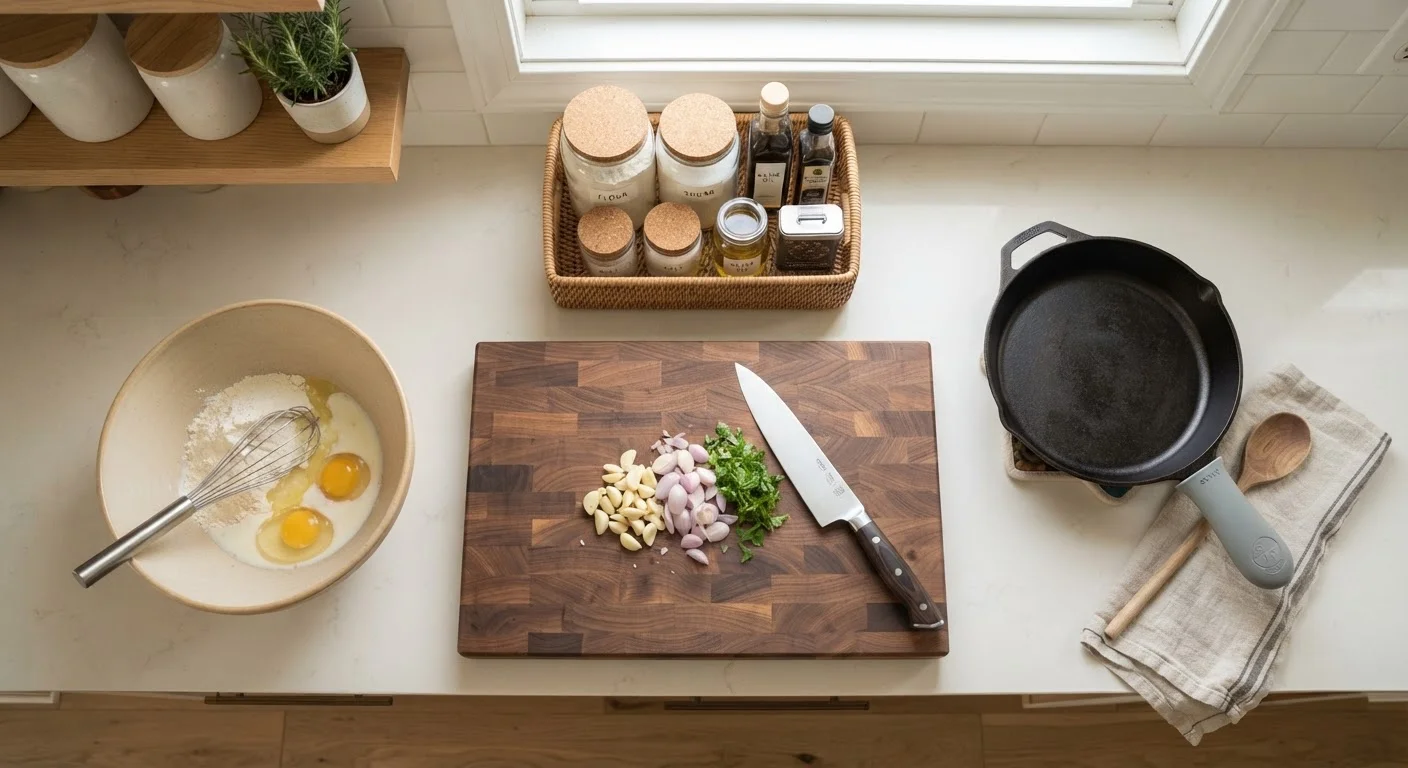
And once you have your tools in place, consider adopting the habit of mise en place - setting up and prepping all your ingredients before you start cooking. It's a small shift that makes a big difference. See how it works in our piece on mise en place for home cooks.
Chef's Knife
Handles the bulk of everyday prep work including chopping, slicing, and dicing vegetables, herbs, and proteins.
Instant-Read Thermometer
Confirms safe internal temperatures for meat and poultry, removing guesswork from cooking doneness.
Cast Iron or Stainless Steel Skillet
Provides consistent, even heat for searing, sautéing, and stovetop-to-oven cooking.
Rimmed Baking Sheet
Used for roasting vegetables, baking, and sheet-pan meals - one of the most versatile pieces in a beginner kitchen.
Digital Kitchen Scale
Improves accuracy in baking and portioning, especially useful once you start following recipes more precisely.
Dutch Oven
Ideal for soups, braises, and one-pot meals; a worthwhile addition once you've mastered basic stovetop cooking.
Finally, don't feel pressure to buy everything upfront. Add items as your cooking repertoire grows, and you'll avoid filling drawers with things you never touch.
This article is for informational purposes only. Tool and pantry recommendations are general in nature and may not reflect every household situation or dietary need.
The content on this site is for informational purposes only and is not a substitute for professional advice. Always consult a qualified professional for guidance specific to your situation.