

Our Verdict
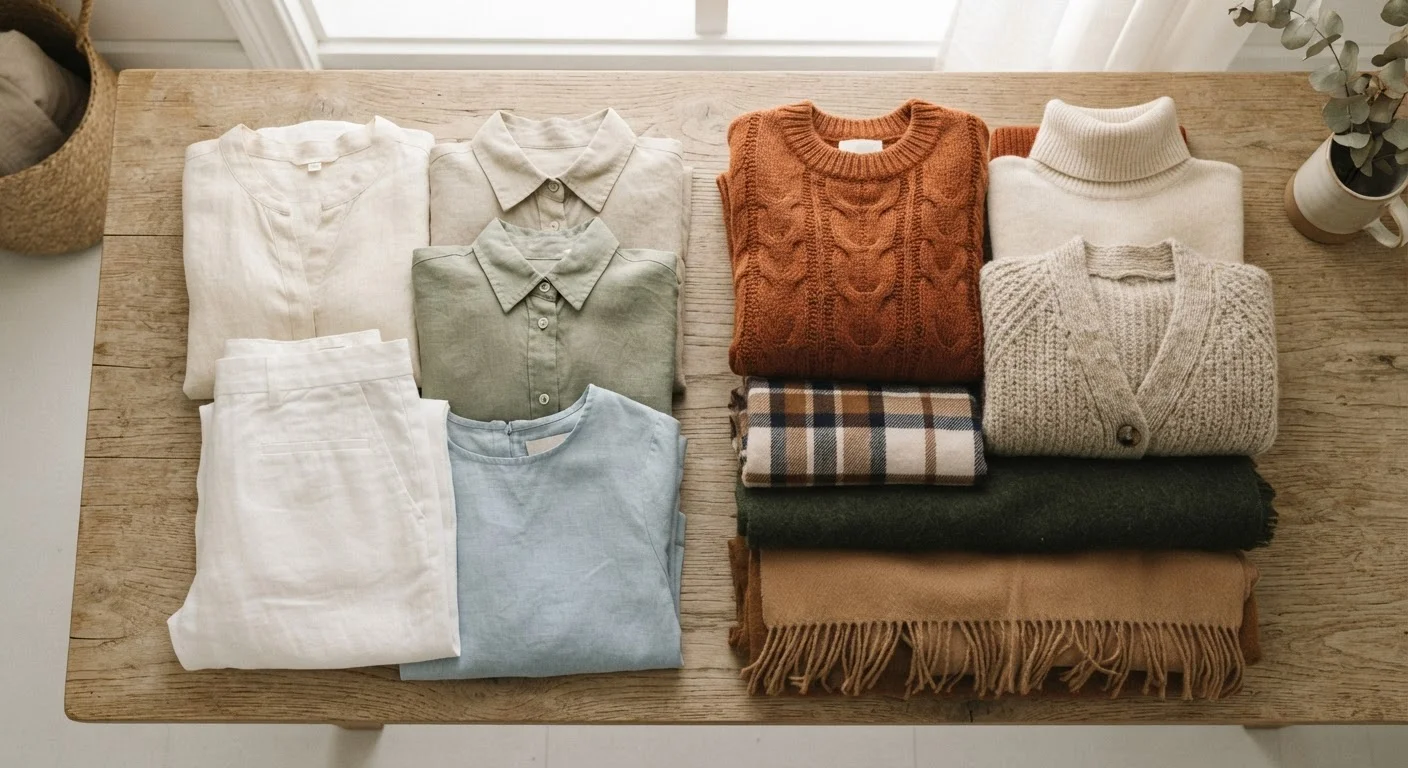
Neither hot- nor cold-weather dressing is inherently harder — they simply require different logic. Hot weather calls for restraint and smart fabric choices, while cold weather rewards a deliberate layering system. Understanding both approaches means you can look put-together and stay comfortable year-round without overhauling your wardrobe each season.
| Best for | Recommended |
|---|---|
| Those managing humid summers or heat-prone climates | Hot-weather fabric-first strategy |
| Commuters and those moving between heated indoors and cold outdoors | Cold-weather three-layer system |
| People in swing-season climates with unpredictable temperatures | Mid-layer versatility approach |
Why Layering Strategy Depends on the Season
Most people think of layering as something you do in winter — pile on sweaters until you're warm. But layering is really about managing your body's relationship with temperature, and that logic applies equally to a sweltering August afternoon. The difference is your goal: in cold weather, you're trapping heat; in hot weather, you're releasing it.
Getting this direction right changes everything about how you shop, dress, and feel throughout the day. See our everyday outfit formulas guide for repeatable pairings that apply these ideas across seasons without reinventing your wardrobe daily.
| Hot Weather Strategy | Cold Weather Strategy | |
|---|---|---|
| Primary goal | Release heat, manage moisture | Trap heat, block elements |
| Best fabrics | Linen, cotton, chambray | Merino wool, fleece, quilted fill |
| Number of layers | 1–2 lightweight pieces | 3 functional layers |
| Fit philosophy | Loose and airy for airflow | Fitted base, roomier outer |
| Adaptability | Add/remove a single cover layer | Remove mid or outer as needed |
| Common mistake | Heat-trapping synthetic fabrics | One bulky layer instead of three |
Dressing Well in Hot Weather: Less Is Smarter, Not Just Less
In heat, the instinct to simply strip down is understandable, but it misses a useful nuance. A single well-chosen layer often outperforms bare skin in direct sun — loose, breathable fabric can shade your skin and slow moisture loss, keeping you cooler longer.
Fabric First
In warm climates, fabric choice does the heavy lifting. Natural fibers like linen and cotton allow air to circulate and wick perspiration away from your body. Tightly woven synthetics (think shiny polyester) trap heat and hold odor. Lightweight chambray, cotton gauze, and moisture-wicking blends are your allies.
Fit and Silhouette
Loose, relaxed cuts create airflow between fabric and skin — a functional advantage, not just a trend. Tight clothing in heat restricts circulation and makes you feel hotter faster. Wide-leg trousers, relaxed button-ups worn open over a simple top, and breezy midi lengths all work with your body rather than against it.
Strategic Minimalism
Hot-weather "layering" is really about finishing touches that elevate a simple base without adding warmth: a lightweight scarf used as a topper, a linen overshirt worn unbuttoned, or a structured tote that adds polish without adding temperature.
The Linen Overshirt Trick
A loose linen or cotton overshirt is one of the most versatile warm-weather pieces you can own. Worn open over a simple top, it adds a finished, put-together look without adding heat — it actually creates shade and a light breeze effect as you move. Look for one in a neutral color and it'll work with nearly everything you already own.
Cold-Weather Layering: The Three-Layer System Explained
Cold-weather dressing has a practical framework backed by outdoor and sports science: the base layer, mid layer, and outer layer. Each does a specific job, and the system works because air trapped between layers insulates far better than one thick garment alone.
Base Layer: Moisture Management
The layer closest to your skin should move sweat away from your body. Merino wool and moisture-wicking synthetics excel here. A damp base layer in cold temperatures pulls heat from your body quickly — keeping dry is the first priority.
Mid Layer: Insulation
This is your warmth engine. Fleece, a chunky knit sweater, or a lightweight quilted vest all trap warm air near your core. The mid layer should fit comfortably over your base without bunching, and it's the layer you remove first when heading indoors.
Outer Layer: Wind and Water Resistance
Your shell protects everything underneath from wind, rain, and snow. It doesn't need to be heavily insulated — that's the mid layer's job. A well-fitted outer layer that blocks the elements while allowing some breathability extends the warmth of what's underneath significantly.
This system also makes cold-weather dressing more adaptable: you're not locked into a single heavy coat but can mix and match based on actual temperatures that day. For guidance on pulling these pieces into a polished look for specific occasions, check our quick-reference style checklist.
Building a Wardrobe That Handles Both Extremes
You don't need two entirely separate wardrobes. A handful of versatile pieces — a fitted cotton tee, a merino crewneck, a lightweight button-up, a mid-weight knit, and a reliable outer layer — can be combined and recombined to work across most conditions.
Neutral colors in these core pieces mean they can be stacked (cold) or worn solo (hot) without clashing. A linen button-up becomes a breezy summer layer or a lightweight mid layer over a tee in early fall. A well-cut cotton tee anchors both a summer outfit and a cold-weather base layer system.
Caring for these versatile pieces extends their usefulness across years, not just seasons. Our guide to caring for everyday clothes covers washing, drying, and storage habits that keep these staples looking sharp longer.
3–5
Core versatile pieces needed for both seasons
Style educators and wardrobe consultants commonly suggest a small set of neutral, multi-use basics forms the foundation of practical seasonal dressing.
~30%
Warmer with layering vs. single thick garment
Textile research consistently shows that trapped air between multiple thin layers insulates more effectively than an equivalent thickness of a single garment.
If you're also thinking about how these principles apply in a more formal context — say, dressing appropriately for a job interview in unpredictable weather — our interview dressing guide walks through exactly that situation.
The content on this site is for informational purposes only and is not a substitute for professional advice. Always consult a qualified professional for guidance specific to your situation.