

Why Most People Don't Own Interview Clothes — And That's Fine
The idea of a dedicated 'interview outfit' is a holdover from an era when formal dress codes were the norm across most workplaces. Today, most American work environments span a wide range — from business casual to genuinely relaxed — and keeping a full formal wardrobe on standby isn't realistic for everyone, especially if job searches are infrequent.
The good news: you almost certainly already own the components of a credible interview look. The goal isn't to look like someone else's idea of a professional. It's to show up looking intentional, clean, and appropriate for the context — and that's achievable with almost any wardrobe when you know what to reach for. If you're building your wardrobe more broadly, our guide to building a wardrobe from scratch is a great companion resource.
What you will need
What You'll Need
Before working through the steps, gather the tools that will make the biggest difference in how your outfit comes together. A few practical items go a long way:
Iron or clothes steamer
Removes wrinkles so even simple, affordable garments look intentional and neat.
Lint roller
Quickly removes pet hair, lint, and dust from dark-colored fabrics.
Neutral belt
Pulls a trouser-based outfit together and signals attention to detail.
Clean, simple shoes
Footwear condition has an outsized effect on how polished an overall look reads.
If any of these are missing, most can be borrowed, purchased inexpensively at a grocery or drugstore, or handled at a local laundromat. Don't skip the pressing step — it's the single highest-impact action you can take on short notice.
Don't Buy Anything Until You Check Your Closet
Panic-buying a new outfit the night before an interview often backfires. Unworn clothes can feel stiff or unfamiliar, and you won't have time to tailor anything that doesn't fit quite right. Work with what you have first, then consider targeted additions only if there's a genuine gap you can't work around.
Step-by-Step: Putting the Look Together
Follow these steps in order. Each one builds on the last, so resist the temptation to skip straight to the outfit assembly without doing the research and closet audit first.
Research the company's dress culture
Before you open your closet, spend ten minutes researching the company. Look at their website, social media, and LinkedIn employee photos. A law firm, a tech startup, and a retail manager role all carry different expectations. Knowing whether you're aiming for business formal (suits, structured dresses), business casual (trousers, blouses, blazers), or smart casual (neat jeans, clean sneakers, collared shirt) will completely change which pieces you reach for.
Do a full closet audit
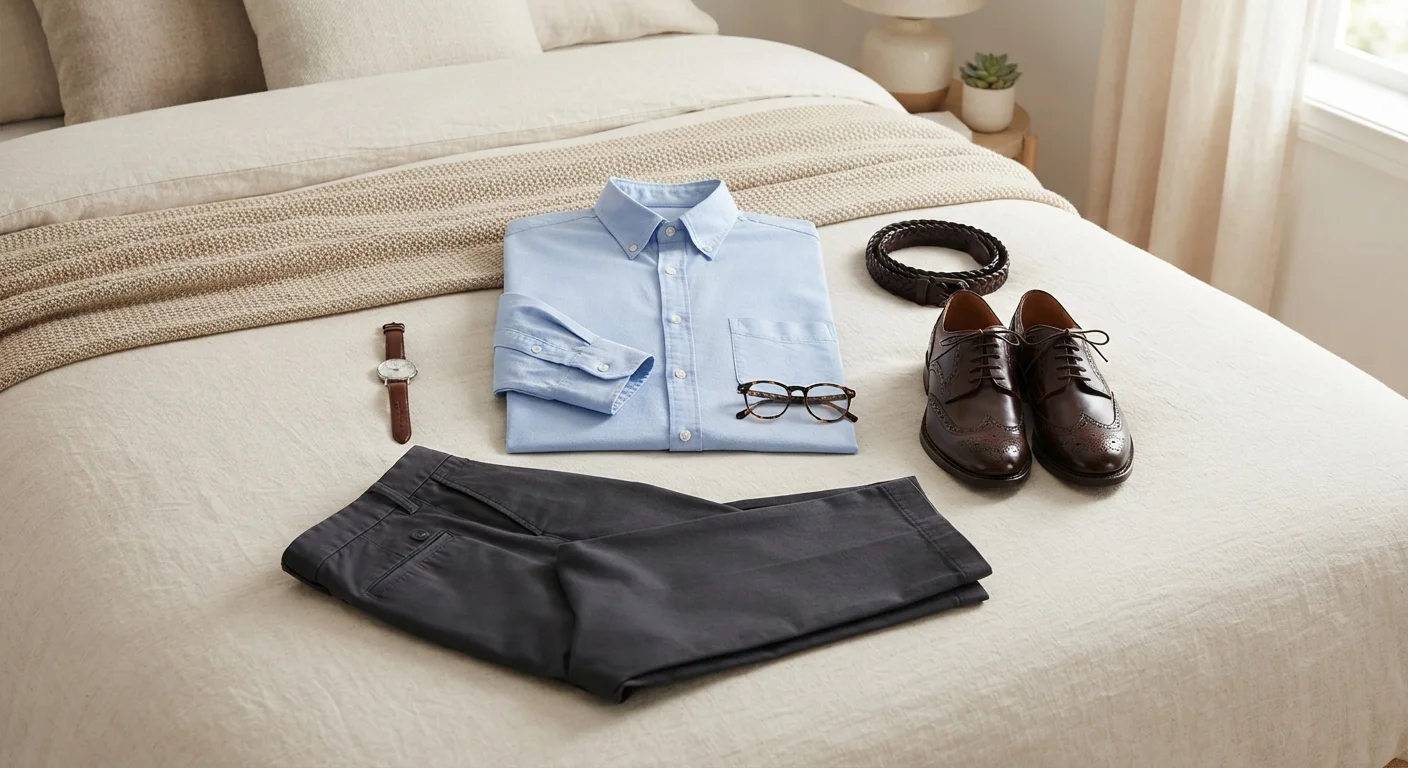
Pull out every item that could plausibly be worn to a professional setting — don't just think about what you already call 'nice.' Dark jeans without distressing, plain-color sweaters, button-down shirts, structured tops, knee-length skirts, and chinos often work for business casual environments. Lay candidates on the bed and evaluate each one for fit, condition, and color. You're looking for pieces that fit well, sit in a neutral or muted color palette, and show no visible damage or heavy wear.
Build the outfit around one strong anchor piece
Choose one piece as the foundation — typically a bottom (trousers, a pencil skirt, tailored chinos) or a structured outer layer (blazer, cardigan). Everything else you add should complement that anchor in color and formality level. A reliable formula: dark, neutral bottom + light, solid top + structured layer. This combination reads as intentional and polished without requiring anything expensive or specialized. See our everyday outfit formulas guide for more reliable pairings.
Clean, press, and lint-roll every piece
Condition matters enormously. A wrinkled shirt in a premium fabric looks worse than a pressed shirt from a discount store. Wash or spot-clean your chosen items, press out any creases with an iron or steamer, and run a lint roller over the full outfit. Check for loose threads, missing buttons, and stains under bright light. Address what you can; if something has a visible flaw you can't fix, swap it out for your second-best option.
Assess your shoes honestly
Shoes are one of the first things interviewers notice. Clean, simple, and unscuffed beats expensive-but-worn every time. Wipe down leather or faux-leather shoes with a damp cloth and let them dry. For fabric shoes, a quick brush or damp sponge can work. If you only have sneakers, choose the most minimal pair — clean white or black with no bold branding — and pair them only if you've confirmed the company culture is casual. For formal settings, scuffed dress shoes should be polished or swapped for a cleaner alternative.
Do a final full-outfit check
Put the complete outfit on — including shoes, belt if applicable, and any accessories — and look in a full-length mirror (or ask someone you trust for honest feedback). Check that nothing pulls, gaps, or bunches awkwardly. Make sure colors feel cohesive rather than clashing. Keep accessories minimal: a simple watch, stud earrings, or a plain necklace are fine; avoid anything noisy, oversized, or distracting. Use our occasion style checklist to make sure you haven't missed anything before you walk out the door.
The Power of a Single Blazer
A well-fitting blazer — even an inexpensive one — can instantly elevate almost any base outfit. Pair it over a plain, tucked-in top and dark trousers or a neat midi skirt and most interviewers will read 'professional' before you say a word. If a blazer isn't an option, a cardigan in a neutral color works similarly in casual-to-business-casual settings.
If You Genuinely Have Nothing That Works
In rare cases, a closet audit turns up nothing that can be made to work — typically for high-formality roles in industries like finance or law when you don't own any structured pieces. In that situation, a few targeted options are worth knowing about:
- Thrift stores and consignment shops often carry blazers, trousers, and dress shirts in good condition at low cost. Give yourself at least two days to find, clean, and press anything you buy.
- Clothing lending programs exist in many cities, specifically aimed at job seekers. Search for 'professional clothing programs' or 'interview clothing assistance' in your area — libraries and workforce development centers often know of local options.
- Borrowing from someone your size is completely reasonable for a one-time use, provided the item fits well enough that it doesn't distract.
Avoid Extremes in Either Direction
Showing up wildly overdressed can signal poor judgment about company culture just as much as showing up underdressed. If you're unsure, aim for 'smart casual' — neat, coordinated, and free of distracting elements. When in doubt, a slightly more polished look is usually the safer call.
Whatever your path, the steps above still apply: research the culture, choose intentional combinations, and get everything pressed and lint-free before interview day. For broader thinking about your wardrobe going forward, this honest look at smaller wardrobes may help you decide whether adding a few versatile pieces makes sense long-term. And while you're preparing, don't forget the application side of the equation — tailoring your resume for each role can be just as impactful as showing up dressed well.
The content on this site is for informational purposes only and is not a substitute for professional advice. Always consult a qualified professional for guidance specific to your situation.