

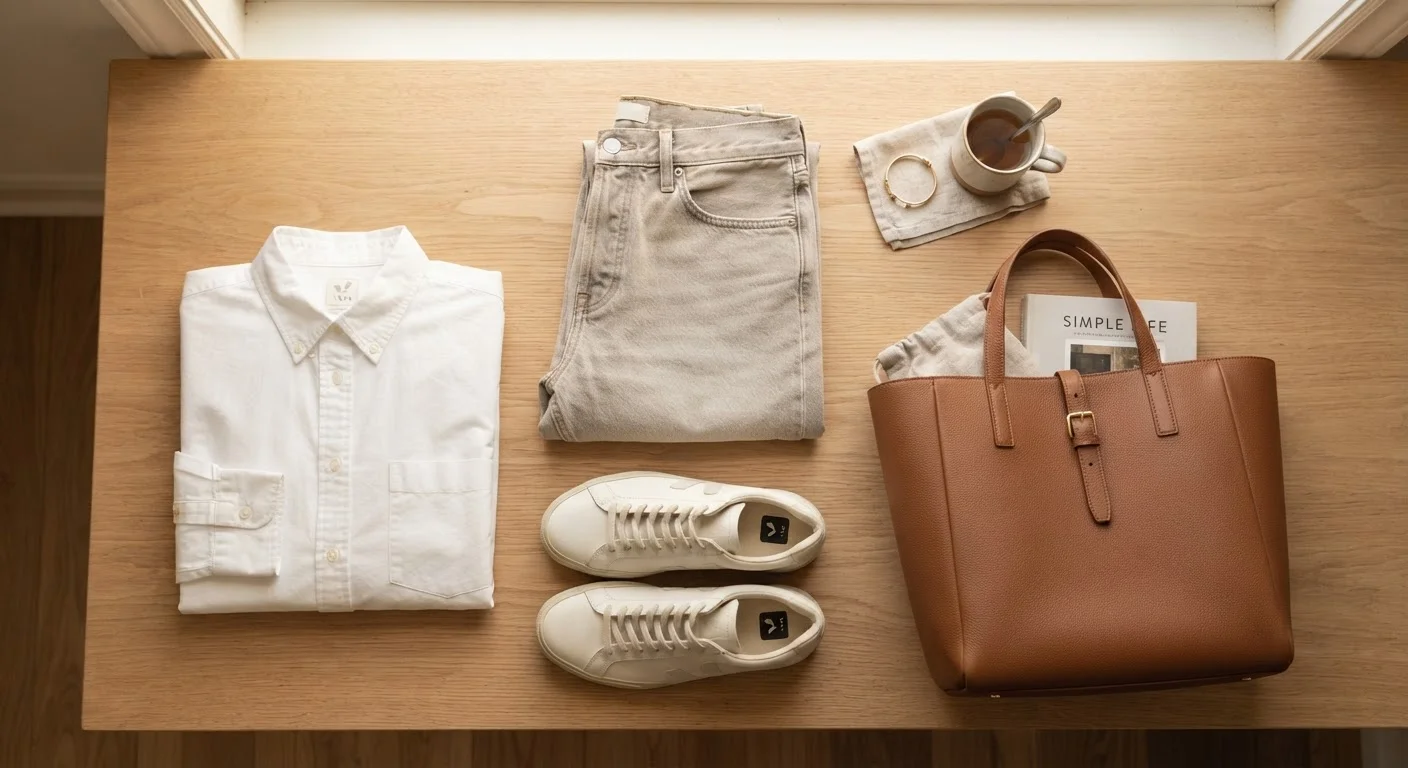
Why Outfit Formulas Work Better Than Rules
Style advice often sounds like a checklist of rules: never mix prints, always tuck your shirt, match your metals. Formulas work differently. Instead of telling you what not to do, they hand you a repeatable structure that produces a good result almost every time — no fashion background required.
Think of a formula the way you'd think of a recipe. You don't need to understand culinary science to follow the steps and get something that tastes great. The same logic applies here. Once you have five or six reliable formulas memorized, getting dressed in the morning becomes a matter of plugging in the pieces you own rather than starting from scratch.
If you're still building your closet, our guide to starting a wardrobe from scratch covers which pieces to prioritize first. And if color coordination still feels tricky, color coordination made simple takes the guesswork out of that too.
Dark Jeans + Solid Top + Clean Sneakers
This is the most universally wearable formula in everyday dressing. Dark-wash jeans read as elevated without trying hard — they avoid the casual casualness of distressed or light-wash denim. Pair them with any solid-color top in a neutral or muted tone and finish with clean, simple sneakers. The result works for errands, casual offices, weekend plans, or low-key social outings.
The key variable is the top. A fitted crewneck, a relaxed button-down left open over a tee, or a simple knit all slot in smoothly. Keep the sneakers plain — minimal branding, clean soles — and the formula holds up.
Dark jeans do more styling work than almost any other single piece you can own.
Monochrome Outfit in One Neutral
Wearing one color head-to-toe sounds bold, but in neutral tones — camel, navy, grey, olive, cream — it reads as quietly intentional rather than theatrical. The trick is allowing variation in texture or shade within the same color family. Matching a heathered grey sweatshirt to charcoal trousers to light grey sneakers, for example, creates visual depth without requiring any color decisions at all.
This formula is especially useful on low-energy mornings when decision fatigue sets in early. You're essentially removing one entire category of consideration (color) from the equation.
Monochrome neutrals eliminate color decisions entirely — and still look considered.
Chinos or Trousers + Plain Tee + One Structured Layer
Swap jeans for chinos or simple trousers, pair with a clean plain tee, and add one structured outer layer — a blazer, an unlined sport coat, or a neat button-down shirt worn open. The structured layer is doing significant visual work: it signals a step up from purely casual without requiring a tie, dress shoes, or any formal gear.
This formula adapts well for smart-casual offices, dinner out, or any occasion where jeans feel slightly too relaxed. Getting dressed for a job interview without dedicated interview clothes? This formula is a strong starting point.
One structured layer instantly moves an outfit from casual to smart-casual territory.
Midi Skirt + Simple Top + Flat or Low Shoe
A midi-length skirt (hitting roughly mid-calf) in a solid or subtle pattern pairs cleanly with almost any fitted or tucked-in top. The length is forgiving across body types and works across seasons — in warmer months with sandals or flats, in cooler months with ankle boots or block-heeled shoes and a lightweight layer on top.
The formula's strength is its flexibility. A linen midi skirt with a white tee is relaxed weekend dressing. The same skirt with a fitted ribbed top and simple mules moves comfortably into more polished territory. For more on how clothing choices interact with your comfort and proportions, see our article on dressing for your body shape.
A midi skirt pairs with almost anything and works from warm months straight through winter.
Fitted Base Layer + Wide-Leg or Relaxed Pant
When one piece is relaxed and roomy, balance it with something closer-fitting on top. A fitted tee, tank, or slim-cut knit paired with wide-leg trousers or relaxed-fit pants creates a proportional contrast that looks deliberate. The silhouette does the work — you're not relying on color, pattern, or accessories to pull the look together.
This formula works particularly well if you gravitate toward comfort-first dressing. It allows loose, easy-to-wear bottoms without the outfit reading as unstructured or unintentional. Refer to our capsule wardrobe explainer if you want to build a small set of pieces that support multiple formulas like this one.
Balancing a relaxed bottom with a fitted top is one of the simplest silhouette tricks in everyday dressing.
Layered Basics for Changing Temperatures
This formula is less about specific items and more about a structural approach: start with a base layer (tee or lightweight long-sleeve), add a mid-layer (flannel, cardigan, or light sweatshirt), and keep a packable outer layer on hand. Each layer works independently, and together they let you adapt across air-conditioned offices, outdoor commutes, and variable weather without carrying a separate bag of options.
For a deeper look at how layering strategies change across seasons, our article on layering strategies for hot and cold weather walks through the logic in practical terms.
A three-layer formula lets you dress once and adapt all day without carrying backup options.
Putting the Formulas to Work
These formulas aren't trend-dependent, which means you won't need to relearn them every season. Most of the pieces involved are wardrobe staples — the kind covered in our article on pieces that pull any outfit together. Once you've identified two or three formulas that fit your lifestyle, try pre-planning them the night before so morning decisions practically make themselves.
Try the "formula audit" once a week
On Sunday evening, pick three formulas from this list and identify which pieces in your current closet satisfy each one. If a formula consistently comes up short, that's a clear signal of what's worth adding next — not based on trends, but based on what you'll actually use repeatedly.
When an occasion calls for something more specific — a job interview, a semi-formal dinner, a weekend away — use this occasion-dressing checklist to verify you haven't missed anything. Formulas give you the foundation; that checklist helps you fine-tune for context.
The content on this site is for informational purposes only and is not a substitute for professional advice. Always consult a qualified professional for guidance specific to your situation.