

Why Clothing Care Actually Matters
Replacing worn-out clothes adds up fast. A few consistent habits — most of them free — can meaningfully extend how long your everyday items hold up, saving money and reducing the frustration of a shrinking wardrobe. If you're building a wardrobe from scratch, protecting what you already own is just as important as choosing what to buy next.
The good news: you don't need specialty products or a lot of time. Most clothing damage comes from a handful of avoidable mistakes — too much heat, wrong detergent amounts, and skipping the care label. Understanding the basics puts you well ahead.
~80%
Of clothing damage linked to washing and drying
Textile care researchers generally attribute the majority of fiber degradation and color loss to repeated laundering rather than normal wear.
2x
Longer lifespan with cold-water washing
Fabric care guidance from textile industry bodies consistently notes that cooler wash temperatures can roughly double the effective lifespan of color-dyed garments.
Best Practices for Washing and Drying
How you wash and dry clothes has more impact than almost any other factor. Here are the core practices that make a real difference:
Always read the care label before washing a new garment.
Care labels contain manufacturer-tested instructions for that specific fabric blend. Ignoring them is the single most common cause of shrinkage, color bleeding, and texture damage. A thirty-second check prevents an irreversible mistake.
Wash clothes in cold water as your default setting.
Hot water accelerates color fading and causes natural fibers like cotton and wool to shrink. Cold water is effective for most everyday laundry and is gentler on fabric structure. It also uses less energy, which is a side benefit worth noting.
Turn dark and brightly colored clothes inside out before washing.
The agitation and friction inside a washing machine causes surface dye to fade faster. Turning items inside out puts the interior — not the visible exterior — in direct contact with that friction, preserving color depth longer.
Use the lowest effective dryer heat, or air dry when possible.
High dryer heat breaks down elastic fibers, shrinks cotton, and weakens fabric over repeated cycles. Air drying is the gentlest option. When using a dryer, a low or medium heat setting and removing items while slightly damp reduces damage significantly.
Treat stains as quickly as possible — before they dry or set.
Most stains become significantly harder to remove once they've dried and bonded with fabric fibers. Acting within the first few minutes, even just blotting with cold water, dramatically improves outcomes. Avoid rubbing, which spreads the stain and works it deeper into the fibers.
Avoid overwashing clothes that don't need it.
Every wash cycle puts mechanical stress on fabric. Many items — jeans, sweaters, jackets — don't need washing after every single wear unless visibly soiled or odorous. Spot cleaning and airing out garments between wears extends the time between full washes and reduces cumulative wear.
Storing Clothes the Right Way
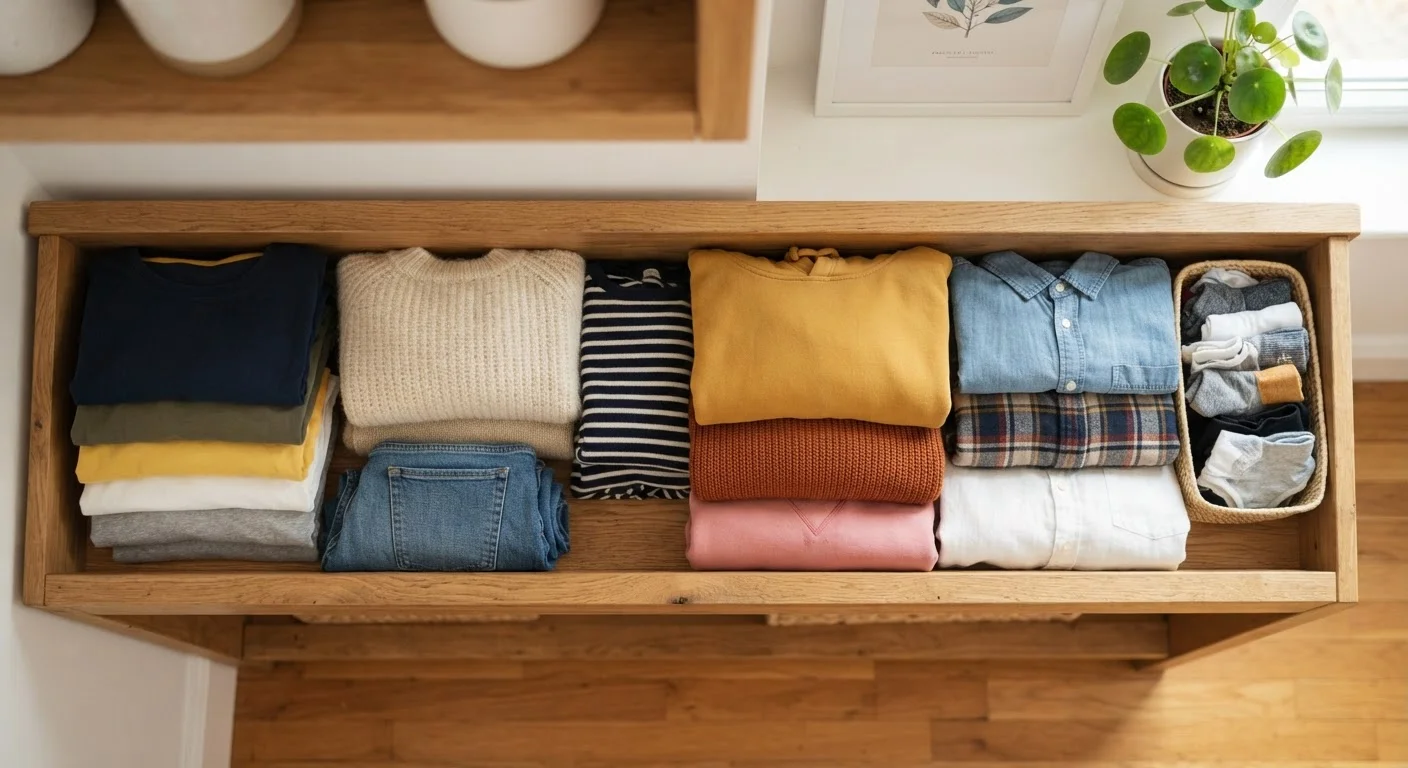
Even perfectly washed clothes can lose their shape if stored incorrectly. The general rule: knits and stretchy fabrics should be folded, while structured pieces like blazers, dress shirts, and trousers benefit from hanging. Hanging heavy knitwear causes shoulder bumps and stretching that are difficult to reverse.
Hang Only What Can Handle It
Use padded or shaped hangers for structured jackets and dress shirts — wire hangers can distort shoulders over time. Lightweight knits, t-shirts, and anything with stretch are much safer folded flat in a drawer or on a shelf. If you're not sure, fold it: folding never causes the kind of permanent damage that improper hanging can.
For seasonal storage, clean clothes before putting them away — residual body oils and light stains can set permanently over months. Breathable cotton garment bags offer better protection than plastic, which can trap moisture and cause yellowing over time. This connects directly to making a smaller wardrobe work harder — well-maintained pieces pull more weight.
Quick Wins You Can Start Today
You don't have to overhaul your entire laundry routine at once. A few targeted changes deliver noticeable results quickly:
Clothes that fit and look good also tend to photograph better and feel more versatile — which matters whether you're heading to work or a casual weekend outing. Check out our occasion dressing checklist to make sure your freshly cared-for pieces are working for every situation. For a broader overview of everyday style, the complete foundation guide covers fit, color, and wardrobe-building in plain language.
The content on this site is for informational purposes only and is not a substitute for professional advice. Always consult a qualified professional for guidance specific to your situation.