

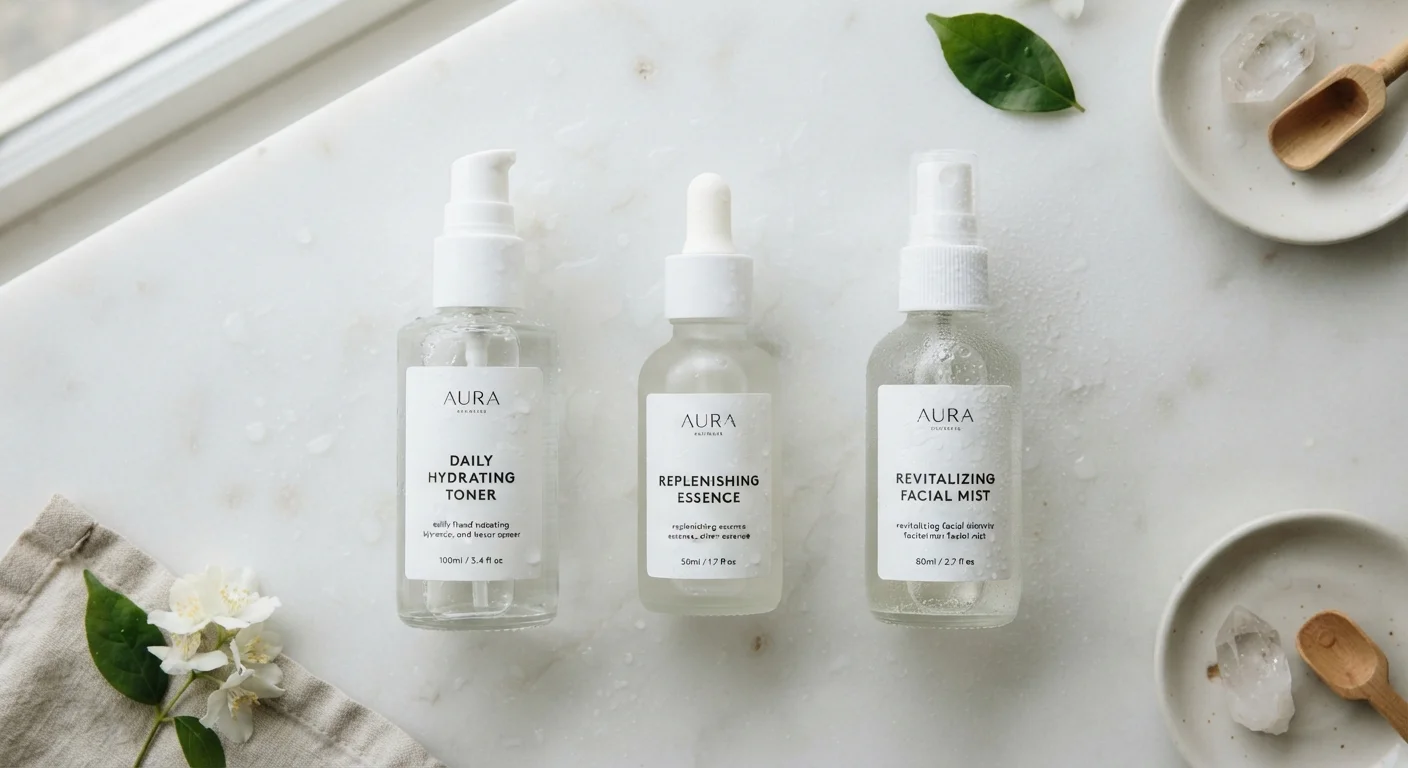
Our Verdict
Toner, essence, and mist all work with water as their base but serve genuinely different purposes. Toner is the foundational prep step, essence is the targeted treatment layer, and mist is the lightweight refresh option. None of the three is required for every person — what matters is choosing the steps that address your specific skin concerns.
| Best for | Recommended |
|---|---|
| Those building a beginner skincare routine | Toner |
| Those focused on hydration or targeting specific skin concerns | Essence |
| Those who want a quick midday refresh or are frequently on the go | Mist |
| Those with combination or dry skin wanting multiple hydration layers | All three, layered in order |
Why These Three Get Confused
Walk into any beauty aisle and you'll see dozens of water-based bottles making overlapping promises — "hydrating," "brightening," "refreshing." Toners, essences, and mists are all lightweight, watery formulas, which makes it easy to assume they're interchangeable. They're not. Each one is designed to act at a different stage of your routine and deliver a different result.
If you're starting to build a skincare routine, understanding these distinctions helps you avoid buying three products that do the same job — or skipping one that would actually help your skin.
| Toner | Essence | Mist | |
|---|---|---|---|
| When to apply | After cleansing | After toner, before serum | Last step or midday refresh |
| Primary purpose | pH balance, surface prep | Deep hydration, active delivery | Surface refresh, quick moisture |
| Texture | Very thin, watery | Slightly thicker than toner | Ultra-fine spray |
| Key ingredients to look for | Glycerin, AHAs, BHAs | Hyaluronic acid, peptides, ferments | Humectants, botanical extracts |
| Necessary for everyone? | No — skin-type dependent | No — targets specific needs | No — mostly optional |
| Results timeline | Immediate surface effect | Cumulative over weeks | Immediate but temporary |
Toner: The Reset After Cleansing
Toner is applied immediately after washing your face. Its original purpose — stripping away oil — has largely given way to a gentler modern mission: rebalancing your skin's pH level after cleansing and sweeping away any remaining traces of makeup, hard water minerals, or cleanser residue.
Most contemporary toners are either hydrating (containing ingredients like glycerin or hyaluronic acid) or exfoliating (containing chemical exfoliants like AHAs or BHAs — short for alpha hydroxy acids and beta hydroxy acids). Hydrating toners add a first layer of moisture. Exfoliating toners help clear dead skin cells from the surface and should generally not be used daily unless the formula specifically says it's gentle enough for that.
Pat, Don't Rub
Whether you're applying toner or essence, use clean hands or a soft cotton pad and press the product gently into skin rather than wiping it across. Patting encourages better absorption and avoids unnecessary friction on your skin barrier. This small habit makes a real difference in how much of the product actually gets where it needs to go.
Toner is the step most likely to feel "optional" — and it genuinely is for some people. If your cleanser leaves your skin feeling balanced and comfortable, you may not need one. But if your skin feels tight after washing, a hydrating toner can bridge that gap nicely.
Essence: The Concentrated Hydration Layer
Essences originated in Korean skincare and remain a cornerstone of multi-step routines. They sit between toner and serum in application order and are often described as the "heart" of a routine — thicker than toner but lighter than serum, formulated to push active ingredients (like niacinamide, fermented extracts, or peptides) deeper into skin before heavier products are layered on top.
The key thing to understand about essence is that it's not just water with fragrance. A well-formulated essence contains functional ingredients that support hydration, skin barrier repair, or radiance over time. Results are cumulative, meaning consistent daily use over weeks matters more than any single application.
Essences pair well with other treatment steps. For a deeper look at how this layer compares to a serum, our guide on serums vs. moisturizers explains where each fits and when you need both.
Mist: The Refresh, Not the Replacement
Facial mist is the most misunderstood of the three. Marketed as a hydration hero, it's often used mid-afternoon to "wake up" skin or set makeup — but it's important to be clear about what it actually does versus what it can't do.
A mist can temporarily add moisture to skin's surface, help press down makeup without disturbing it, and feel genuinely refreshing in hot or dry environments. It does not replace moisturizer, and plain water mists can actually backfire by drawing moisture out of skin as they evaporate if no humectant (a moisture-binding ingredient) is present in the formula.
When used as the final step in a routine, a mist can help "press" layers together. When used midday, it's a comfort tool more than a treatment one. That's perfectly valid — just don't expect it to fix dehydration that a proper routine hasn't addressed. Learning to read skincare labels clearly can help you spot mists with real functional ingredients versus mostly water and fragrance.
The Right Order and What You Actually Need
When using all three, apply them thinnest to thickest: toner first, then essence, then mist (if using it as a finishing step). This order ensures each layer can absorb properly before the next is added.
That said, you don't need all three. A minimal but effective routine can skip any or all of these and still serve your skin well — especially if you're committed to skin-friendly habits beyond products like sleep, hydration, and stress management. Think of toner, essence, and mist as additions you layer in as your routine evolves and your skin signals what it needs, not as mandatory purchases for good skin.
~30 seconds
Recommended wait time between layers
Dermatologists generally suggest allowing each watery layer to absorb briefly before applying the next product.
pH 4.5–5.5
Healthy skin surface pH range
The skin's natural acid mantle falls in a mildly acidic range; toners help restore this balance after alkaline cleansers disrupt it.
The content on this site is for informational purposes only and is not a substitute for professional advice. Always consult a qualified professional for guidance specific to your situation.