

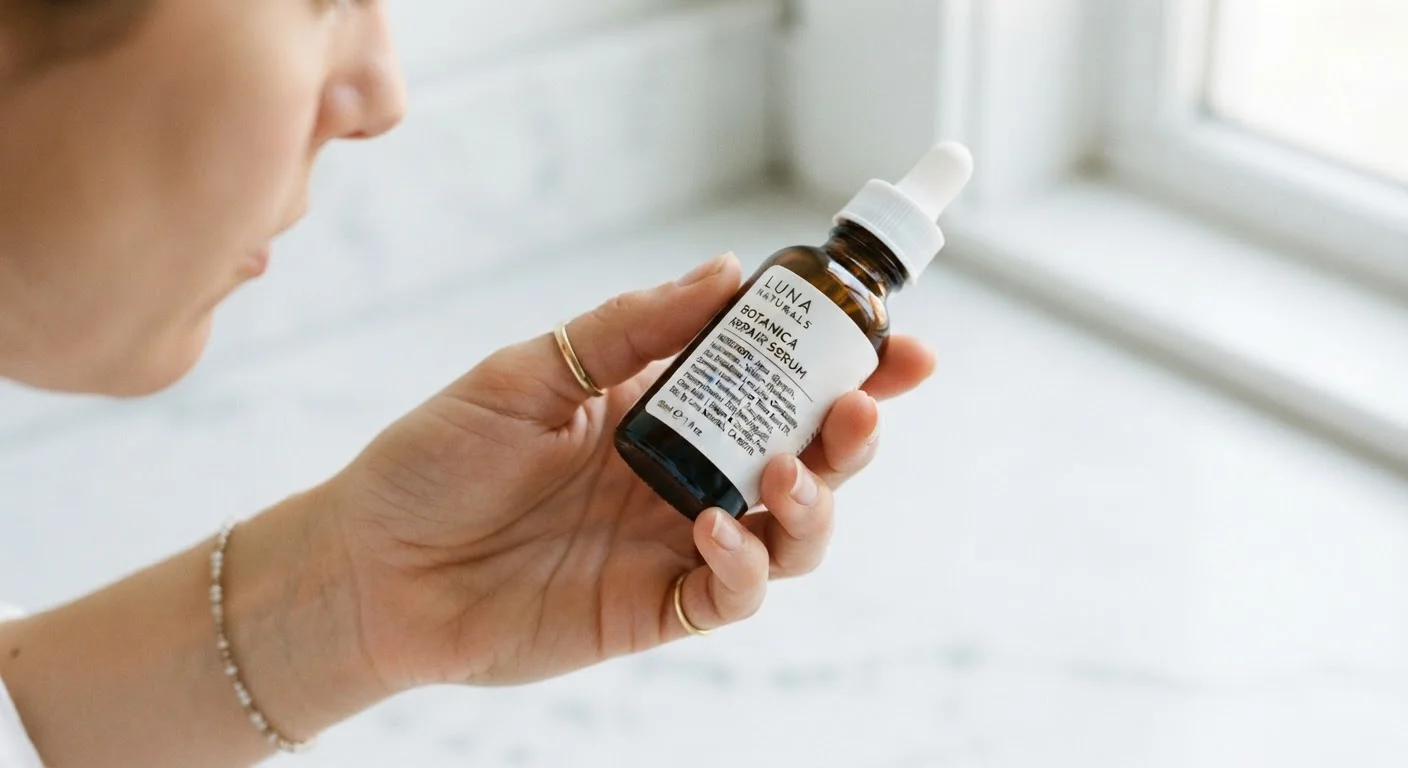
Why Skincare Labels Can Be So Confusing
Skincare packaging is a masterclass in selective communication. Brands invest heavily in front-panel design, choosing words and visuals that trigger trust — words like pure, science-backed, gentle, or clinically tested. The problem is that most of these terms are either unregulated, inconsistently defined, or both. For everyday shoppers without a cosmetic chemistry background, it can be genuinely difficult to tell which claims reflect formulation reality and which are just good copywriting.
The good news: the regulated, factual information is there — you just need to know where to look and what to prioritize. U.S. cosmetics are overseen by the FDA, which requires that ingredients be disclosed in a standardized format. That requirement is your most reliable tool.
The Front Panel Is Advertising
Treat everything on the front of a product as marketing copy — because that's exactly what it is. Flip the product over and read the ingredient list and any required disclosures instead. That's where the regulated, factual information lives.
Understanding how labels work also dovetails naturally with common skincare myths worth debunking — many of which are quietly reinforced by vague label language.
How to Read a Skincare Label Step by Step
What you will need
Product ingredient list
The primary source of factual information about what a product actually contains.
FDA Cosmetics Ingredients reference (fda.gov)
The FDA's publicly available resource for understanding how cosmetic labeling rules work in the U.S.
EWG Skin Deep or CosDNA (ingredient lookup tools)
Free public databases that can help you research what individual ingredients are generally used for — use as a research aid, not a definitive safety verdict.
Ignore the front of the package first
Before anything else, mentally set aside the front-panel claims. Phrases like 'clinically proven,' 'dermatologist-tested,' or '100% natural' are marketing language, not regulated disclosures. They're designed to create a feeling of trust, not convey specific factual data. Start your evaluation from the back or side of the product instead.
Find the ingredient list and understand how it's ordered
Under U.S. FDA rules, cosmetic ingredients must be listed in descending order of concentration — meaning the first ingredient makes up the largest proportion of the formula, and so on down the list. Ingredients present at 1% or less can appear in any order at the bottom of the list. This tells you a lot: if water (aqua) is listed first, the product is mostly water — which isn't a flaw, just a fact worth knowing.
For a deeper breakdown of what those long ingredient names actually mean, see our guide to decoding skincare ingredients.
Spot the buzzwords that have no legal definition
Several widely used terms carry no standardized legal meaning in U.S. cosmetics regulation. These include:
- Natural / All-natural — no regulated definition; synthetic and natural ingredients can coexist in such products
- Clean — defined differently by every retailer and brand that uses it
- Hypoallergenic — no FDA-defined standard; the FDA has noted this term can be misleading
- Dermatologist-tested — only confirms a dermatologist participated in some capacity; implies no approval or clinical endorsement
- Non-comedogenic — not regulated; testing methods vary widely between brands
Recognizing these terms as unregulated doesn't mean a product is bad — it means these labels alone can't serve as your reason to trust it.
Check where key ingredients actually fall on the list
If a product is marketed around a specific active ingredient — say, vitamin C or niacinamide — check where it appears in the ingredient list. If it's listed near the very bottom, its concentration is likely quite low, which may affect how noticeable any effect is. This isn't always a dealbreaker, since some ingredients are effective at low concentrations, but it's useful context the front label won't give you.
Look at the full ingredient list for anything you want to avoid
If you have known sensitivities, allergies, or preferences — fragrance-free, alcohol-free, or avoiding specific compounds — the ingredient list is the only reliable place to check. Don't rely on front-panel claims like 'fragrance-free' without verifying; look for the words fragrance, parfum, or individual fragrance compounds listed by name.
Cross-reference unfamiliar ingredients using a reputable tool
You don't need a chemistry degree to research what's in your product. Free public databases like EWG Skin Deep or CosDNA let you look up individual ingredient names and see what they're generally used for. Use these as a starting point for research, not a final verdict — ingredient safety depends on concentration, formulation context, and individual skin type. For a broader look at how ingredient lists work across product categories, our article on reading an ingredient list without confusion covers helpful transferable concepts.
Fragrance Can Hide Many Ingredients
The single word 'fragrance' or 'parfum' on an ingredient list can legally represent a blend of dozens of undisclosed chemicals. If you have sensitive skin or known fragrance sensitivities, this is one of the most important things to watch for — even in products labeled 'natural' or 'clean.'
Marketing Terms Are Not FDA-Regulated
Words like 'clean,' 'natural,' 'gentle,' and 'non-toxic' are not defined or regulated by the U.S. Food and Drug Administration when used on cosmetics. Any brand can use them freely, regardless of what's in the formula. This article is for general educational purposes only — not personalized skincare or medical advice. If you have a skin condition or sensitivity, consult a dermatologist.
Once you're comfortable reading labels, a natural next step is knowing how to introduce new products carefully. Our checklist for switching to a new skincare product safely walks you through patch testing and pacing so your skin has time to respond without overwhelm. And if you're just getting started with a routine overall, building a simple skincare routine from the ground up is a solid foundation.
The content on this site is for informational purposes only and is not a substitute for professional advice. Always consult a qualified professional for guidance specific to your situation.