

Start here
Why a Simple Routine Beats a Complicated One
Next
The Core Three: Cleanse, Moisturize, Protect
Then
Understanding Your Skin Type
When you're ready
How to Layer Products in the Right Order
Level up
When and How to Add More Steps
Why a Simple Routine Beats a Complicated One
Open any beauty app and you'll find ten-step routines, ingredient layering charts, and a dizzying number of serums promising transformation. For a beginner, that landscape is more likely to cause frustration — or breakouts — than glowing skin. The reality, backed by dermatologists, is that most people's skin thrives on consistency with a handful of well-chosen basics, not a pharmacy's worth of actives.
Overloading your skin with too many new products at once makes it nearly impossible to figure out what's working and what's causing a reaction. Starting simple isn't settling — it's actually the smarter strategy. Once your skin is stable and you understand how it responds, you can thoughtfully add more. Check out lifestyle habits that support healthy skin alongside any product routine you build.
The One-Product Swap Rule
If you're tempted to overhaul your entire routine at once, pause. Change only one product at a time and give it at least two to four weeks before evaluating. This keeps your skin from being overwhelmed and makes it much easier to spot the cause of any new reaction.
The Core Three: Cleanse, Moisturize, Protect
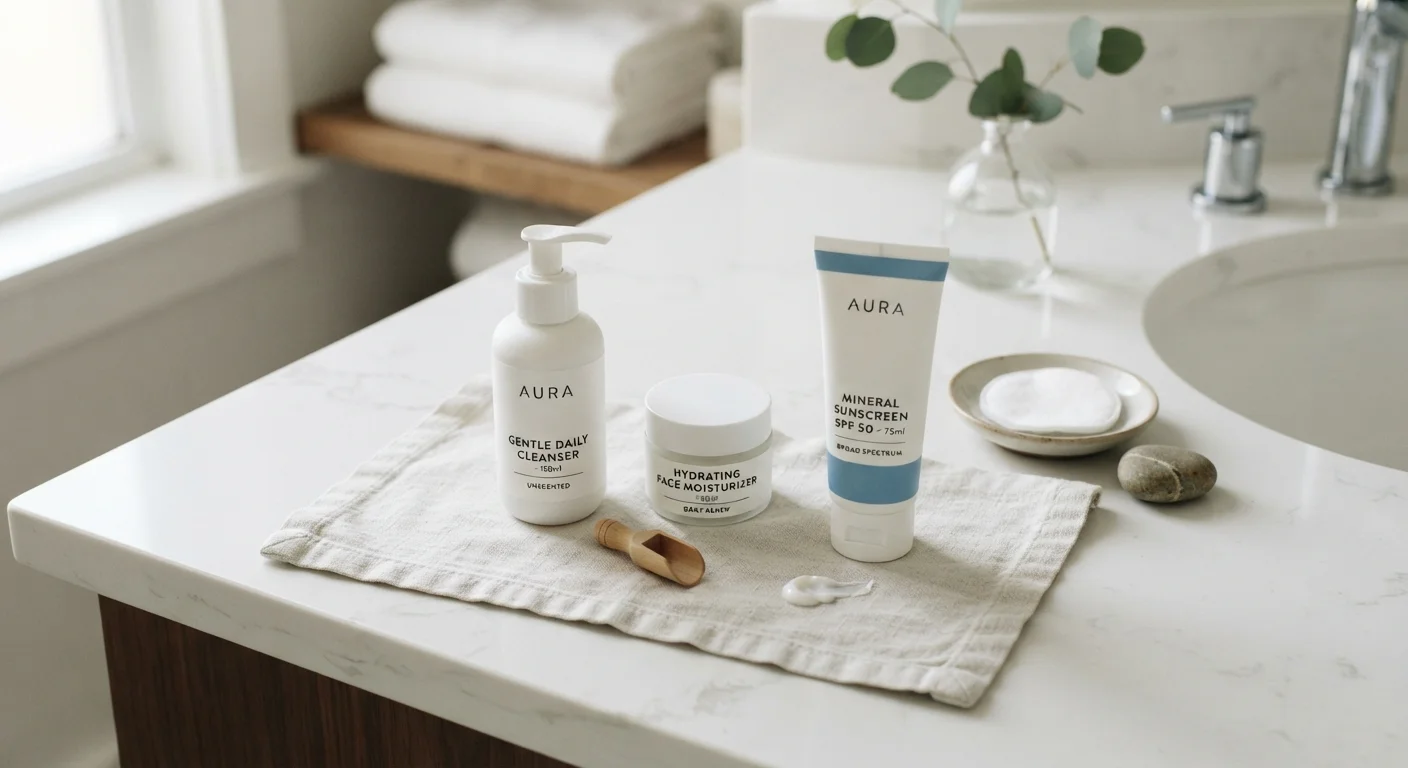
Every effective skincare routine — beginner or advanced — is built on three non-negotiable pillars:
- Cleanser: Removes dirt, excess oil, sweat, and pollution that accumulates on your skin. Use a gentle, non-stripping formula. If your skin feels tight or squeaky after washing, the cleanser may be too harsh.
- Moisturizer: Replenishes water content in the skin and supports the skin's natural protective barrier. Even oily skin benefits from moisturizer — skipping it can actually prompt your skin to produce more oil to compensate.
- Sunscreen (AM only): Broad-spectrum SPF 30 or higher is one of the most evidence-supported steps in skincare. It protects against UV-related damage that accumulates over years, regardless of skin tone. This is non-negotiable for daytime use.
These three steps, done consistently morning and evening (sunscreen in the morning only), cover what the vast majority of people need day to day.
Broad-spectrum SPF
A sunscreen that protects against both UVA rays (which cause aging) and UVB rays (which cause burning). The number (e.g. SPF 30) indicates how much UVB protection it offers.
Skin barrier
The outermost layer of your skin that locks in moisture and keeps irritants out. A damaged barrier can cause dryness, sensitivity, and breakouts.
Double cleansing
A two-step cleansing method that uses an oil-based cleanser first (to dissolve makeup and sunscreen) followed by a water-based cleanser to clean the skin itself.
Chemical exfoliant
An ingredient like glycolic or lactic acid that gently dissolves dead skin cells without physical scrubbing. Generally considered less irritating than scrubs for sensitive skin.
Serum
A lightweight, concentrated formula designed to deliver specific active ingredients deeper into the skin. Applied after cleansing and before moisturizer.
T-zone
The forehead, nose, and chin area of the face, which tends to produce more oil than the cheeks. Common reference point when describing combination skin.
Understanding Your Skin Type
Picking products without knowing your skin type is a bit like buying shoes without knowing your size — you might get lucky, but you'll often end up uncomfortable. The most common skin types are:
- Dry: Feels tight, may flake; benefits from richer, cream-based moisturizers.
- Oily: Shiny throughout, prone to enlarged pores; lighter, gel-based formulas tend to work better.
- Combination: Oily in the T-zone (forehead, nose, chin), drier on the cheeks; often does well with a balanced, medium-weight moisturizer.
- Sensitive: Reacts easily to new products, fragrances, or environmental changes; fragrance-free, minimal-ingredient formulas are generally gentler.
- Normal: Few concerns, relatively balanced — lucky you, most basic formulas will work fine.
Before adding anything new to your routine, our guide to introducing new skincare products safely walks you through patch testing and pacing so you can avoid unwanted reactions.
Fragrance Is a Common Hidden Irritant
Many skincare products — even those marketed as gentle — contain added fragrance, which is one of the most common causes of skin sensitivity and allergic reactions. If your skin reacts to something but you can't figure out why, checking for fragrance (listed as 'parfum' or 'fragrance' on ingredient labels) is a smart first step.
How to Layer Products in the Right Order
Product order matters because some formulas can physically block others from absorbing. A reliable rule of thumb: apply products from thinnest consistency to thickest, and always finish your morning routine with sunscreen.
A typical morning order looks like this:
- Cleanser (rinse off)
- Toner or essence (if using — optional for beginners)
- Serum (if using — optional for beginners)
- Moisturizer
- Sunscreen
At night, the order is the same minus sunscreen. Some people also add a dedicated cleansing oil or balm as a first step at night if they wear makeup or sunscreen — this is called double cleansing and is useful but entirely optional at this stage. For those who are starting to explore makeup alongside their routine, our beginner makeup guide explains how skincare and makeup interact.
When and How to Add More Steps
Once you've been consistent with the core three for at least a month and your skin feels stable, you can explore additions — but introduce only one new product at a time, spaced a few weeks apart. This way you'll know exactly what's helping or causing issues.
Common next steps beginners often explore include:
- Exfoliation: Removes dead skin cells to improve texture. Chemical exfoliants (like lactic or glycolic acid) tend to be gentler and more predictable than physical scrubs for most people.
- Serums: Concentrated formulas targeting specific concerns like uneven tone, dullness, or dehydration. Vitamin C is a popular starting point for brightening.
- Retinol: One of the most studied anti-aging ingredients available without a prescription — but it requires a careful, slow introduction. Read everything you need to know about retinol before you start before adding it to your routine.
And when you're ready to decode ingredient lists and marketing buzzwords, reading a skincare label without getting tricked will help you shop smarter.
This article is for general informational and educational purposes only and is not a substitute for professional medical or dermatological advice. If you have a skin condition or persistent concerns, consult a qualified healthcare provider.
Frequently Asked Questions
Three steps — cleanser, moisturizer, and sunscreen — are genuinely sufficient for most beginners. Complexity doesn't equal effectiveness. A consistent three-step routine will outperform an inconsistent ten-step one every time.
Ideally yes, but they can be nearly identical at first. The main difference is sunscreen in the morning (essential) and skipping it at night. Even a quick cleanse and moisturize at night is far better than nothing.
Wash your face, pat dry, and wait 30 minutes without applying anything. If it feels tight, you likely have dry skin. If it looks shiny all over, you're likely oily. Shine only in the T-zone suggests combination skin. Skin that reacts easily may be sensitive.
Yes — for beginners, one simple moisturizer works fine both times. Night-specific formulas exist, but they're not necessary at the start. Focus on building the habit before layering on product-specific rules.
Skin cell turnover takes roughly four to six weeks, so most products need at least that long to show meaningful results. Hydration improvements can appear faster, sometimes within a few days of consistent moisturizing.
Yes — broad-spectrum SPF 30 or higher is one of the most evidence-supported steps in any skincare routine. UV exposure contributes to premature aging and other skin concerns even on cloudy days or when you're mostly indoors near windows.
The content on this site is for informational purposes only and is not a substitute for professional advice. Always consult a qualified professional for guidance specific to your situation.