

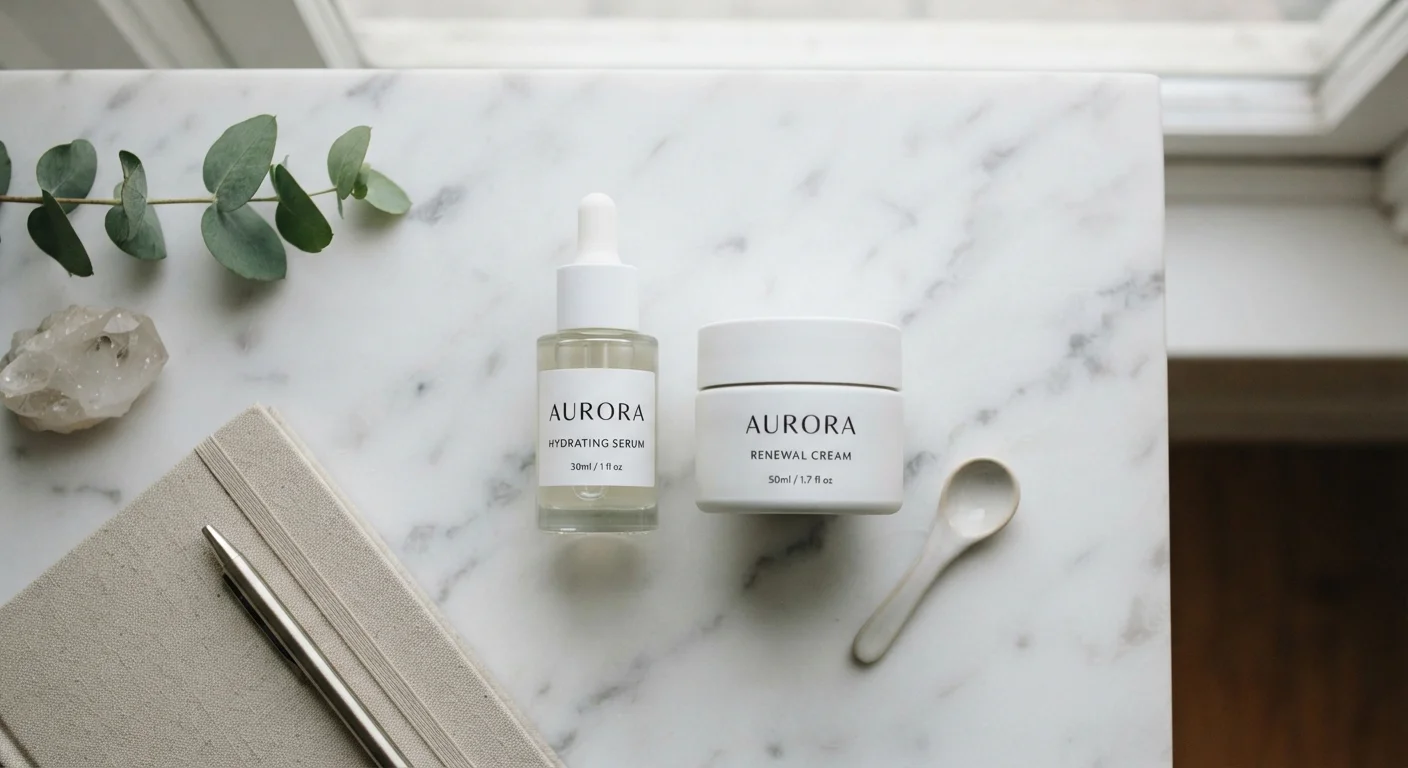
Option A
Moisturizer
The essential barrier defender every skin type needs.
Best for: Anyone who wants to lock in hydration, protect the skin barrier, and prevent water loss throughout the day or night.
Option B
Serum
The targeted treatment built for specific skin concerns.
Best for: People dealing with a particular concern — dark spots, fine lines, dullness, or uneven texture — who want concentrated active ingredients.
What a Moisturizer Actually Does
Think of a moisturizer as your skin's everyday shield. Its primary job is to prevent transepidermal water loss — a fancy term for stopping the water already in your skin from evaporating into the air. It does this through a mix of three ingredient types: humectants (which attract water), emollients (which smooth and soften), and occlusives (which seal everything in).
Moisturizers sit on or just beneath the surface of the skin, reinforcing what dermatologists call the skin barrier — the outermost layer that protects you from environmental irritants, pollutants, and dryness. A compromised barrier can show up as redness, flaking, tightness, or sensitivity.
Almost every skin type benefits from a moisturizer, including oily skin. The goal isn't to add grease — it's to maintain balance. If you're unsure what your skin type actually is, our guide on identifying your skin type can help you figure it out before you shop.
What a Serum Actually Does
Serums are lightweight, fast-absorbing formulas designed to deliver a high concentration of active ingredients deeper into the skin. Because they have a smaller molecular structure than moisturizers, they can penetrate more effectively — which is exactly why they're used to target specific concerns rather than general hydration.
Common serum ingredients include vitamin C (for brightening), hyaluronic acid (for moisture-drawing), niacinamide (for pore appearance and tone-evening), and retinol (for cell turnover and fine lines). Each does something distinct, which is why the serum step is where most of the customization in a skincare routine happens.
That said, serums are not moisturizers. Most don't contain the occlusives or emollients needed to seal the skin barrier — which is why skipping moisturizer after a serum often leaves skin feeling tight or unprotected. If ingredient names like these feel confusing, our skincare ingredients decoder breaks them all down in plain language.
| Criterion | Moisturizer | Serum |
|---|---|---|
| Primary purpose | Hydrate and protect the skin barrier | Deliver targeted active ingredients |
| Texture | Cream, lotion, or gel — thicker | Lightweight, watery, or oil-like |
| Penetration depth | Surface and upper skin layers | Deeper into the skin |
| Who needs it | Virtually everyone | Those with specific skin concerns |
| Replaces the other? | No — different function | No — different function |
| Application order | Second (after serum) | First (on clean skin) |
| Routine necessity | Essential baseline step | Optional, targeted add-on |
Do You Need One, or Both?
Here's the honest answer: nearly everyone needs a moisturizer. It's the baseline step that keeps skin comfortable and protected regardless of your skin type or concerns. A serum, on the other hand, is optional — but genuinely useful if you have a specific goal you're working toward.
If your skin feels comfortable, looks even, and you're not bothered by particular concerns, a good moisturizer alone is a complete routine. If you're noticing persistent dullness, uneven tone, fine lines, or texture that a moisturizer doesn't address, that's a reasonable signal to consider adding a targeted serum.
~70%
Skin barrier function lost with chronic dehydration
Skin barrier research consistently highlights that transepidermal water loss is a key driver of sensitivity, irritation, and accelerated visible aging.
2–3 min
Typical serum absorption time before moisturizer
Dermatologists generally recommend waiting a short period after applying serum to allow the formula to absorb before layering moisturizer on top.
One important note: serums don't replace moisturizer, and moisturizers don't replace serums. They work at different levels with different functions. The right order matters too — apply serum first on clean skin, let it absorb for about 30 seconds, then follow with your moisturizer. This sequence ensures active ingredients reach the skin before the barrier is sealed. For other water-based steps you might be wondering about, see our breakdown of toners, essences, and mists.
When "Hydrating Serum" Gets Confusing
Some serums — particularly those featuring hyaluronic acid — are marketed as "hydrating," which can blur the line between serums and moisturizers. These serums draw water into the skin, but they still don't seal it in the way a moisturizer does. If you use a hydrating serum, you still need a moisturizer on top to prevent that drawn-in moisture from evaporating. Think of it as a two-step process: attract water, then lock it in.
The content on this site is for informational purposes only and is not a substitute for professional advice. Always consult a qualified professional for guidance specific to your situation.