

Our Verdict
Primer can genuinely improve makeup longevity and finish, especially for oily skin types or long days. But it's not a universal must-have — people with balanced or dry skin, minimal makeup routines, or limited budgets may find it unnecessary. Think of it as a targeted tool, not a baseline requirement.
Best for anyone with oily skin, large visible pores, or who needs their makeup to last through a demanding day without touch-ups.
What Primer Actually Does
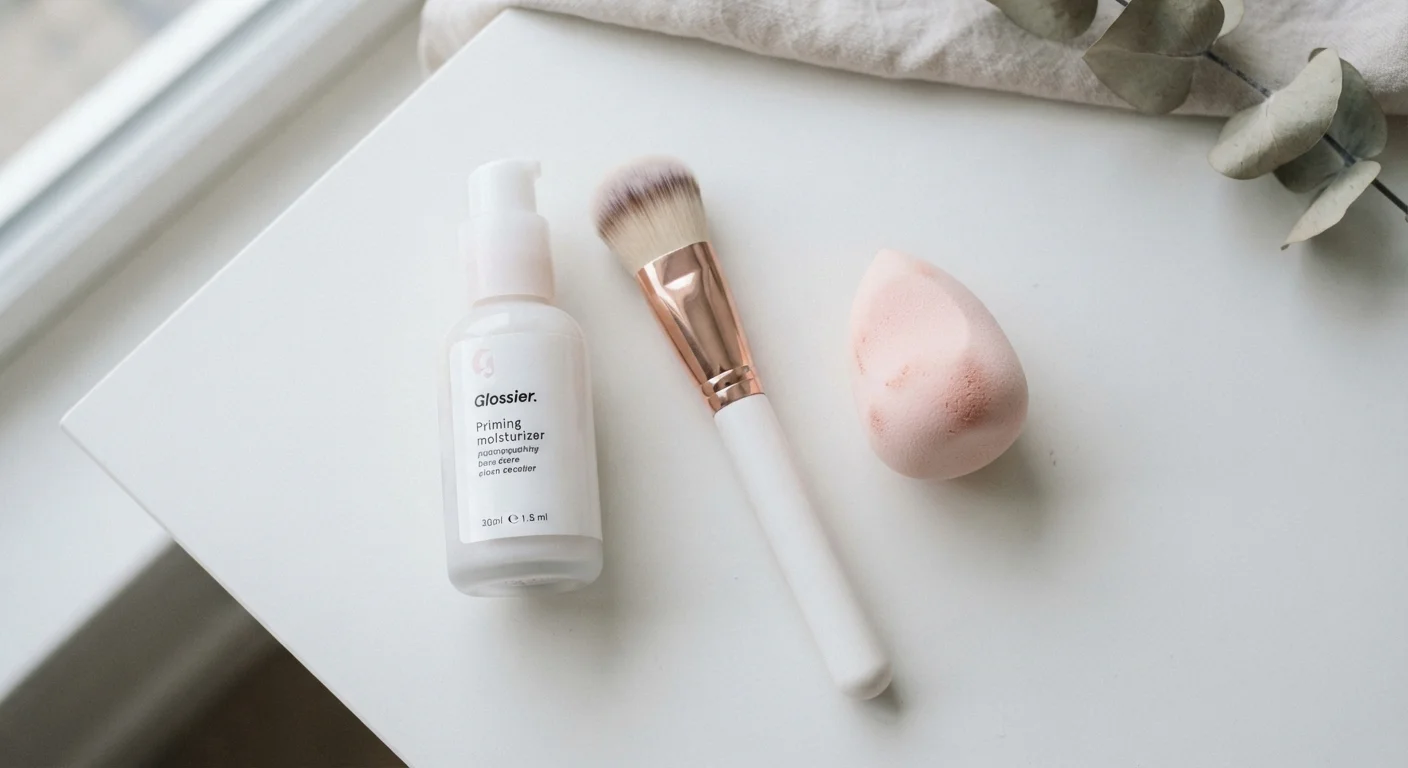
A makeup primer is a product applied after skincare and before foundation (or other complexion products). Its job is to act as a bridge between the two — smoothing the skin's surface, controlling shine or dryness, and giving foundation something to grip onto.
Think of it like priming a wall before painting. Without prep, paint (or foundation) can slide around, sink into texture, or fade unevenly. Primer creates a more uniform canvas. Most primers work by filling in fine lines, minimizing the appearance of pores, and reducing excess oil or adding a touch of moisture depending on the formula.
It's worth noting that primer doesn't change your skin — it's a temporary cosmetic effect that lasts only while it's worn. If you're building a longer-term skin prep routine, a solid skincare foundation will do more for your complexion over time.
Primer vs. Moisturizer: Not the Same Thing
Primer and moisturizer serve different purposes. Moisturizer hydrates and supports your skin barrier — it's skincare. Primer is cosmetic prep for makeup application. Some products are marketed as 'moisturizing primers,' but they shouldn't replace a dedicated moisturizer in your routine. If you're unsure how moisturizer fits into your overall regimen, this breakdown of moisturizers vs. serums can help clarify.
The Different Types of Primer
Primers aren't one-size-fits-all — and that's where things get confusing at the beauty counter. Here's a plain-language breakdown of the main categories:
- Silicone-based primers: The most common type. They fill in pores and fine lines with a smooth, slightly slippery texture. Great for photography or long events, but can feel heavy on some skin types.
- Water-based primers: Lighter and better tolerated by sensitive or acne-prone skin. They hydrate and refresh rather than fill.
- Mattifying primers: Designed for oily skin; they absorb excess sebum to keep shine at bay throughout the day.
- Illuminating primers: Add a subtle glow underneath foundation — helpful for dull or dry skin that looks flat under makeup.
- Color-correcting primers: Green cancels redness; peach or orange counteracts dark circles or hyperpigmentation. These are more specialized and work best when a specific concern is your focus.
Choosing the wrong formula for your skin type can actually make things worse — a heavy silicone primer on acne-prone skin, for example, may clog pores. When in doubt, lighter and water-based is a safer starting point. For help pairing primer with the right foundation finish, see our guide to foundation finishes.
Extends how long makeup stays in place
Primer gives foundation something to adhere to, which can meaningfully reduce fading, creasing, or transfer — particularly useful during long workdays or events.
Smooths skin texture for more even application
Silicone-based formulas temporarily blur the look of pores and fine lines, making foundation go on more smoothly and look more polished.
Targets specific skin concerns before makeup
Mattifying primers reduce midday shine for oily skin types; illuminating primers give dull skin a lift; color-correcting primers neutralize redness or discoloration before foundation.
Can protect skin from heavy pigment products
A primer layer can act as a buffer between skin and highly pigmented products like dark eyeshadows, helping prevent staining and making removal easier.
When Primer Isn't Worth It
Here's the honest truth the beauty industry rarely leads with: many people don't actually need primer. If your skin is balanced, your makeup routine is light, or you're not wearing foundation for more than a few hours, a well-applied moisturizer can do much of the same prep work.
Primer also adds cost, time, and another layer to a routine that may already feel complex. For beginners just building their first makeup kit, it's rarely the place to start.
Adds cost and steps without guaranteed benefit
Primer is an additional product expense that not every routine actually needs. For minimal or natural-finish makeup, the difference is often negligible.
Wrong formula can cause breakouts or pilling
Silicone-heavy primers can clog pores for acne-prone skin, and layering incompatible products (e.g., silicone primer under water-based foundation) can cause makeup to pill or flake off.
Can feel heavy or uncomfortable to wear
Some people find thicker primer formulas occlusive or mask-like, especially in warm weather or for those with sensitive skin that dislikes extra layers.
Marketing claims often outpace real-world results
Primer packaging frequently promises dramatic 24-hour wear or pore-erasing effects; in practice, results vary widely by skin type, climate, and the other products used.
The best approach is to try your routine without primer first. If your makeup fades quickly, looks patchy, or slides off by midday — that's a genuine signal that a targeted primer might help. If your makeup holds up fine, you've saved yourself a step and some money.
~30 min
Typical extra wear time primer may add
Cosmetic chemists generally note that primer's longevity benefit depends heavily on the specific formula pairing and skin type — results are not uniform.
2–3 steps
Skincare steps that should come before primer
Primer is applied after cleanser, moisturizer, and SPF — skipping or rushing those steps limits how well any primer can perform.
The content on this site is for informational purposes only and is not a substitute for professional advice. Always consult a qualified professional for guidance specific to your situation.