

Our Verdict
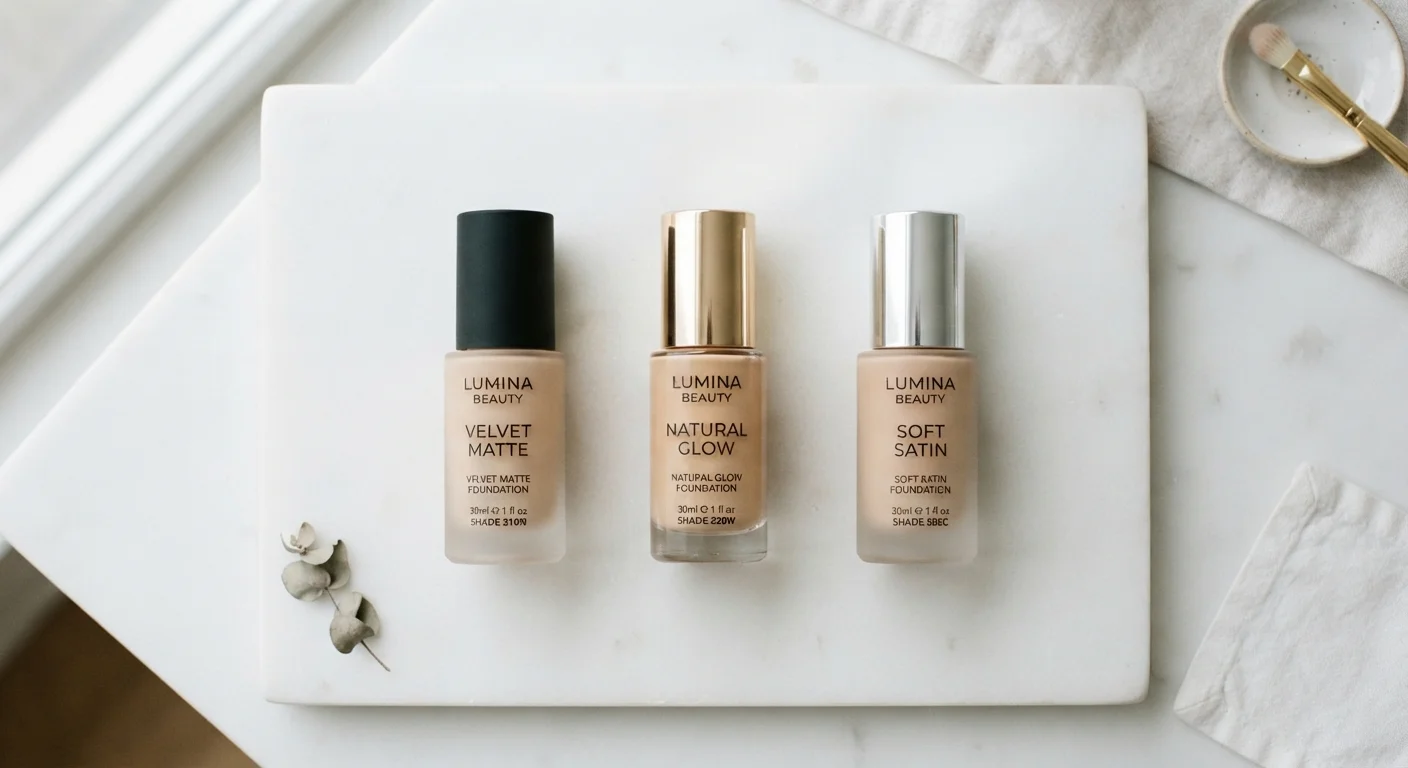
Matte, dewy, and satin foundations each serve a distinct purpose, and none is objectively better than the others. Your skin type, daily routine, and personal preference are the real deciding factors. Understanding what these terms actually mean puts you in control — so you stop guessing at the drugstore and start choosing with confidence.
| Best for | Recommended |
|---|---|
| Those with oily skin or who prefer a shine-free look | Matte |
| Those with dry, dull, or mature skin seeking a radiant effect | Dewy |
| Those with combination or normal skin wanting a versatile everyday finish | Satin |
Why Foundation Finish Labels Matter
Walk down any beauty aisle and you'll find foundation bottles plastered with words like "matte," "dewy," "luminous," "natural," and "radiant." These aren't just marketing fluff — they describe something real about how a formula interacts with your skin and light. But without a plain-language decoder, they're easy to ignore or misread.
Foundation finish refers to the level of light reflection a formula produces once it's dried down on your face. That reflection — or lack of it — changes how your skin looks in photos, in sunlight, and under indoor lighting. It can make pores appear more visible or less so, make skin look plumper or more matte, and dramatically affect how long a formula seems to last through the day.
Before diving into the three main finishes, it helps to know your skin type — oily, dry, combination, or sensitive — since that's the most reliable starting point for choosing well. Understanding your true skin type matters more than any trend or marketing claim on the label.
Matte vs. Dewy vs. Satin: A Side-by-Side Look
Here's a quick breakdown of how each finish compares across the criteria that matter most in everyday wear:
| Matte | Dewy | Satin | |
|---|---|---|---|
| Light reflection | None — absorbs light | High — bounces light | Low — soft, diffused sheen |
| Best skin type match | Oily, acne-prone | Dry, dull, mature | Combination, normal |
| Shine control | Excellent | None — adds luminosity | Moderate |
| Hydration effect | Minimal to none | High | Moderate |
| Risk of caking | Higher on dry skin | Low | Low to moderate |
| Photography performance | Very clean, no flash glare | Can cause flashback | Generally flattering |
| Wear in humid climates | Holds up well | Can turn greasy | Performs reasonably well |
Keep in mind that formulas vary widely even within the same finish category. A "matte" foundation from one line might feel completely different from another. Reading ingredient lists and understanding label language goes a long way — our guide to reading a skincare label without getting tricked can help you cut through the noise.
Matte Finish: What It Is and Who It Suits
A matte foundation is formulated to absorb or minimize light reflection, leaving behind a flat, shine-free surface. Most matte formulas contain oil-absorbing ingredients like silica or kaolin clay, which help keep excess sebum in check throughout the day.
Matte finishes tend to work well for people with oily or acne-prone skin, since they can help minimize the appearance of enlarged pores and reduce mid-day shine without requiring frequent touch-ups. They also tend to photograph cleanly because there's no shine to catch a flash.
Prep Is Everything with Matte Formulas
If you have dry patches or flaky areas, always moisturize thoroughly before applying a matte foundation — skipping this step is the number one reason matte foundations look patchy or cakey. Let your moisturizer absorb for a few minutes before you start blending. A lightweight, non-greasy primer can also smooth the surface and help the formula sit evenly.
The tradeoff? On dry or dehydrated skin, matte foundations can look cakey or settle into fine lines. Thorough moisturizing and a good primer beforehand can help — primers aren't always necessary, but for matte formulas they can be a genuine difference-maker.
Dewy Finish: What It Is and Who It Suits
A dewy foundation is designed to reflect light in a way that mimics healthy, well-hydrated skin. The result is a luminous, almost glass-skin effect — skin looks plump, fresh, and naturally radiant rather than perfected or matte.
Dewy formulas typically contain hydrating ingredients like glycerin or hyaluronic acid. If you're curious about what those actually do, our breakdown of common skincare ingredients explains it clearly. These foundations generally suit dry, dull, or mature skin that could use a moisture boost, and they tend to blend smoothly without emphasizing dry patches.
The main limitation: on oily skin, a dewy foundation can shift from glowing to greasy by midday. Humid climates can accelerate this. If you love the look but have oily skin, applying a light setting powder over the T-zone can help strike a balance.
~65%
Adults with some degree of skin dehydration
Dermatologists commonly note that most people experience some degree of skin dehydration regardless of whether their skin is oily or dry, making hydrating formulas broadly relevant.
3 types
Core foundation finishes used across the industry
Despite the wide range of marketing terms on packaging, most foundations fall into three fundamental finish categories: matte, dewy, and satin.
Satin Finish: The Middle Ground
Satin — sometimes labeled "natural" or "soft matte" — is the great compromise finish. It offers a low-level sheen that reads as healthy skin rather than shine, without the full flat effect of a true matte. Think of it as a muted glow: polished but not reflective, controlled but not dull.
Satin foundations tend to be the most forgiving across different skin types, which is why many makeup artists reach for them when they're working with someone whose skin type is unknown or variable. For combination skin in particular, satin can help unify texture without overcorrecting in either direction.
Because satin sits squarely in the middle of the spectrum, it's also the most versatile for different lighting environments — office lighting, outdoor sun, or evening low-light all read reasonably well with a satin finish. If you're a foundation beginner or shopping for someone else, satin is often a sensible starting point.
The content on this site is for informational purposes only and is not a substitute for professional advice. Always consult a qualified professional for guidance specific to your situation.