

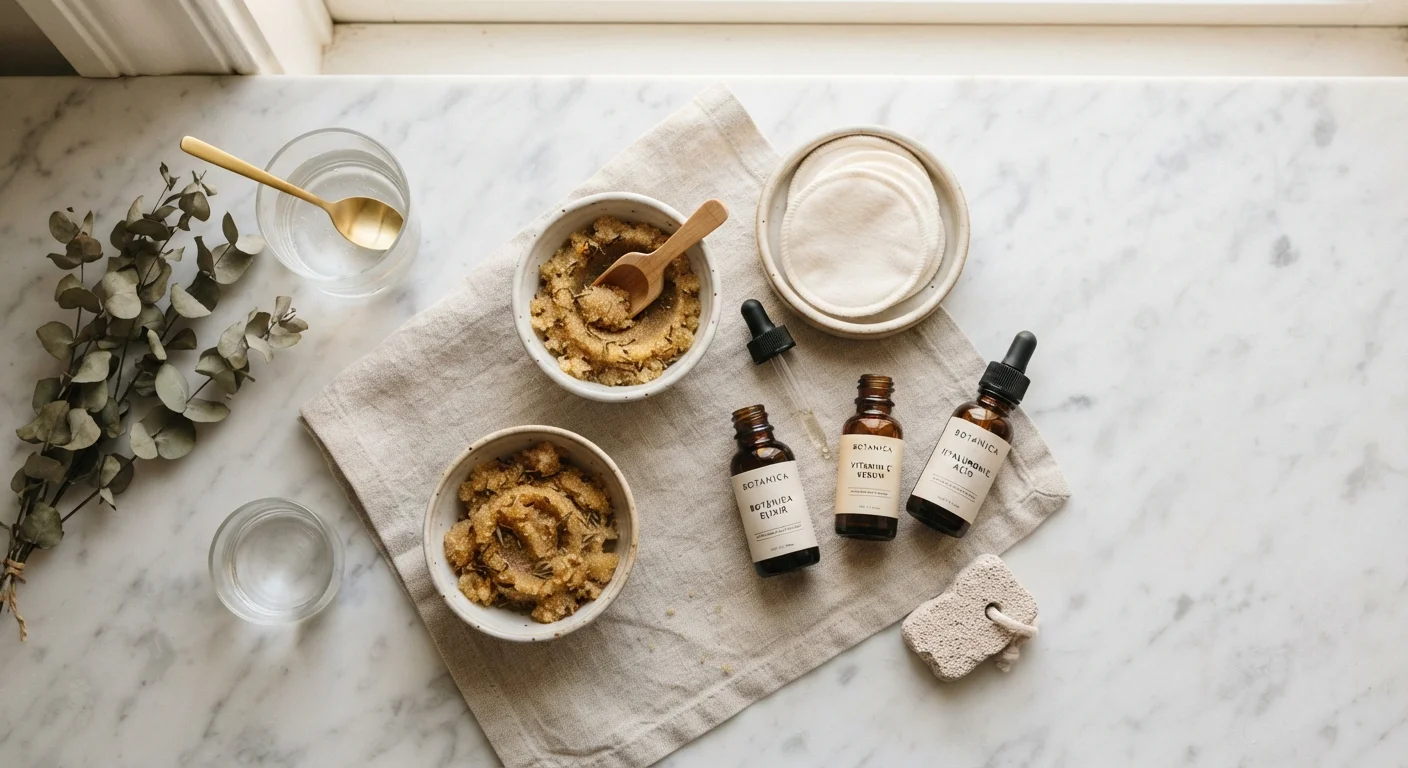
Option A
Chemical Exfoliants
The science-backed, hands-off approach to cell turnover.
Best for: People with sensitive, acne-prone, or uneven skin who want thorough exfoliation without scrubbing.
Option B
Physical Scrubs
The tactile, instantly satisfying manual method.
Best for: People who enjoy a hands-on skincare ritual and have normal to oily, non-reactive skin.
How Each Method Actually Works
Exfoliation is the process of removing dead skin cells from the surface of your skin — and there are two fundamentally different ways to do it. Understanding the mechanism helps you make a smarter choice for your face.
Chemical exfoliants use acids or enzymes to loosen the bonds that hold dead skin cells together, allowing them to shed naturally. The two most common types are:
- AHAs (alpha-hydroxy acids) — water-soluble acids like glycolic and lactic acid that work on the skin's surface. They're often recommended for dryness, dullness, and uneven tone.
- BHAs (beta-hydroxy acids) — oil-soluble acids like salicylic acid that can penetrate into pores. Commonly used for oily and acne-prone skin.
Physical scrubs work through manual abrasion. You apply a product containing gritty particles — sugar, salt, rice bran, or ground nutshell — and rub them across the skin to physically dislodge dead cells.
Want a deeper look at how these ingredient names are constructed? See our skincare ingredients guide for a plain-language breakdown.
| Criterion | Chemical Exfoliants | Physical Scrubs |
|---|---|---|
| Mechanism | Dissolves dead-cell bonds chemically | Removes cells via physical friction |
| Gentleness on facial skin | Generally gentler when correctly formulated | Friction level depends on user pressure |
| Pore penetration | BHAs penetrate inside pores | Surface-only; can't enter pores |
| Ease of use for beginners | Concentration is pre-set; less user error | Pressure is user-controlled; easier to over-scrub |
| Best skin types | Sensitive, acne-prone, hyperpigmented | Normal to oily, non-reactive |
| Typical frequency | 1–3 times per week | 1–2 times per week |
| SPF required after use? | Yes — increases UV sensitivity | Yes — as with any exfoliation |
Which One Is Gentler — And Why It's Complicated
The short answer: chemical exfoliants are generally considered gentler on facial skin when used correctly. Here's why.
Physical scrubs rely on pressure and friction applied by your hands. That friction is very difficult to control precisely — too much pressure, an irregular particle shape, or a coarse grain can create micro-tears in the skin that aren't visible to the naked eye but can compromise your skin barrier over time. Walnut shell powder, for example, has sharp, jagged edges that many dermatologists flag as problematic for facial use.
Chemical exfoliants don't require any rubbing. A properly formulated product at an appropriate pH does the chemical work for you. You apply it, leave it on (for a rinse-off or leave-on formula), and let the chemistry act — no scrubbing force involved.
The Skin Barrier: Worth Protecting
Your skin barrier (technically the stratum corneum) is a thin but crucial layer that keeps moisture in and irritants out. Both chemical and physical exfoliation temporarily disrupt it, which is normal and manageable. What's not manageable is doing it too often — daily exfoliation of any kind is rarely necessary and frequently counterproductive. Non-product habits like sleep and hydration also play a real role in barrier health; see our skin-friendly habits article for more.
That said, the word "gentle" only applies when either method is used appropriately. Over-exfoliating — whether by scrubbing too hard, using too high a concentration, or using either method too frequently — can strip the skin's protective barrier. Signs you've overdone it include tightness, redness, peeling, and sudden breakouts.
If you're just getting started with exfoliation, it fits neatly into the broader framework covered in our simple skincare routine guide.
~30 days
Natural skin cell turnover cycle
Dermatologists estimate the average adult sheds and replaces the outermost skin layer roughly every 28–30 days; exfoliation supports this process without replacing it.
5–6
Optimal skin pH level
The skin's natural pH is mildly acidic; AHA and BHA formulas are typically buffered to a similar range to exfoliate effectively while minimising irritation.
Choosing Based on Your Skin Type and Goals
No single exfoliant category is universally right. Your skin type, concerns, and comfort level all matter.
Go chemical if you have:
- Sensitive or reactive skin — low-concentration lactic acid (an AHA) is widely considered one of the mildest exfoliating options available.
- Acne or clogged pores — BHAs work inside pores where scrubs literally cannot reach.
- Hyperpigmentation or dullness — AHAs help accelerate surface cell turnover to fade dark spots over time.
Physical scrubs may work if you have:
- Normal or oily skin that isn't reactive — the skin can tolerate some friction without significant backlash.
- A preference for a short, wash-off ritual — scrubs rinse away immediately, with no wait time.
Before adding any new exfoliant to your routine, it's worth pausing. Our product-switching checklist covers patch testing and pacing so you can catch reactions early. And remember — marketing terms on the label don't always mean what they imply; our skincare label guide can help you read past the hype.
This article is for general informational and educational purposes only. It is not a substitute for professional dermatological or medical advice. If you have a skin condition or are unsure which approach is right for you, consult a licensed dermatologist.
The content on this site is for informational purposes only and is not a substitute for professional advice. Always consult a qualified professional for guidance specific to your situation.