

Why Budget Eating Gets a Bad Reputation
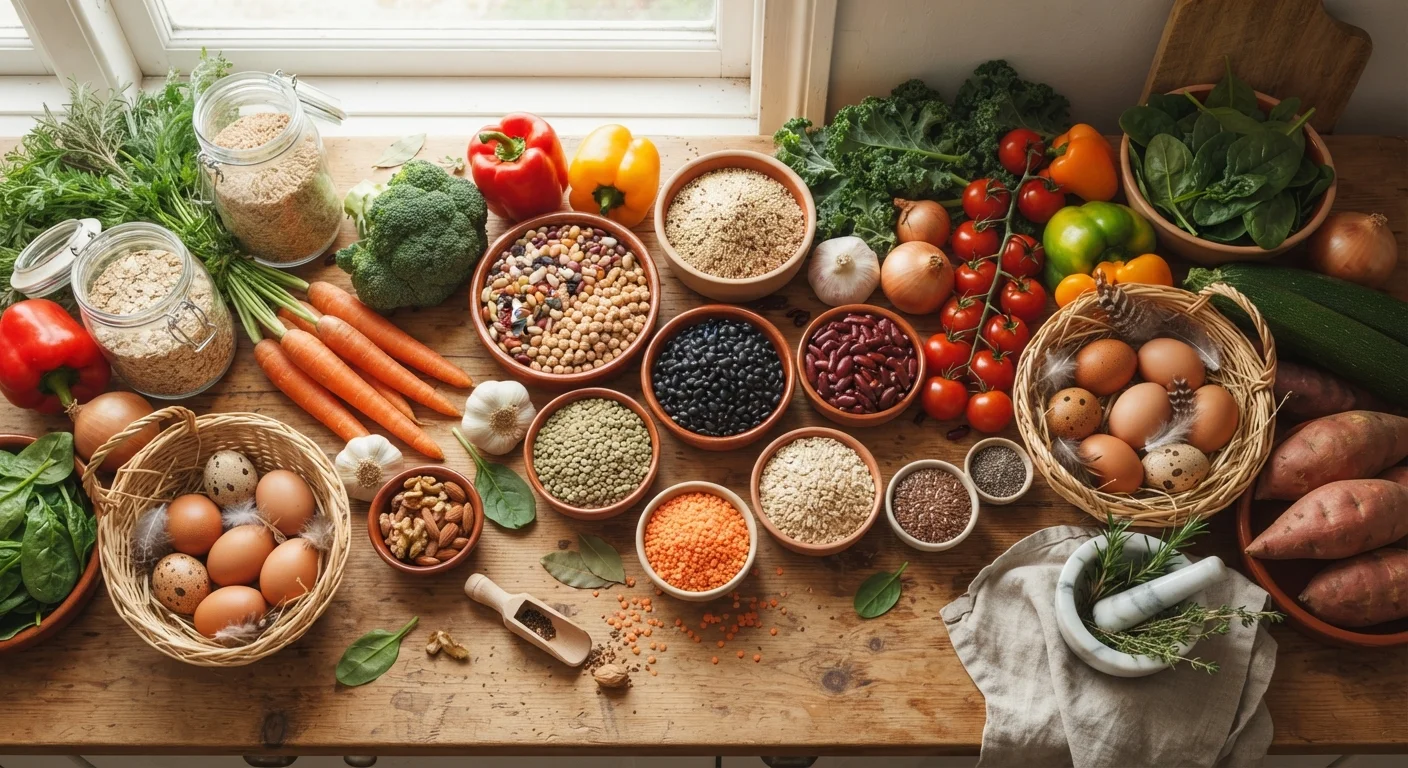
There's a persistent myth that eating nutritiously is reserved for people with extra money. In reality, many of the most nutrient-dense foods on the planet — dried beans, oats, eggs, cabbage, sweet potatoes — are also some of the least expensive. The challenge isn't access to good food; it's knowing which strategies actually work when cash is limited.
This article skips the diet-culture framing and gets practical. These approaches are grounded in general nutrition guidance and designed for real grocery trips, not idealized ones. If you're also navigating a broader money crunch, our guide to recognizing budget warning signs can help you see where food spending fits into the bigger picture.
Build meals around inexpensive whole-food staples
Dried legumes, whole grains, eggs, and seasonal produce deliver solid nutrition at a fraction of the cost of processed convenience foods. Centering your meals around these staples means you're spending less while getting more fiber, protein, and micronutrients.
Choose frozen vegetables and fruit without hesitation
Frozen produce is harvested and frozen at peak ripeness, which generally preserves nutrients well — often comparably to fresh. It also lasts much longer, reducing spoilage waste that quietly inflates grocery costs.
Plan meals before making a grocery list
Shopping without a plan almost always leads to both overspending and underusing ingredients. A rough weekly meal plan — even a loose one — helps you buy only what you'll actually use and minimizes mid-week takeout decisions.
Cook in batches to stretch effort and cost
Batch cooking means one cooking session covers multiple meals, reducing both food waste and the temptation to buy something convenient when you're tired. It also allows you to buy larger, cheaper quantities and use them fully.
Buy shelf-stable staples in larger quantities when possible
Dried beans, rice, oats, and pasta cost significantly less per serving when bought in larger bags or containers. These foods have long shelf lives, so buying in bulk reduces per-meal costs without any risk of spoilage.
Smart Shopping Habits That Make a Difference
How you shop matters as much as what you buy. A few consistent habits can meaningfully lower your grocery bill without cutting nutritional quality.
Pairing smart shopping with consistent weekly grocery routines makes healthy eating feel far less effortful over time.
Store Brands Are Usually Worth It
Generic or store-brand versions of pantry staples — canned beans, oats, frozen vegetables, pasta — are nutritionally equivalent to name-brand versions in most cases. Choosing store brands consistently can shave a meaningful amount off your monthly grocery bill without any quality trade-off.
Getting Enough Protein Without Overspending
Protein is one of the nutrients people worry most about on a budget, but it doesn't have to be expensive. Plant-based proteins — lentils, chickpeas, black beans, tofu — typically cost far less per gram of protein than meat. Eggs remain one of the most complete and affordable protein sources available. Canned fish like tuna or sardines also offers strong nutritional value at a low price point.
~$0.25
Estimated cost per serving of dried lentils
Dried lentils are consistently among the lowest-cost protein and fiber sources available in U.S. grocery stores, often priced well under a dollar per pound.
~40%
Of Americans report cost as a barrier to healthy eating
According to the American Heart Association, perceived food costs are one of the most commonly cited obstacles to nutritious eating among U.S. adults.
For a detailed comparison of how plant and animal proteins stack up nutritionally, see our side-by-side protein guide. And if you want a simple framework for building balanced meals without tracking numbers, building a balanced plate without counting calories offers an approachable starting point.
Unpredictable Schedules Require Different Strategies
If your daily routine shifts frequently — due to shift work, caregiving, or an irregular schedule — standard meal-planning advice may not always apply cleanly. Our article on nutrition for people without predictable schedules addresses strategies better suited to those situations.
This article is for general informational purposes only and is not a substitute for personalized medical or dietary advice. If you have specific health conditions or nutritional concerns, please consult a qualified healthcare professional.
The content on this site is for informational purposes only and is not a substitute for professional advice. Always consult a qualified professional for guidance specific to your situation.