

Why Counting Calories Often Doesn't Work Long-Term
Calorie counting can feel precise and scientific, but research consistently shows that most people find it difficult to maintain over time. It requires accurate logging, an understanding of portion weights, and often a tracking app — and even then, calorie estimates on labels can be off by meaningful margins. More significantly, it can shift attention away from what you're eating and toward a number, which doesn't always reflect how nourishing a meal actually is.
The plate method — a framework supported by organizations including the U.S. Department of Agriculture and the Harvard T.H. Chan School of Public Health — offers a simpler, more durable alternative. Rather than tracking units of energy, you use your plate itself as a visual guide to portion food groups in rough proportion. It requires no apps, no scales, and no math.
This approach won't produce the same granular data as calorie tracking, but for most people, it builds consistent habits that support overall wellbeing. If you're managing a specific health condition where precise intake matters, a registered dietitian can help tailor this framework to your needs.
Your Hand Is a Built-In Measuring Tool
A palm-sized portion is a practical rough guide for protein; a cupped hand works for grains; a fist approximates a vegetable serving. These aren't precise measurements, but they travel with you and scale naturally to your body size — no equipment needed.
Pair this approach with practical strategies for eating well on a tight budget if cost is a consideration — the two methods work together naturally.
What You'll Need to Get Started
What you will need
A standard dinner plate (9–10 inches)
Provides a visual reference for dividing food groups without measuring tools.
A variety of vegetables (fresh, frozen, or canned)
Fills half the plate with fiber, vitamins, and minerals.
A protein source (beans, eggs, fish, poultry, tofu, or meat)
Provides essential amino acids and helps sustain energy and fullness.
A whole grain or starchy vegetable
Supplies complex carbohydrates for sustained energy release.
A small amount of healthy fat (olive oil, avocado, nuts)
Supports absorption of fat-soluble vitamins and adds satisfaction to meals.
You don't need anything special beyond what's likely already in your kitchen. The plate method is deliberately low-friction — it's meant to work with the foods you already eat and buy, not require an overhaul of your pantry.
How to Build Your Plate: Step by Step
Fill Half Your Plate with Vegetables and Fruit
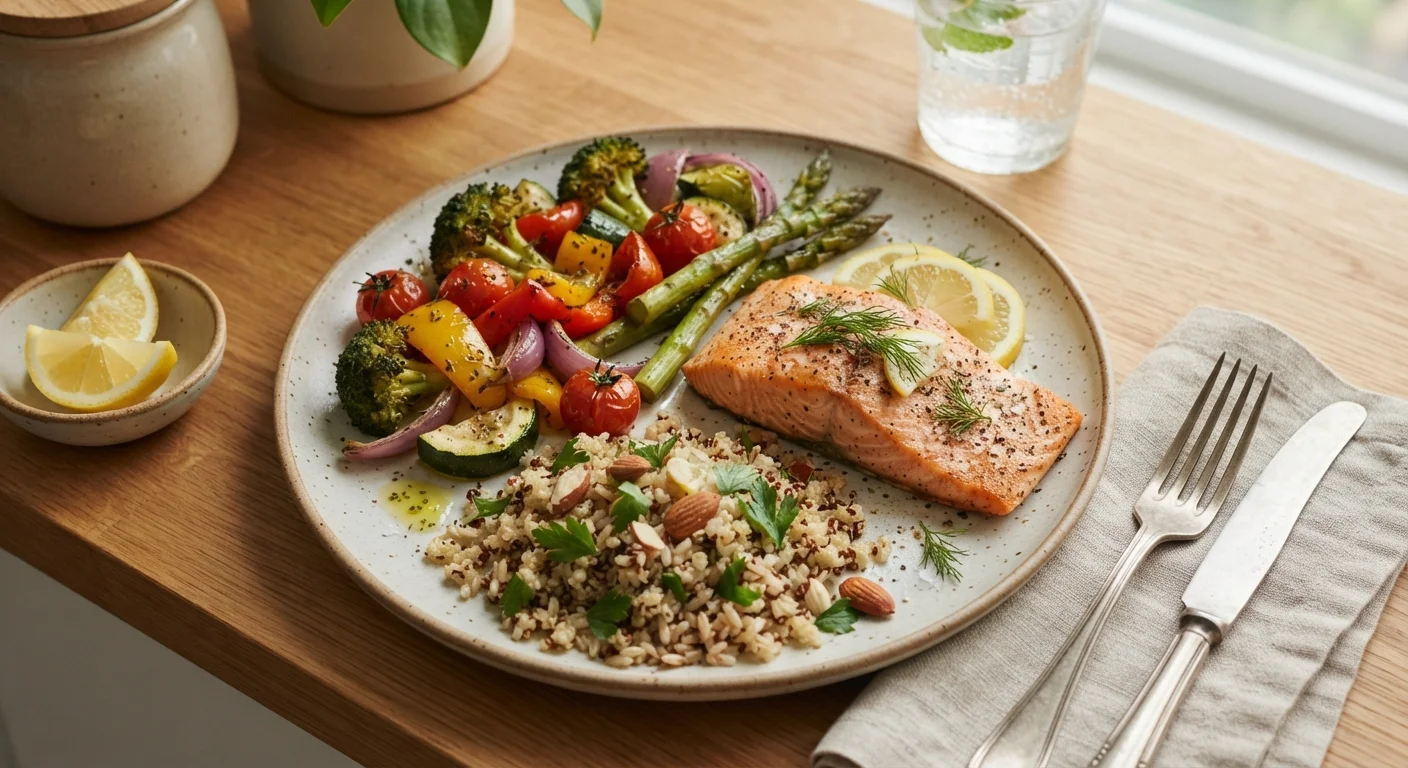
Start by dedicating roughly half your plate to non-starchy vegetables — think leafy greens, broccoli, peppers, carrots, cucumbers, or whatever you have on hand. A small portion of fruit can count here too. This half provides fiber, water content, and a wide range of micronutrients without dramatically affecting how full you'll feel from heavier foods.
Frozen vegetables are just as nutritious as fresh and often more affordable. Canned vegetables (look for low-sodium options when possible) also work well. There's no requirement to eat raw — roasted, steamed, or sautéed all count.
Add a Protein Source to One Quarter of Your Plate
Reserve about a quarter of your plate for a protein source. This could be grilled chicken, canned fish, eggs, tofu, tempeh, lentils, chickpeas, or black beans. Protein supports muscle maintenance, helps regulate appetite, and slows digestion — which means you tend to feel satisfied for longer after eating.
Plant-based proteins like legumes are a smart, budget-friendly choice that also bring fiber along for the ride. If you eat animal proteins, leaner options generally align with widely accepted dietary guidance, though the most important thing is that you're including some protein consistently.
Fill the Remaining Quarter with Whole Grains or Starchy Vegetables
The last quarter of your plate is for complex carbohydrates — the primary fuel source your body runs on. Whole grains like brown rice, quinoa, oats, whole-wheat bread, or farro are good choices. Starchy vegetables like sweet potatoes, corn, or peas also fit here well.
Whole grains differ from refined grains in that they retain the bran and germ, which carry fiber, B vitamins, and minerals. That said, even white rice or regular pasta as part of an otherwise varied diet is far better than skipping this food group entirely.
Add a Small Amount of Healthy Fat
Fat isn't something to avoid — it's essential for absorbing fat-soluble vitamins (A, D, E, and K) and for making meals feel satisfying. A drizzle of olive oil, a few slices of avocado, a small handful of nuts or seeds, or a spoonful of nut butter adds healthy unsaturated fat without overwhelming the rest of the plate.
This step is often already handled naturally — if you cooked your vegetables in oil or your protein source contains fat, you've likely covered this without thinking about it.
Choose a Beverage That Doesn't Undermine the Meal
What you drink alongside a meal is often overlooked. Water is the most straightforward choice and supports digestion. Unsweetened tea, sparkling water, or low-fat milk are also reasonable options depending on your preferences and health context. Sugary drinks add significant calories and can blunt the benefit of an otherwise well-balanced plate — but an occasional choice isn't cause for concern.
Avoid Applying This Rigidly
The plate method is meant to be a loose guide, not a strict rulebook. If you find yourself feeling stressed or guilty when a meal doesn't match the template, that's a signal to loosen up. Progress in eating well is rarely linear, and flexibility is a feature, not a flaw.
Once this becomes habit, you'll find yourself doing it intuitively without any conscious effort. Most cuisines around the world already contain these elements in some combination — a stir-fry over rice, a burrito bowl, a soup with beans and vegetables — so you're likely already closer than you think.
For those with irregular schedules, nutrition strategies for unpredictable days can help you apply this framework even when mealtimes shift around.
Making This Work in Real Life
The plate method is a guide, not a prescription. There will be meals that don't fit neatly into the template — and that's entirely fine. A slice of pizza, a bowl of pasta, or a holiday dinner doesn't need to be restructured. The goal is consistency across many meals over time, not perfection at every sitting.
If you want to build more repeatable habits around food, simple weekly grocery habits can help reduce decision fatigue and make balanced eating feel less effortful day to day. Pairing good nutrition with movement is also worth considering — the Fitness Basics hub is a helpful starting point if you're new to building an activity routine.
This Is General Nutrition Information
The guidance in this article is for general educational purposes and is not a substitute for personalized medical or dietary advice. If you have a health condition, food allergy, or specific nutritional need, please consult a registered dietitian or your healthcare provider before making significant changes to how you eat.
This article is for general informational and educational purposes only and does not constitute medical or dietary advice. Please consult a qualified healthcare provider or registered dietitian for guidance specific to your health needs.
The content on this site is for informational purposes only and is not a substitute for professional advice. Always consult a qualified professional for guidance specific to your situation.