

Why Standard Nutrition Advice Often Misses the Mark
Most mainstream nutrition guidance assumes you eat three meals at predictable times, have access to a kitchen at lunch, and sleep the same hours every night. For shift workers, parents of young children, caregivers, gig workers, and anyone with a fluid schedule, that model simply doesn't apply.
The good news: eating well without a routine isn't about forcing a structure that doesn't fit your life. It's about building in enough flexibility that good choices remain available — even at 2 a.m., between school pickups, or after a back-to-back double shift.
If you're also navigating a tight grocery budget alongside a hectic schedule, our guide on eating well on a tight budget covers strategies that work together with the approaches here.
A Note on Night Shifts and Digestion
Eating late at night isn't inherently harmful, but the digestive system does work differently during hours when the body expects to rest. Many shift workers find that lighter, easier-to-digest options — like soups, eggs, or yogurt — feel better during overnight shifts compared to heavy, high-fat meals. This is not a rule, and individual responses vary. If you're experiencing persistent digestive discomfort related to your schedule, it's worth discussing with a healthcare provider.
Best Practices for Eating Well Without a Set Routine
The following practices are grounded in general dietary guidance from sources like the CDC and NIH. They're designed to be adaptable — pick and build on what fits your reality.
Stock a personal "anchor food" kit that travels with you.
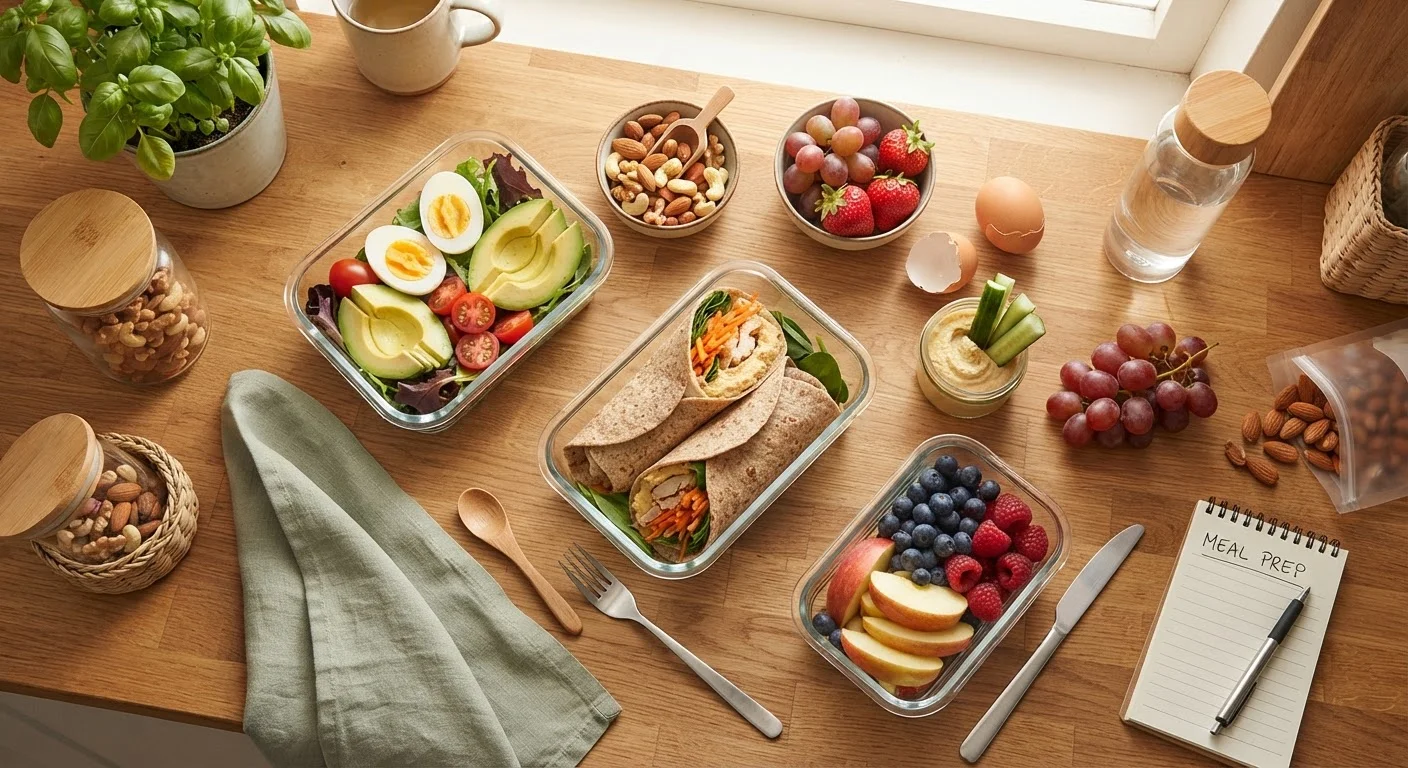
When meals are delayed or vending machines are the only option, having portable staples on hand prevents energy crashes and impulsive choices. Foods that are stable at room temperature and high in protein or fiber keep you fuller longer without refrigeration. This removes the dependency on being near a full kitchen.
Batch-cook one or two versatile protein sources at the start of your available window.
Having pre-cooked protein — like hard-boiled eggs, roasted chicken, or canned beans — means you can assemble a balanced meal in under five minutes without decision fatigue. According to general dietary guidelines, protein supports satiety and helps stabilize energy, both critical during irregular schedules.
Anchor meals around protein and fiber rather than meal timing.
Research consistently supports that protein and dietary fiber are the two nutrients most associated with sustained fullness and stable energy. For people who can't eat on a schedule, prioritizing these at every eating opportunity — regardless of what time it is — does more than sticking to a rigid clock. Our article on why you feel hungry an hour after eating explains the science behind this in plain terms.
Use your grocery trip to set yourself up for the week's likely gaps.
Rather than planning specific meals for specific days — which falls apart with unpredictable schedules — shop with your likely hunger moments in mind. What do you typically reach for at 11 p.m.? What do you eat in the car? Stocking for those scenarios reduces the chance of skipping meals entirely. Weekly grocery habits that support consistent eating can help make this feel routine.
Hydrate consistently, not just when you feel thirsty.
Shift work and high-activity parenting both disrupt the body's normal thirst signals. Mild dehydration can present as fatigue or even hunger, leading to unnecessary snacking or low energy. Keeping a refillable water bottle visible and accessible is one of the simplest interventions with real, well-documented effects on how you feel.
Quick Wins You Can Start Today
You don't need a complete overhaul to improve how you eat. A few immediate changes can have a meaningful impact, even on the most unpredictable weeks.
For a deeper look at how to put together meals without obsessing over numbers, see our guide on building a balanced plate without counting calories. And if unpredictable schedules extend beyond food, time management approaches for people who hate rigid schedules may offer useful perspective.
This article is for general informational and educational purposes only and is not a substitute for personalized medical or dietary advice. Please consult a qualified healthcare professional or registered dietitian for guidance specific to your health needs.
The content on this site is for informational purposes only and is not a substitute for professional advice. Always consult a qualified professional for guidance specific to your situation.