

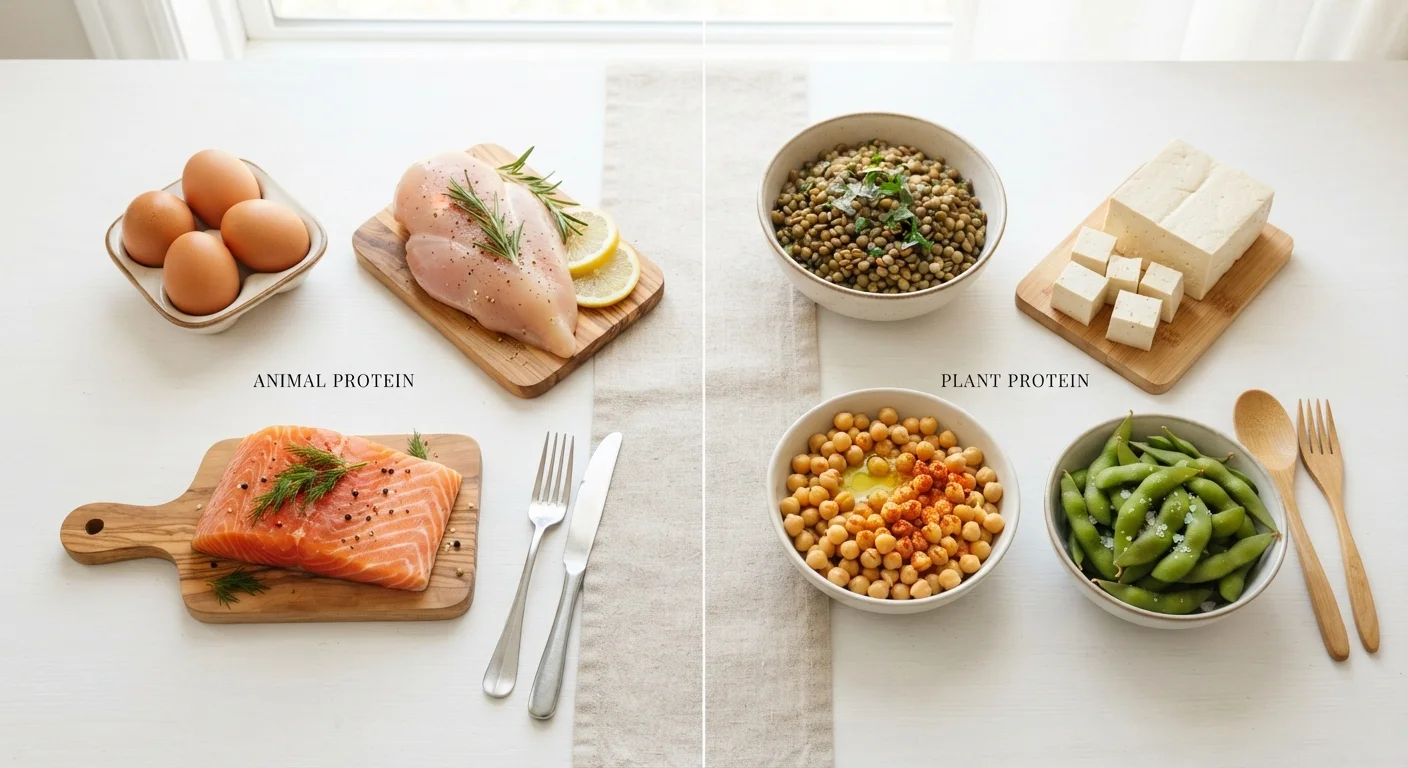
Option A
Animal-Based Protein
The complete, highly bioavailable classic.
Best for: People seeking protein sources that contain all essential amino acids in a single food with high absorption rates.
Option B
Plant-Based Protein
The versatile, nutrient-rich alternative.
Best for: People looking to diversify their protein intake, reduce meat consumption, or follow vegetarian and vegan eating patterns.
What Makes a Protein Source 'Complete' or 'Incomplete'?
Protein is one of the three core macronutrients your body depends on — if you want a broader picture of how it fits alongside carbohydrates and fats, our overview of macronutrients and micronutrients is a helpful starting point.
All dietary protein is made of smaller building blocks called amino acids. Your body requires 20 different amino acids to function; nine of these are called essential amino acids because your body cannot manufacture them — they must come from food.
Animal proteins (meat, poultry, fish, eggs, dairy) are called complete proteins because they naturally contain all nine essential amino acids in proportions that closely match what the human body uses. Plant proteins (beans, lentils, tofu, tempeh, whole grains, nuts, seeds) are mostly considered incomplete, meaning any single plant food may be low in one or more essential amino acids.
Importantly, this does not mean plant proteins are inadequate. Eating a variety of plant foods across the day — for example, rice and beans, or hummus and whole grain bread — supplies the full set of essential amino acids without requiring precise meal-by-meal pairing. Major nutrition organizations, including the Academy of Nutrition and Dietetics, confirm that well-planned plant-based diets can meet all protein needs.
How Animal and Plant Proteins Compare Head to Head
Beyond amino acid completeness, several practical factors separate these two protein categories in everyday eating.
| Criterion | Animal-Based Protein | Plant-Based Protein |
|---|---|---|
| Amino acid profile | Complete (all 9 essential amino acids) | Often incomplete; complete when varied |
| Digestibility | Generally high (85–99%) | Moderate to high; varies by source |
| Fiber content | None | Present in most whole-food sources |
| Saturated fat | Present in many sources; varies widely | Typically very low |
| Dietary cholesterol | Present | None |
| Typical cost | Moderate to high (varies by type) | Low to moderate |
| Examples | Chicken, eggs, salmon, Greek yogurt | Lentils, tofu, edamame, black beans |
One nuance worth noting: digestibility varies meaningfully within each category. Among animal proteins, eggs and dairy tend to be very easily digested. Among plant proteins, soy and pea protein score highly on digestibility measures, while whole legumes digest somewhat more slowly — which also contributes to feelings of fullness. The fiber that accompanies plant proteins is absent in most animal foods, making plant sources a two-for-one nutritional win in that respect.
Saturated fat is another consideration. Fatty cuts of meat and full-fat dairy carry significant saturated fat, which most dietary guidelines recommend moderating. Fatty fish, by contrast, provides heart-supportive omega-3 fatty acids. Plant proteins are generally low in saturated fat and free of dietary cholesterol entirely.
Everyday Practicality: Cost, Access, and Cooking
Nutrition facts only tell part of the story — what you can realistically prepare and afford matters just as much. Our guide on eating well on a tight budget explores this in more depth, but a few highlights apply directly to protein choices.
~26g
Protein per 3 oz serving of cooked chicken breast
Per USDA FoodData Central nutritional database figures for skinless, roasted chicken breast.
~18g
Protein per cooked cup of lentils
Per USDA FoodData Central; lentils also deliver roughly 15g of fiber per cup, a benefit animal proteins don't offer.
~$0.13
Estimated cost per gram of protein from dried lentils
Based on typical U.S. grocery store pricing for dried lentils; one of the most cost-efficient protein sources widely available.
Dried lentils and canned chickpeas regularly rank among the lowest-cost protein sources per gram available in American grocery stores. Eggs offer a relatively affordable animal-protein option. Fresh fish and lean cuts of meat tend to sit at the higher end of the price range.
On the cooking side, both categories have easy entry points. Canned beans require no cooking at all. Eggs cook in minutes. Rotisserie chicken, cottage cheese, and edamame are all minimal-effort, high-protein options. The idea that healthy protein eating requires elaborate meal prep is one of the nutrition myths worth setting aside.
A Note on Special Dietary Needs
Certain groups — including people who are pregnant, older adults, children, and those managing chronic conditions such as kidney disease — may have protein needs or restrictions that differ from general population guidelines. For example, high protein intakes that are fine for most adults may require adjustment for people with certain kidney conditions. Always loop in a qualified healthcare provider before making significant dietary changes if any of these circumstances apply to you.
If you are navigating a specific health condition, pregnancy, or other circumstances that affect your nutritional needs, a registered dietitian can offer personalized guidance that goes well beyond what any general comparison can provide.
This article is for general informational purposes only and does not constitute medical or nutritional advice. Consult a qualified healthcare professional for guidance tailored to your individual health needs.
The content on this site is for informational purposes only and is not a substitute for professional advice. Always consult a qualified professional for guidance specific to your situation.