

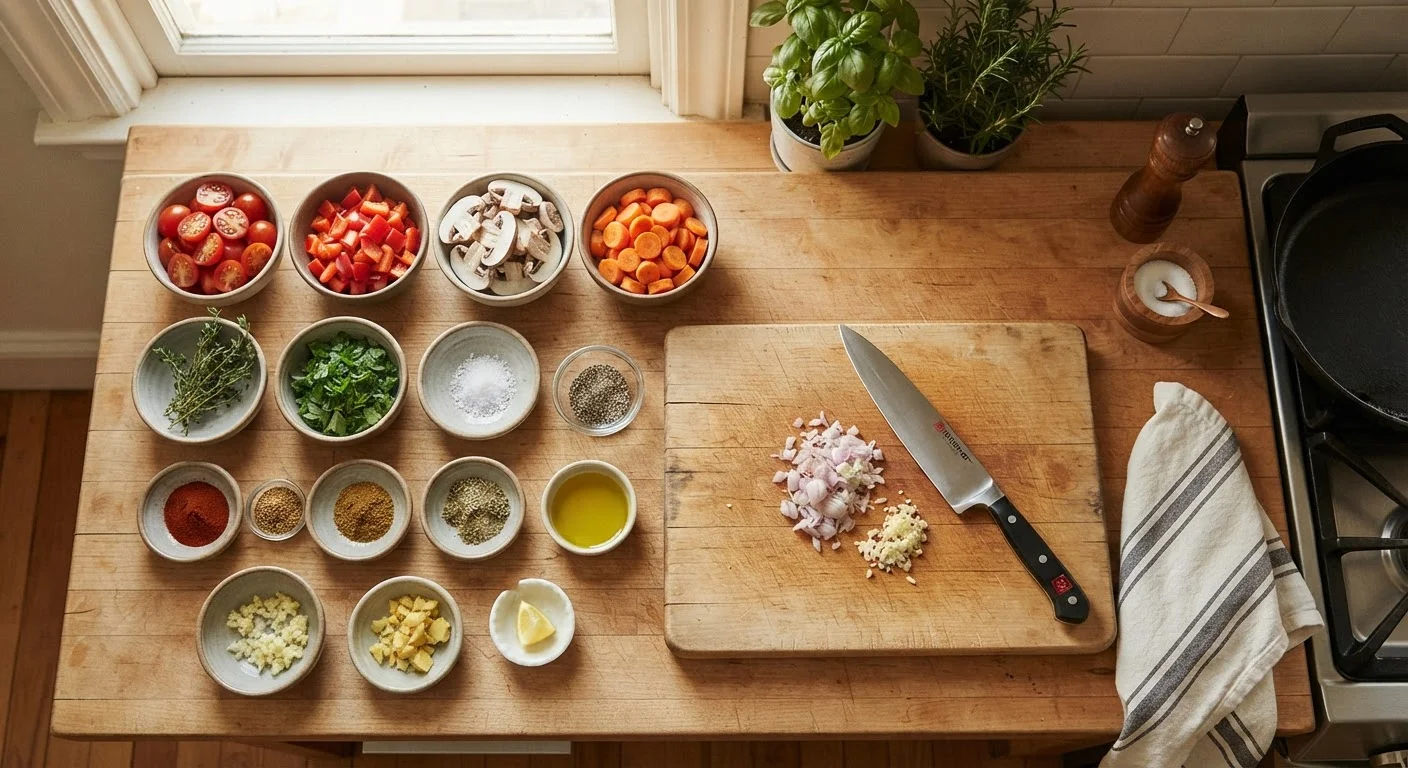
What Mise en Place Actually Means
Mise en place (pronounced mee-zon-plass) is a French culinary phrase meaning "everything in its place." In professional kitchens, it describes the practice of measuring, chopping, portioning, and organizing every ingredient before cooking starts. Nothing goes on the heat until prep is complete.
At home, the idea translates naturally. Instead of scrambling to mince garlic while onions are already burning, you have everything ready in advance. The stove gets your full attention. So does the timing. It's a simple shift in sequence, and it makes a noticeable difference - especially when a recipe has multiple components moving at once.
Understanding why steps are ordered in recipes the way they are connects directly to this principle. See how recipe structure works for a deeper look at reading recipes more critically.
Best Practices for Applying Mise en Place at Home
You don't need a restaurant setup to make this work. Here's how to bring the practice into an everyday home kitchen.
Read the entire recipe before touching a single ingredient.
Surprises mid-cook - like needing to marinate something for 30 minutes, or discovering a step requires two pans - derail timing and create stress. A full read-through lets you spot these moments in advance and plan around them.
Measure and prep every ingredient before turning on the heat.
Cooking often moves faster than expected, especially at high heat. If you're still chopping when the oil is smoking, both the food and your focus suffer. Having everything measured and ready keeps you present and in control.
Use small bowls or ramekins to hold prepped ingredients separately.
Grouping ingredients that go in together and keeping others separate mirrors how you'll actually use them. It prevents accidentally adding something too early and makes the cooking sequence intuitive to follow.
Clear and wipe your prep area before you start cooking.
A cluttered counter creates mental noise and makes it easy to lose track of what's been prepped. A clean, organized space lets you work faster and think more clearly.
Prep ingredients in the order they'll be used.
Working through prep in sequence means your bowls and portions are naturally organized by when they're needed. This makes it easy to hand off from prep to cook without hunting around.
Quick Wins to Start Tonight
You don't have to overhaul your whole cooking routine at once. A few small adjustments can immediately reduce the friction of getting dinner on the table.
If you're also working on eating well on a busy schedule, mise en place pairs particularly well with batch cooking and meal planning approaches that suit your lifestyle.
The content on this site is for informational purposes only and is not a substitute for professional advice. Always consult a qualified professional for guidance specific to your situation.