

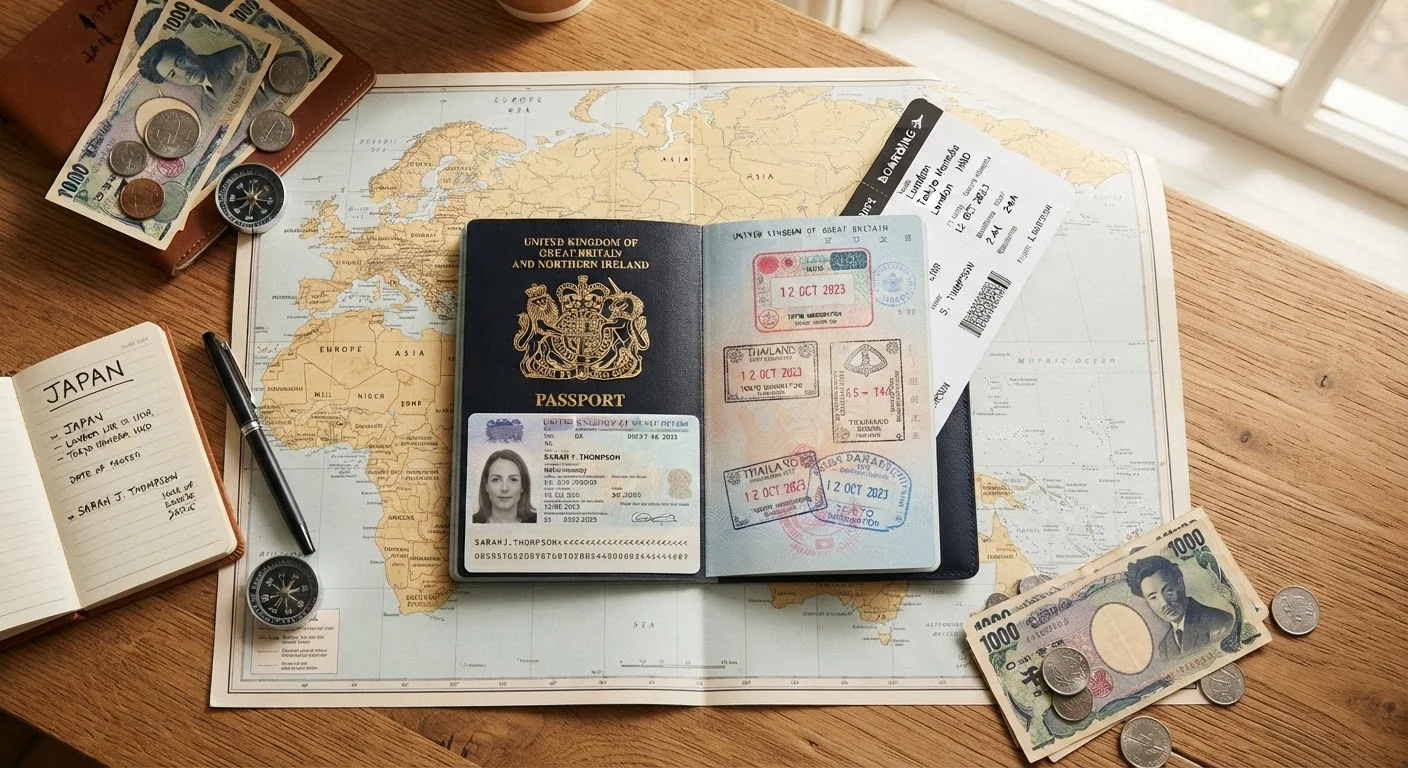
The Three Tiers of Entry: Passport, Visa, or Neither
When planning an international trip, the first question to answer is simple: what does the destination actually require you to carry? For American travelers, entry requirements generally fall into one of three categories.
| Documents for U.S. Territories | Government-issued ID only (no passport) (U.S. Customs and Border Protection) |
| Passport-Only Destinations | Canada, Mexico, most EU countries, Japan, and others (U.S. Department of State, travel.state.gov) |
| Minimum Passport Validity Required | 6 months beyond travel dates (many countries) (U.S. Department of State) |
| Routine Passport Renewal Time | 6–8 weeks (times vary) (U.S. Department of State) |
| Best Official Source for Requirements | travel.state.gov (U.S. Department of State) |
| Second Source to Cross-Check | Destination country's official embassy or consulate website |
No document beyond ID: A handful of U.S. territories — including Puerto Rico, the U.S. Virgin Islands, Guam, and American Samoa — are domestic destinations. American citizens travel there with a government-issued ID, just as they would for a domestic flight. No passport needed.
Passport only: Many countries allow U.S. citizens to enter for tourism or short visits without obtaining a visa in advance. You show your valid passport at the border, and entry is granted — often for stays ranging from 30 to 90 days. Canada, Mexico, most of Western Europe, Japan, and South Korea fall into this category, though specifics vary.
Passport plus a visa or travel authorization: Some countries require Americans to obtain permission before or upon arrival. This could be an eTA, an e-visa, a visa-on-arrival, or a traditional consular visa applied for weeks in advance. For a deeper look at each type, see our guide to visa types.
Why Requirements Change — and How to Stay Current
Entry rules are set by each country's government and can shift without much notice due to diplomatic changes, public health policies, security concerns, or reciprocity agreements. A requirement that didn't exist last year may be in effect today, and vice versa.
Travel Blogs Are Not Official Sources
Personal travel blogs, YouTube videos, and social media posts can be helpful for inspiration, but they are not reliable for entry requirements. Policies change, and outdated information can result in denied boarding or refusal of entry. Always verify directly with the U.S. Department of State and the destination country's official government website before every trip.
This is why travel blogs, social media posts, and even guidebooks are unreliable as your primary source. Their information may be months or years out of date. Always use official, government-maintained sources to confirm what you need before you book — and again a few weeks before you depart.
The most authoritative source for American travelers is the U.S. Department of State at travel.state.gov. Each country page lists current passport, visa, and health requirements, plus travel advisories. The destination country's official embassy or consulate website is the second source to cross-check, since they set the actual rules. If you want to understand how to read and apply that information without feeling overwhelmed, our article on reading destination entry information walks through the process step by step.
Passport Validity: The Rule Most Travelers Miss
Having a valid passport is not always enough. Many countries require that your passport remain valid for at least six months beyond your planned departure date. If your passport expires in four months, you could be denied boarding — even if your trip is only two weeks long.
6+ months
Passport validity many countries require beyond your return date
According to the U.S. Department of State; exact requirements vary by destination.
6–8 weeks
Typical routine passport processing time in the U.S.
U.S. Department of State guidance; processing times can fluctuate significantly.
195+
Countries and territories with distinct entry requirements
Each sets its own rules independently, which is why destination-specific research is essential.
Check your passport's expiration date early in the planning process. If it needs renewal, the U.S. State Department recommends allowing at least 6–8 weeks under routine processing, though times fluctuate. Expedited options are available for an additional fee when time is short. Keep a record of your passport details separately from the document itself — our article on essential travel documents explains what information to store and why.
A Simple Pre-Trip Document Checklist
Use this process every time you plan an international trip, regardless of how familiar the destination feels:
- Identify the destination's requirements — check travel.state.gov for the specific country.
- Confirm passport validity — verify you meet the six-month rule for your destination.
- Determine visa requirements — note whether you need to apply in advance, at arrival, or not at all.
- Check for additional authorizations — some countries (such as Canada's IRCC for the eTA) require a separate electronic registration even when no visa is needed.
- Review health entry requirements — some destinations require proof of vaccination or other documentation.
- Make copies of everything — store both digital and physical backups. See our guide on digital vs. physical document copies for practical options.
For a full picture of what to bring beyond the basics, including medication rules and emergency contacts, visit the Travel Safety & Docs hub.
eTA (Electronic Travel Authorization)
A digital pre-travel permission required by some countries — such as Canada — for visitors who don't need a traditional visa. It is linked electronically to your passport and typically applied for online before departure.
Visa-on-arrival
A visa issued at the destination country's port of entry (airport, border crossing) rather than applied for in advance. Eligibility varies by nationality and destination.
Reciprocity agreement
A mutual arrangement between two countries that grants matching travel or visa privileges to each other's citizens. If one country changes its rules, the other may respond in kind.
Six-month passport rule
A requirement enforced by many countries that a visitor's passport must be valid for at least six months beyond their intended departure date, not just the date of arrival.
Consular visa
A visa applied for at a foreign country's embassy or consulate before travel. This type often requires submitting an application, supporting documents, and sometimes an interview.
The content on this site is for informational purposes only and is not a substitute for professional advice. Always consult a qualified professional for guidance specific to your situation.