
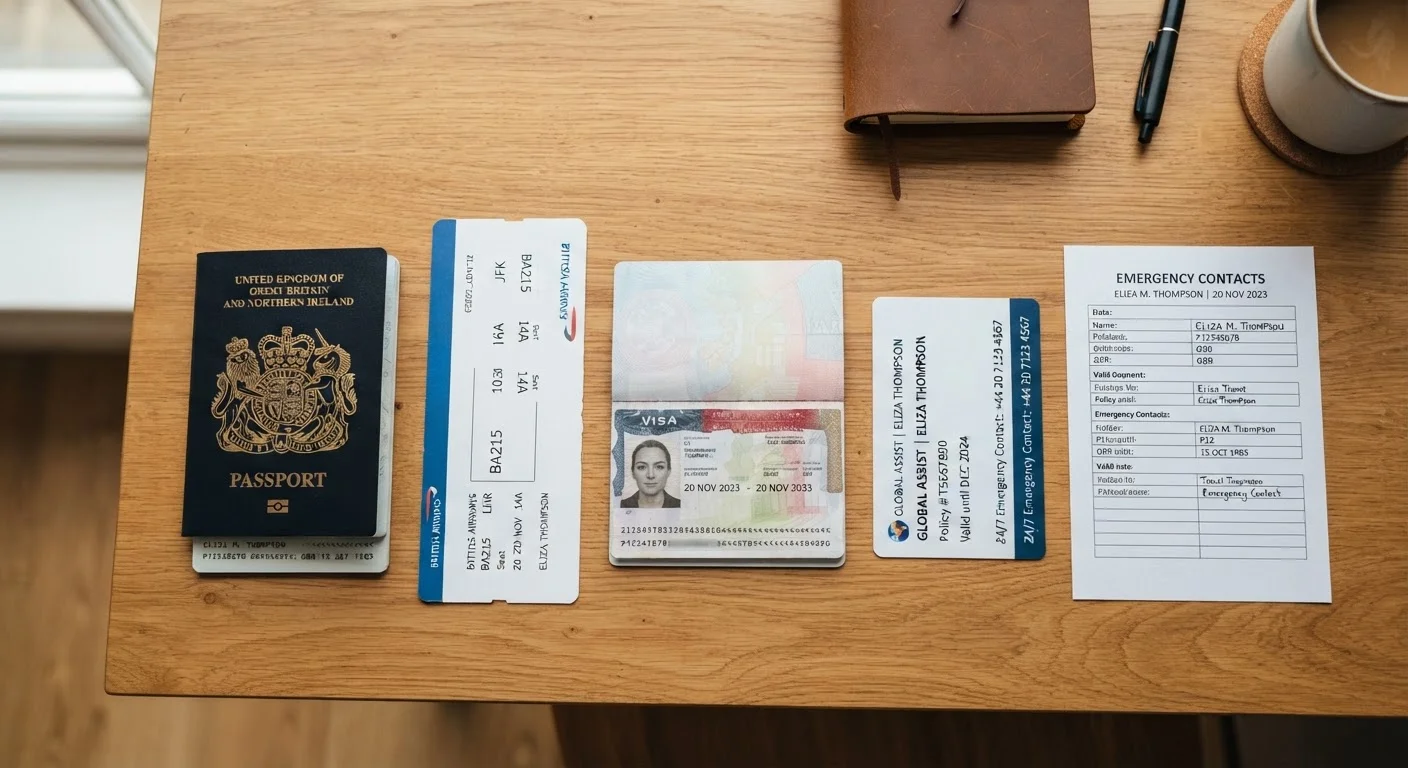
Summary
18 items · 30–60 minutes to gather and organize
Why Your Document Prep Matters Before You Board
For many Americans, packing documents is an afterthought — toss the passport in the bag and go. But international travel involves a web of entry requirements, insurance rules, and emergency protocols that can unravel quickly if your paperwork isn't in order. Border agents can turn you away, hospitals can demand proof of coverage, and a lost passport becomes a multi-day ordeal without backup documentation.
This checklist walks through every document category worth organizing before departure. Whether you're a first-time international traveler or someone who travels once a year, running through these items a week before you leave gives you real peace of mind. For a broader pre-trip review, see the pre-departure checklist for occasional travelers.
Passport & Entry Documents
Copies & Backups
Health & Insurance Documents
Emergency & Contact Information
Financial & Logistical Documents
Tools You'll Need to Pull This Together
Gathering your documents doesn't require special software, but a few tools make the process faster and more secure.
Secure cloud storage or encrypted app
Store digital copies of passports, visas, and insurance cards that you can access from any device if originals are lost.
Laminator or waterproof document sleeve
Protect printed emergency contact cards and backup document copies from water damage during travel.
U.S. State Department travel site (travel.state.gov)
Verify official visa requirements, entry rules, and travel advisories for every destination on your itinerary.
STEP enrollment portal (step.state.gov)
Register your trip with the nearest U.S. embassy so you can receive emergency alerts and assistance abroad.
Once you've assembled everything, consider how you'll store backup copies. The decision between cloud storage and printed backups involves real trade-offs — the digital vs. physical document copies guide covers both approaches clearly.
Critical Warnings Before You Travel
A few document-related mistakes are common enough — and consequential enough — that they deserve a direct callout before you finalize your preparation.
Passport Validity Rules Can Ground Your Trip
Dozens of countries require your passport to be valid for at least six months after your planned departure date — not just your arrival date. Airlines may also deny boarding if your passport doesn't meet this threshold. Check your passport's expiration date now, and apply for renewal at least 8–12 weeks before travel if there's any question about validity.
Entry Requirements Change Without Much Notice
Visa policies, vaccination requirements, and entry rules can shift due to diplomatic changes, public health situations, or new bilateral agreements. Always verify requirements directly through travel.state.gov or the official embassy website of your destination country — not travel blogs or third-party booking sites. For guidance on reading travel advisories, see what U.S. travel advisories actually tell you.
For a broader look at preparedness gaps that catch first-timers off guard, see travel safety oversights that surprise first-time international travelers. If you're carrying prescription medication, the rules around documentation and legal status at your destination deserve separate attention — see medication across borders: rules, documentation, and common pitfalls.
The content on this site is for informational purposes only and is not a substitute for professional advice. Always consult a qualified professional for guidance specific to your situation.