

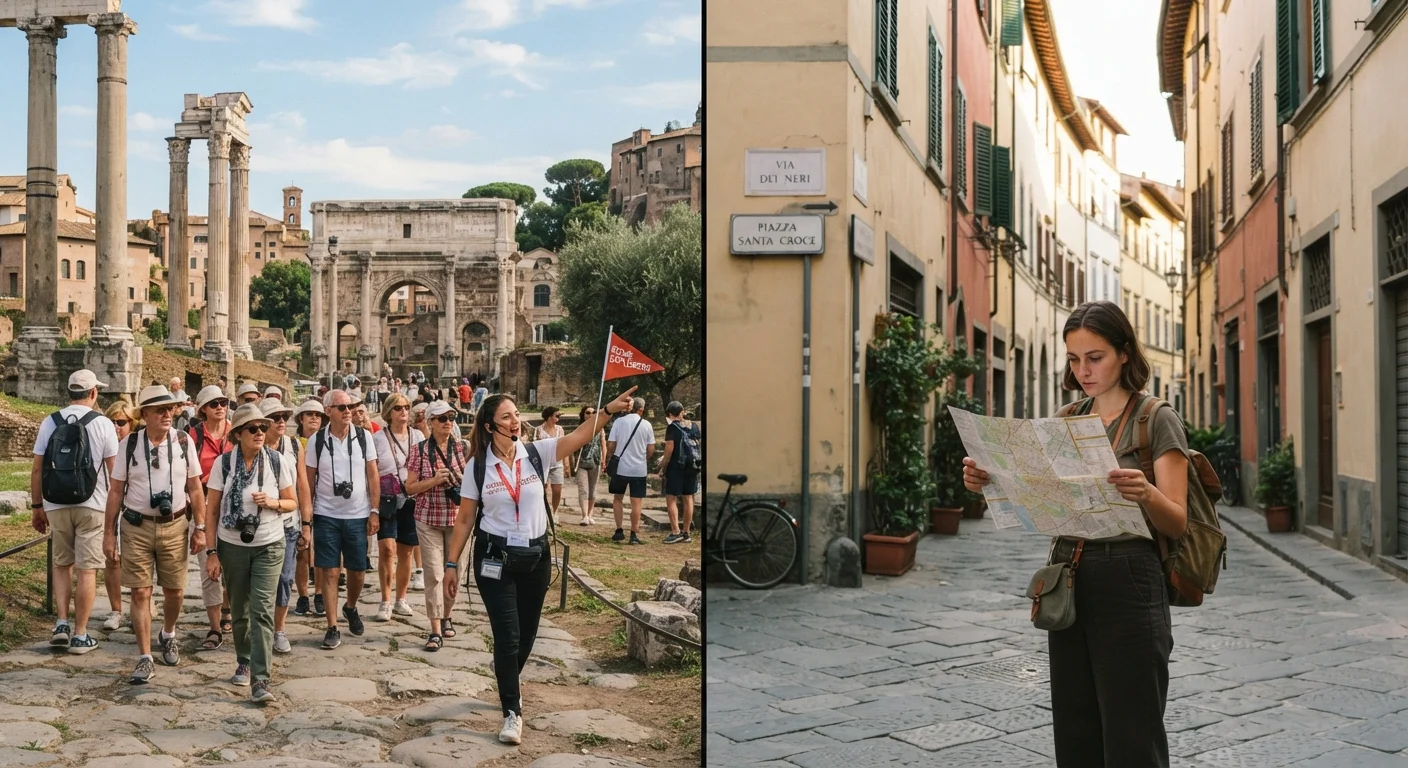
Our Verdict
Neither guided tours nor independent travel is objectively superior — each suits a different type of traveler and trip. Guided tours shine when you're visiting a destination with significant language barriers, complex logistics, or limited solo infrastructure. Independent travel rewards those who want total control over their itinerary and are willing to put in the planning work upfront.
Guided tours are best for first-time international travelers, those with limited time, or anyone visiting destinations where local expertise genuinely changes the experience — while independent travel suits confident planners who prioritize flexibility and personalized pacing.
What You're Actually Choosing Between
When travelers debate guided versus independent travel, they're really weighing two different sets of trade-offs: control vs. convenience and depth vs. efficiency. A guided tour typically bundles transportation, accommodation, meals, and sightseeing into a single package led by a professional guide. Independent travel means you research, book, and navigate everything yourself — or with travel companions.
The right choice isn't universal. It shifts based on your destination, your experience level, your budget approach, and frankly, how much you enjoy the planning process itself. Before committing to either path, it helps to run through the key planning decisions that affect any trip, regardless of format.
This article examines the real advantages and genuine drawbacks of each approach — without declaring a winner, because there isn't one.
The Case for Guided Tours
Guided tours remove the heaviest logistical burden from the traveler. When you land in an unfamiliar country, you don't need to figure out how to get from the airport to your hotel, decode a foreign transit system, or wonder if a restaurant is safe — your tour operator has already solved those problems.
Eliminates complex logistics and pre-trip research burden
Transportation, accommodation, and major activities are pre-arranged, meaning you arrive with far less advance preparation required than a comparable independent itinerary.
Access to local expertise and context
A knowledgeable guide can explain cultural significance, share historical detail, and answer questions in ways that no guidebook fully replicates — particularly valuable at archaeological or heritage sites.
Built-in safety net in unfamiliar destinations
When something goes wrong — a missed connection, a health issue, a language barrier — a reputable tour operator has protocols and local contacts to help resolve it quickly.
Opportunities to meet fellow travelers
Small-group tours in particular create natural social opportunities that solo independent travelers have to work harder to find, which some travelers genuinely value.
This matters most in destinations with significant language barriers, limited English-language signage, or safety considerations that benefit from local expertise. A well-run guided tour can also grant access to sites or experiences that would be difficult to arrange independently — private after-hours museum access, small-group permits for restricted natural areas, or guides with genuine specialist knowledge.
For travelers comparing different types of group experiences, it's also worth reading about how group trip dynamics change your planning — guided tours share some of the same coordination advantages as group travel generally.
The Drawbacks of Guided Tours
The convenience of a guided tour comes with real constraints. You move at the group's pace, not yours. If you want to spend two hours in a single museum gallery while the group moves on, that's usually not an option. Meals are often pre-selected, activities run on a fixed schedule, and free time — if built in at all — is limited.
Fixed schedule limits spontaneity and personal pace
Tour itineraries are built around group consensus and operator efficiency, not your individual preferences — lingering longer at something you love is rarely an option.
Less authentic interaction with local culture
Tours often move through tourist-optimized venues and routes; independent travelers typically encounter a less filtered version of daily local life.
Can be significantly more expensive for some itineraries
Premium guided tours charge for convenience and expertise, which can make them costlier than a well-planned independent trip to the same destination — though not always, once all independent costs are tallied.
Group dynamics can affect your experience
A single difficult group member or a pace mismatch with other participants can affect the trip in ways entirely outside your control.
Cost is another consideration worth examining carefully. Guided tours can appear expensive upfront, but they bundle costs that independent travelers pay separately. The honest comparison requires adding up your own flights, accommodation, transfers, entrance fees, and guides before concluding which approach actually costs more for your specific trip.
Planning Your Own Trip: What You Gain and What It Costs You
Independent travel puts every decision in your hands — which is both the appeal and the challenge. You can spend an extra night somewhere you love, skip an attraction that doesn't interest you, eat where locals eat, and adjust plans in real time based on weather, energy, or a recommendation from a stranger at a café.
72%
First-time international travelers citing logistics as top concern
A U.S. Travel Association survey found that logistical anxiety — not cost — is the most commonly cited barrier among Americans considering their first international trip.
3–5 hrs
Average daily planning time for complex independent itineraries
Travel researchers and trip-planning platforms estimate that a 10-day independent trip to a new destination typically requires 30–50 hours of advance research and booking across all components.
The trade-off is the planning investment. A well-executed independent trip to an unfamiliar destination typically requires researching visa requirements, understanding local transportation options, vetting accommodation safety, and building a realistic daily budget. When you travel matters enormously to this process — the impact of travel dates on cost and crowds is a factor independent travelers must evaluate entirely on their own.
For accommodations, independent travelers also face a wider range of choices. Understanding options like hostels versus budget hotels is one example of the research that falls entirely to you.
Visa and Entry Rules: Always Verify Officially
Whether you travel independently or with a guided tour, visa requirements, vaccination rules, and entry documentation are your personal responsibility to confirm. Tour operators may provide general guidance, but requirements can change. Always check the official U.S. Department of State travel pages and the destination country's official immigration authority before traveling. Visit the Travel Safety & Docs hub for a starting-point overview of key documentation every traveler should prepare.
The Hybrid Approach: A Practical Middle Ground
Many experienced travelers don't choose strictly between guided and independent — they combine both within a single trip. A common pattern: fly independently into a city, spend a few days exploring on your own, then join a guided day tour or multi-day excursion for a specific region or experience that benefits from expert local context.
This hybrid model works especially well when one segment of your trip involves complex logistics. Cruise travelers, for example, face a version of this decision at every port: booking shore excursions through the cruise line vs. independently captures exactly this trade-off in miniature.
The key is being honest about where your comfort level drops off. If navigating rural transportation in a country where you don't speak the language sounds stressful rather than adventurous, that's a strong signal that a guided component will improve — not diminish — your trip. There's no badge for doing everything independently if the experience suffers for it.
The content on this site is for informational purposes only and is not a substitute for professional advice. Always consult a qualified professional for guidance specific to your situation.