

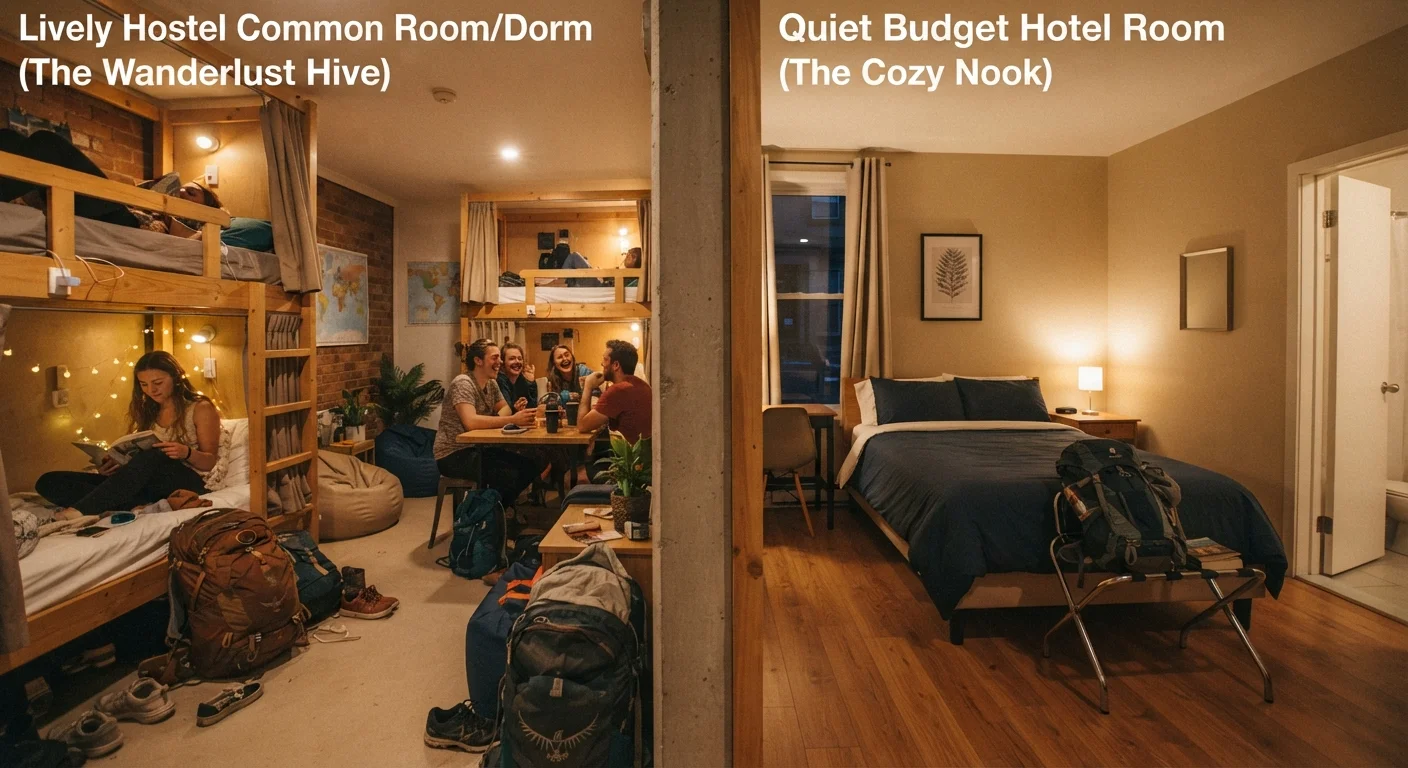
Option A
Hostels
The social, ultra-affordable option for flexible travelers.
Best for: Solo travelers, backpackers, and anyone who wants to meet fellow travelers while keeping nightly costs as low as possible.
Option B
Budget Hotels
The private, predictable choice for comfort-conscious savers.
Best for: Couples, families, or travelers who want guaranteed privacy and a reliable amenity set without spending on a full-service hotel.
The Core Difference: Shared vs. Private
The fundamental divide between hostels and budget hotels comes down to one word: privacy. In a hostel, the most affordable option is a dormitory bed — a bunk in a room shared with anywhere from 4 to 20 other travelers. Bathrooms are typically communal. In a budget hotel, you book a private room, usually with your own bathroom, that only your party occupies.
That distinction ripples into nearly every other aspect of your stay — cost, sleep quality, security, and the type of experience you have. Neither option is objectively better; they serve genuinely different types of travelers and trips. Understanding where each one fits will help you spend less in the right place and more where it matters to you.
For a broader look at how accommodation fits into your overall spending, see where your money actually goes on a trip.
Cost: How the Numbers Actually Compare
Hostel dorm beds in popular U.S. and international destinations commonly range from $20–$50 per night, depending on location, season, and how many beds are in the room. Budget hotel private rooms in the same cities often run $70–$130 per night or more. On a 10-night trip, that gap can mean hundreds of dollars — money that could fund activities, meals, or an extra travel day.
However, the math shifts when you're not traveling alone. Two people splitting a budget hotel room may each pay less per night than two hostel beds in a popular city. Always compare the per-person cost, not just the headline rate.
| Criterion | Hostels | Budget Hotels |
|---|---|---|
| Average nightly cost (solo) | $20–$50 (dorm bed) | $70–$130 (private room) |
| Privacy | Shared room and bathroom | Private room, often private bath |
| Social atmosphere | High — communal by design | Low — more anonymous |
| Kitchen access | Often yes (communal kitchen) | Rarely included |
| Sleep quality risk | Higher (noise, light, movement) | Lower (private, controlled) |
| Best for group/couple cost | Less efficient per person | Often cheaper split between two |
| Security | Lockers provided; shared spaces | Locked private room |
Keep in mind that both hostel and hotel prices swing significantly with season and location. Choosing your travel dates strategically can reduce costs for either option.
Amenities, Comfort, and What to Actually Expect
Budget hotels typically include: a private bed, a private or ensuite bathroom, a lock on your door, and often a small TV and Wi-Fi. Some include a simple breakfast. What you generally don't get at this price tier: room service, a fitness center, or daily housekeeping on every stay.
Hostels offer a different set of perks. Many have communal kitchens where you can cook your own meals — a genuine money-saver over the course of a week. Common areas, game rooms, and organized social events are standard in well-run hostels. Private lockers are provided for your valuables, though you'll want to bring or rent a padlock. Bathrooms and showers are shared and scheduled around other guests.
$20–$50
Typical hostel dorm bed per night
Prices vary by city and season; major tourist hubs like New York or London tend toward the higher end of this range.
4–20
Beds in a typical hostel dorm room
Smaller dorms (4–6 beds) generally offer more sleep-friendly conditions and sometimes cost slightly more than larger rooms.
~50%
Potential nightly savings vs. budget hotel
Choosing a hostel dorm over a budget hotel private room can cut accommodation costs by roughly half for solo travelers, depending on destination.
Quality varies enormously in both categories. A highly rated hostel with clean facilities and a welcoming atmosphere will beat a dingy budget hotel on almost every metric except privacy. Always read recent guest reviews on multiple platforms before committing to a booking. This is especially important if you're new to budget travel — our ground-up guide to planning your first budget trip covers how to vet accommodations effectively.
Social Experience and Safety Considerations
One of the most overlooked advantages of hostels is their built-in social environment. If you're traveling solo, a good hostel can eliminate the loneliness that sometimes comes with independent travel. Staff often post local tips, arrange group outings, and facilitate introductions between guests. This can be genuinely valuable — not just socially, but practically, since fellow travelers often share current, candid advice about neighborhoods and activities.
Budget hotels are quieter and more anonymous. If you value downtime, introversion, or simply traveling as a self-contained pair or group, that's a feature rather than a drawback.
On safety: reputable hostels in well-traveled areas are generally safe, but shared spaces require more personal vigilance. Use provided lockers for passports, electronics, and cash. Budget hotels offer a locked private room by default, which removes that layer of management. Neither type of accommodation guarantees safety — neighborhood matters more than accommodation type in most cases.
Before finalizing any booking, run through the pre-booking checklist for budget-conscious travelers to make sure you've covered the essentials.
The content on this site is for informational purposes only and is not a substitute for professional advice. Always consult a qualified professional for guidance specific to your situation.