

Our Verdict
Neither option is universally better — the right choice depends on the port, your comfort level, and your priorities. Ship excursions trade higher cost for peace of mind and convenience, while independent tours offer savings and freedom at the cost of added personal responsibility.
| Best for | Recommended |
|---|---|
| First-time cruisers or those visiting unfamiliar, remote ports | Ship-organized excursions |
| Budget-conscious travelers visiting well-connected, tourist-friendly ports | Independent booking |
| Travelers with mobility or health considerations | Ship-organized excursions |
| Experienced travelers who prefer a custom pace and itinerary | Independent booking |
What's Actually at Stake When You Choose
Shore excursions are one of the biggest variable costs in any cruise budget — and one of the most personal decisions you'll make. Whether you're docking in Cozumel, Dubrovnik, or Juneau, you have two fundamental choices: book an excursion through the cruise line, or arrange your own plans independently.
The stakes involve more than price. You're weighing safety net versus savings, structure versus spontaneity, and convenience versus control. Understanding exactly what each approach offers — and where each one can let you down — helps you make a confident call at each port. See our guide to budgeting for onboard and port costs for broader context on how excursion spending fits into your total cruise budget.
Ship-Organized Excursions: The Case For and Against
Cruise lines curate and vet their excursion vendors, and that vetting provides real value — especially in ports where it's hard to assess operator quality on your own. The most significant protection is the ship-will-wait guarantee: if a ship-sponsored tour runs late due to traffic or delays, the vessel holds departure for that group. Book independently and you don't get that protection.
Ship excursions also handle logistics from pier to pier, which reduces stress — especially for first-time cruisers, older travelers, or anyone with health considerations. For more on planning around health needs, see what to consider when cruising with a health condition.
The trade-offs are real, however:
- Cost: Ship excursions commonly run 30–50% more than comparable independent tours for the same activity.
- Group size: Cruise-line tours often travel in large groups of 20–40 people, which can feel impersonal and rushed.
- Limited customization: Itineraries are fixed; you can't linger at a site you love or skip one you don't care about.
| Ship-Organized Excursions | Independent Booking | |
|---|---|---|
| Typical Cost | Higher (often 30–50% premium) | Lower for comparable activities |
| Ship-Will-Wait Guarantee | Yes — ship holds for late returns | No — you are responsible if late |
| Group Size | Usually large (20–40 people) | Small or private (your party) |
| Flexibility | Fixed itinerary and pace | Customize stops, timing, and pace |
| Vendor Vetting | Cruise line screens operators | You must research independently |
| Best For | Remote ports, first-timers, low-stress needs | Popular ports, experienced travelers, budget focus |
Independent Booking: What You Gain and What You Risk
Booking directly with a local tour operator or hiring a private guide almost always costs less — sometimes significantly so. You also gain genuine flexibility: you choose the start time, the group size (often just your travel party), the pace, and which sites to prioritize.
Independent travelers often report richer, more immersive experiences precisely because smaller groups allow for more interaction with local guides and communities. For a broader look at how this dynamic plays out in travel generally, our comparison of guided versus independent travel explores the same trade-offs outside a cruise context.
Research Operators Before You Sail
Don't wait until you're on the ship to research independent tours. Look up operators weeks in advance using third-party review sites and cruise community forums. Confirm they have experience with cruise passengers, understand ship departure times, and offer clear cancellation policies. Booking early also means better availability and sometimes lower prices.
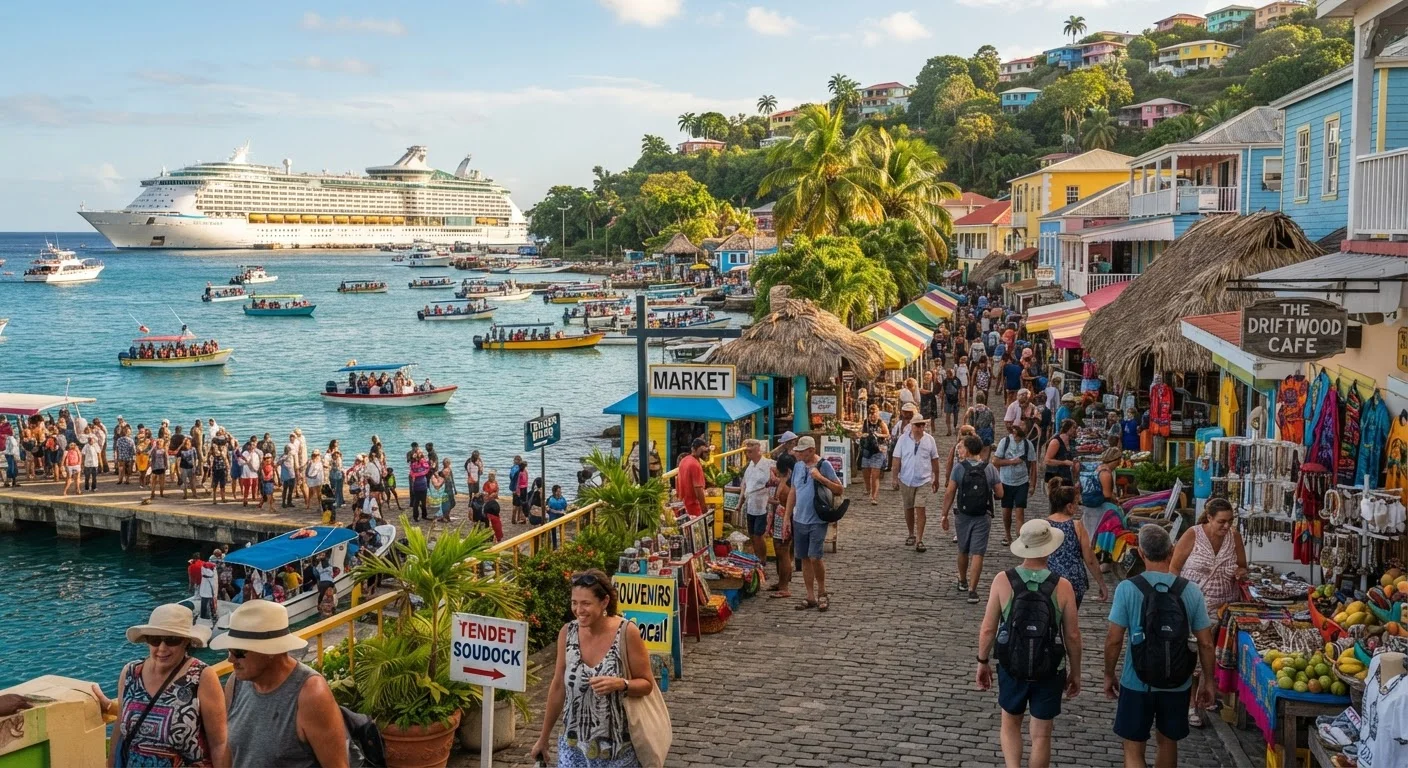
The non-negotiable risk: if you're late returning to the ship, it will sail without you. You then bear all costs of catching up to the vessel at its next port — flights, hotels, transportation. This is why port logistics matter. In a well-connected port city with good transportation (like Nassau or Barcelona), the risk of being stranded is manageable. In a remote tender port — where passengers are ferried ashore by small boat — timing is less predictable and the stakes are higher.
When evaluating any independent operator, look for verifiable reviews on third-party platforms, clear cancellation policies, and a confirmed track record with cruise passengers. Verify operator credentials where possible, and always note your ship's all-aboard time before you leave the pier.
How to Decide Port by Port
Experienced cruisers rarely commit to one approach for the entire voyage. Instead, they evaluate each port individually using a short set of criteria:
- Port accessibility: Is this a major tourist hub with reliable infrastructure, or a remote stop requiring a tender boat? Remote ports generally favor ship excursions.
- Activity type: Active adventures (zip-lining, snorkeling, ATV tours) often have comparable quality independent operators at lower prices. Highly logistical tours (remote ruins, multi-stop island drives) carry more coordination risk independently.
- Time in port: A six-hour port stop gives you more margin for independent exploration than a three-hour window.
- Crowd sensitivity: If you dislike large groups, independent tours will nearly always offer a better experience.
- Your contingency comfort: How confident are you navigating unexpected delays or language barriers? Be honest about your own stress tolerance.
Shore excursion costs are a meaningful line item in your overall cruise spend. Explore hidden cruise costs that catch travelers off guard to make sure excursion decisions don't knock your budget off track.
30–50%
Typical cost premium for ship excursions
Industry travel guides and cruise consumer advocates consistently estimate cruise-line tours cost roughly 30–50% more than comparable independent options for the same activity.
~800
Average number of ports a major cruise line visits annually
Large ocean cruise lines collectively call on hundreds of ports each year, ranging from major tourist hubs to remote tender-only stops — each with very different independent travel logistics.
Practical Steps Before Each Port
Regardless of which route you choose, a few habits protect you:
- Know your all-aboard time — not the departure time, but the hard cutoff when the gangway closes. Write it down.
- Screenshot your ship's itinerary including the port name, dock location (ships sometimes use different terminals in large ports), and emergency contact for the ship's guest services.
- Book independent tours well in advance for popular ports; reputable small-group operators fill up quickly, especially in peak season.
- Check the ship's excursion listings anyway — even if you plan to go independent, the ship's options tell you what activities are logistically viable in the time available.
- Budget a contingency for unexpected costs: a taxi back to the pier, an entrance fee not included in a tour price, or a meal ashore.
For more on how excursion budgeting fits within the full picture of cruise spending, practical tips for traveling farther on less offers general strategies applicable to cruise travel as well.
The content on this site is for informational purposes only and is not a substitute for professional advice. Always consult a qualified professional for guidance specific to your situation.