
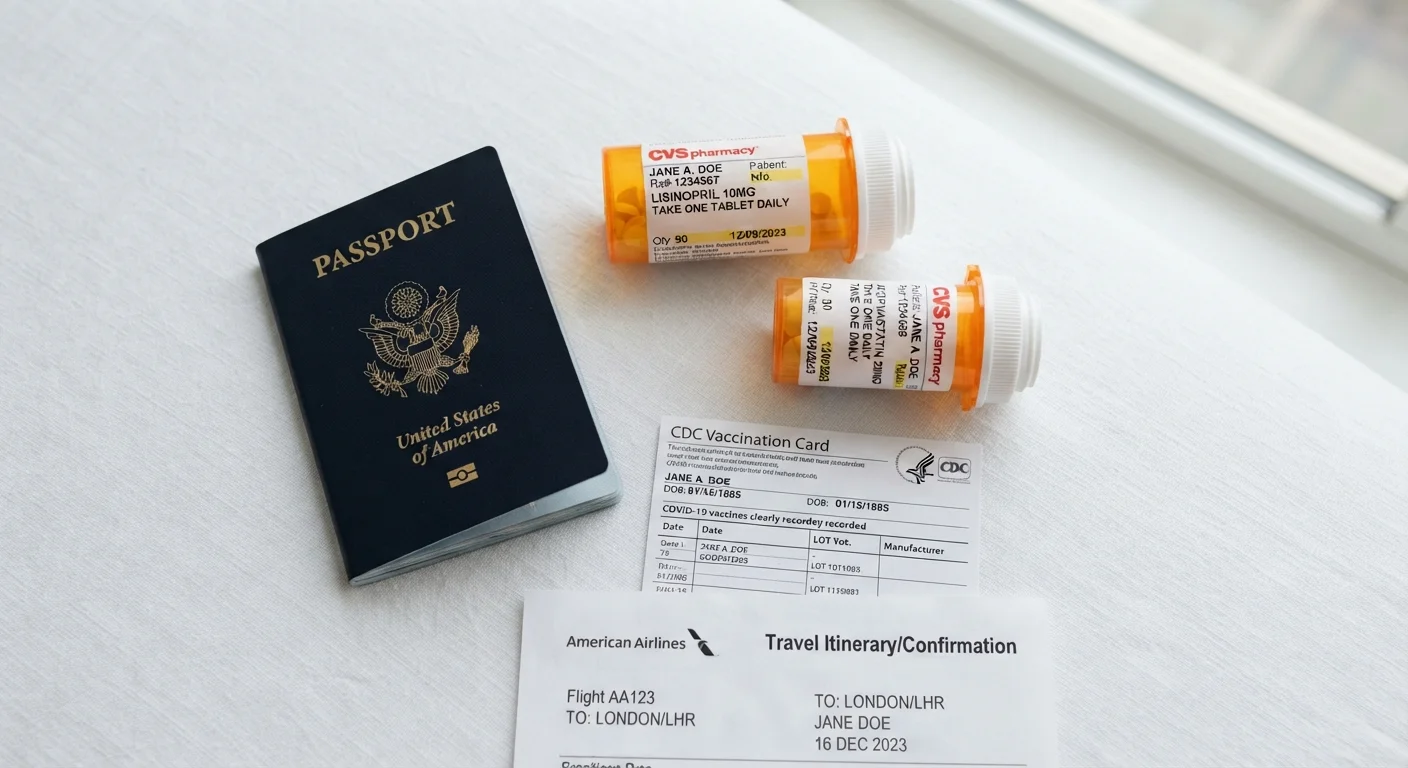
Why Medication Rules Differ Across Borders
Many American travelers assume that because a medication is legally prescribed at home, it will be accepted without question anywhere they travel. This assumption can lead to serious problems at customs. Countries set their own drug classification systems, and a prescription drug that is routine in the United States may be considered a controlled substance — or even prohibited — in another country.
Common medications that attract international scrutiny include certain opioid painkillers, benzodiazepines (a class of anti-anxiety drugs), ADHD medications containing amphetamines, and some sleep aids. Even over-the-counter decongestants containing pseudoephedrine face restrictions in certain countries. Japan, the United Arab Emirates, and several Southeast Asian nations are frequently cited examples of destinations with strict pharmaceutical import rules — but regulations exist across every region and can change without widespread notice.
This is not a reason to avoid traveling with needed medication. It is a reason to research and prepare early. See our guide to common travel safety oversights for other preparedness gaps that catch first-time international travelers off guard.
Essential Documentation to Carry
Proper documentation does not guarantee smooth passage through customs, but its absence almost certainly increases risk. The following are widely recommended practices for traveling internationally with prescription medications.
Carry all medications in their original, pharmacy-labeled containers
Original labels establish that the medication was legally dispensed under your name and connect it to your prescription. Loose pills in unmarked containers raise immediate questions at customs and may result in confiscation or detention.
Obtain a signed physician's letter on official letterhead before departure
A letter from your prescribing doctor explaining your diagnosis, the medication name, dosage, and medical necessity gives customs officers professional context. Some countries specifically ask for this documentation during entry screening.
Bring only the quantity you need for the trip, plus a modest buffer
Many countries impose strict limits on how much of a given medication a traveler may import. Carrying far more than your trip duration requires can flag your supply as excessive and invite scrutiny.
Research whether your specific medication requires an import permit
Some countries require travelers to apply in advance for permission to bring controlled substances across their border. Arriving without a required permit — even with a valid prescription — can result in confiscation.
Consider carrying a translated copy of your prescription and physician's letter
Customs officials may not read English, and a document that cannot be understood provides little protection. A professional translation into the destination country's official language removes a potential communication barrier.
For a broader look at the paperwork that protects you abroad, see Travel Documents Every American Should Carry Abroad.
How to Verify Destination Rules Before You Leave
No single global database covers every country's medication import rules, which is why direct verification is essential. Start with these official sources:
- The destination country's embassy or consulate website — Many publish pharmaceutical import guidelines for travelers.
- The U.S. Department of State country information pages (travel.state.gov) — These include health and safety notes and links to local embassy contacts.
- The destination country's health or customs ministry website — Often the most authoritative source, though pages may require translation.
Contact the embassy directly if written guidance is unclear or absent. Keep a record of any written responses you receive. Allow at least four to six weeks before departure to complete this research, especially if your medication requires special import permits — some countries issue these only upon advance written application.
Rules Can Change — Always Verify Close to Departure
Pharmaceutical import regulations are set by individual governments and can be updated with little public notice. A country that permitted a medication freely when you last visited may have reclassified it since then. Checking regulations once early in your planning is a good start, but re-confirming with an official source within a few weeks of departure is a sound habit. Written confirmation from an embassy or consulate provides the best paper trail if questions arise at the border.
For guidance on storing document copies securely while abroad, see Digital vs. Physical Document Copies While Traveling.
Quick Steps You Can Take Right Now
If your trip is approaching, a few targeted actions can significantly reduce your risk of complications at the border.
This article is for general informational purposes only and does not constitute medical, legal, or regulatory advice. Medication regulations vary by country and change frequently. Always consult your prescribing physician and verify rules through official government and embassy sources before traveling. For any health-related decisions, consult a qualified healthcare professional.
The content on this site is for informational purposes only and is not a substitute for professional advice. Always consult a qualified professional for guidance specific to your situation.